


How Many Centenarians Are There in the US?

Seraphina Therapeutics's Highlights
- Centenarians are the fastest-growing age group in the U.S., offering valuable insight into what supports long, healthy lives.
- Where centenarians live and how they eat, move, and stay socially connected reveals the powerful role of environment and lifestyle in longevity.
- Supporting cellular health, alongside balanced nutrition and daily habits, can help promote healthspan and resilience as we age.
- Centenarians are the fastest-growing age group in the U.S., offering valuable insight into what supports long, healthy lives.
There’s something universally inspiring about someone who reaches 100 years of age. A centenarian’s life embodies a century of experiences, resilience, and change, living through eras so different from our own. In recent decades, the number of people in the United States who reach 100 or older has grown steadily, reflecting both improved survival and a broader shift in global longevity trends.
Although the number of centenarians in the US has grown, the number of people who reach this age (healthfully) is still small. Centenarians’ growing presence can tell us about shifts in our healthcare, how we support the aging community, and how we can potentially live longer.
Let’s explore the data, patterns, and stories of the centenarians living in the U.S.
Centenarians in the United States: The Numbers and the Trends
Counting centenarians might seem straightforward, but it is more nuanced than it appears.
Official data on individuals aged 100 and older comes primarily from the U.S. Census and surveys such as the National Center for Health Statistics. These estimates are updated periodically and reflect not just aging populations, but also improvements in healthcare and living conditions over the last century.
As of the most recent estimates, there are hundreds of thousands of centenarians living in the United States. While precise yearly counts vary, the general trend is unmistakable: the number of Americans reaching 100 has been rising steadily over the past few decades.
For context, in the mid-20th century, centenarians were astonishingly rare and were mostly subjects of human interest stories and demographic curiosity. Today, they represent a small yet steadily growing segment of the population.
Part of this rise is demographic momentum. Baby boomers and older generations are entering advanced ages at unprecedented rates. But it is also a testament to the cumulative effects of better disease prevention, improved sanitation, and medical advances that have reduced early-life mortality and extended average life spans.
It’s important to recognize that centenarian numbers, while increasing, remain a minority among the elderly. Most people still do not live to 100, and the gap between average life expectancy and reaching the century mark remains substantial. That gap, and what we can do to bridge it, is the central question of modern longevity science.
Where Centenarians Are in the U.S.
Like most health outcomes, the distribution of centenarians is not uniform across the United States. Some regions have higher densities of 100-year-olds than others, influenced by factors such as lifestyle, community support, income, access to healthcare, and broader social determinants of health.
States with generally higher life expectancies, such as Hawaii, California, and states in the Northeast, tend to have disproportionately higher centenarian populations.
These areas often combine several longevity-promoting factors:
- Access to preventive healthcare
- Higher education levels
- Health-conscious environments
- Social structures that support older adults.
Conversely, regions with shorter average life expectancy, often in parts of the Southeast and rural Midwest, generally have fewer centenarians per capita. This pattern reflects broader disparities in socioeconomic conditions, health behaviors, and access to care.
While reaching 100 can feel like an individual achievement, it is deeply rooted in the environments people grow up in and inhabit throughout life.
Cities and towns with strong community networks, favorable climates, and access to outdoor spaces also stand out. Even within individual states, urban and suburban areas with robust social services and recreational opportunities tend to show higher proportions of older adults reaching advanced ages.
Understanding these patterns reveals that longevity is shaped by both personal choices and conditions of everyday life. From neighborhoods and healthcare systems to cultural norms around diet and activity, the recipe for longevity is a lengthy list.
The Lifestyles of Centenarians
There may be no universal formula for reaching 100, but researchers have identified some common characteristics among U.S. centenarians that shed light on longevity. These traits are not prescriptions for immortality, but they do highlight patterns that are consistent with healthier aging.
Activity
Many centenarians report that they remained relatively active throughout their lives. Activity may not always look like formal exercise routines. Frequently, it is built into daily living.
Walking, gardening, household chores, and staying physically engaged with the world appear far more common than long hours at treadmills or gyms. This aligns with broader research showing that consistent, moderate activity supports cardiovascular health, mobility, and metabolic resilience, factors that matter deeply over decades.
Diet
Diet is another point of convergence. While no single eating pattern characterizes all centenarians, many report diets rich in whole foods, vegetables, lean proteins, and fiber.
Some centenarians grew up before the era of highly processed food became ubiquitous, and their lifelong eating habits remained closer to traditional or home-prepared meals. Even when diets differ culturally or regionally, emphasis on minimally processed foods and balanced nutrition appears to matter.
Social Engagement
Social engagement also emerges as a powerful theme. Many centenarians maintain close family ties, community involvement, and routines that keep them intellectually and socially active. Reduced loneliness and a sense of belonging are linked to better mental health and lower risk of cognitive decline, reinforcing the idea that longevity is holistic.
Resilience
Attitude and resilience are often cited as support beams of longevity. Centenarians frequently describe a sense of contentment, adaptability, or an ability to cope with life’s inevitable stresses. While psychology alone cannot explain longevity, emotional well-being, purpose, and stress management are increasingly viewed as integral components of a long life.
Health Profiles of Centenarians
Reaching 100 does not necessarily mean living free of health challenges. Many centenarians manage chronic conditions such as arthritis, hypertension, or vision loss.
What often sets them apart is not the absence of disease, but the delayed onset of serious illness. Researchers refer to this as “compressed morbidity,” meaning that many centenarians remain relatively functional and independent until late in life, rather than spending decades in poor health.
This pattern suggests that longevity is closely tied to maintaining resilience at the cellular and metabolic level. The ability to repair damage, manage inflammation, and preserve organ function over time plays an impactful role. In other words, it’s not just about adding years to life, but preserving healthspan (years lived in good health).
Cognitive health also varies among centenarians, but many retain sharp mental faculties well into advanced age. Continued learning, routine problem-solving, and social interaction are believed to support brain health, reinforcing the idea that mental engagement is a lifelong investment.
What Centenarians Can Teach Us About Longevity
Centenarians offer a living lens into what long-term health actually looks like in practice. Their lives reflect a combination of consistency rather than perfection. Most do not follow extreme diets, aggressive fitness programs, or cutting-edge biohacks for decades. Instead, they tend to stick with routines that are sustainable, enjoyable, and adaptable as they aged.
Another key takeaway is that longevity is cumulative. The benefits of healthy behaviors compound over time, just as unhealthy patterns do. This is why public health experts emphasize early and midlife interventions as much as late-life care. By the time someone reaches old age, much of their longevity trajectory has already been shaped.
At the same time, centenarians demonstrate that it’s never too late to benefit from positive changes. Improved nutrition, physical activity, and social engagement can support better function and quality of life even in later decades.
The Future of Centenarians in the U.S.
Demographers expect the number of centenarians in the United States to continue rising over the coming decades. As medical care improves and survival rates increase, reaching 100 may become less extraordinary than it is today, though it will likely remain relatively rare.
This shift carries implications not only for healthcare systems, but for how society approaches aging, retirement, and intergenerational relationships. An aging population underscores the importance of focusing on longevity with quality.
Simply extending lifespan without supporting physical and cognitive function places strain on individuals, families, and public systems. Centenarians remind us that the goal is not just to live longer, but to live well for as long as possible.
Protecting Longevity at the Cellular Level
Protecting our longevity from a biological standpoint begins at the cells. Researchers have discovered that the entire aging process results from 12 specific cellular events, dubbed the “12 hallmarks of aging.” These 12 processes reflect how our cells age, change, and begin to deteriorate, causing a ripple effect that, in turn, ages us.
While this cellular decline is normal, there are ways to slow it down, and in some cases, even reverse cellular aging to increase longevity and promote healthspan. Doctors working with the US Navy made a groundbreaking discovery in 2015 while caring for older Navy dolphins. They found that a molecule called C15:0 predicted the healthiest aging dolphins and provided similar long-term health benefits to humans.
C15:0 is now known to physically strengthen cells against age-related breakdown and delivers 36+ cellular benefits that support long-term metabolic, liver, cognitive, immune, and red blood cell health. Further, C15:0 has been shown to slow aging at the cellular level.*
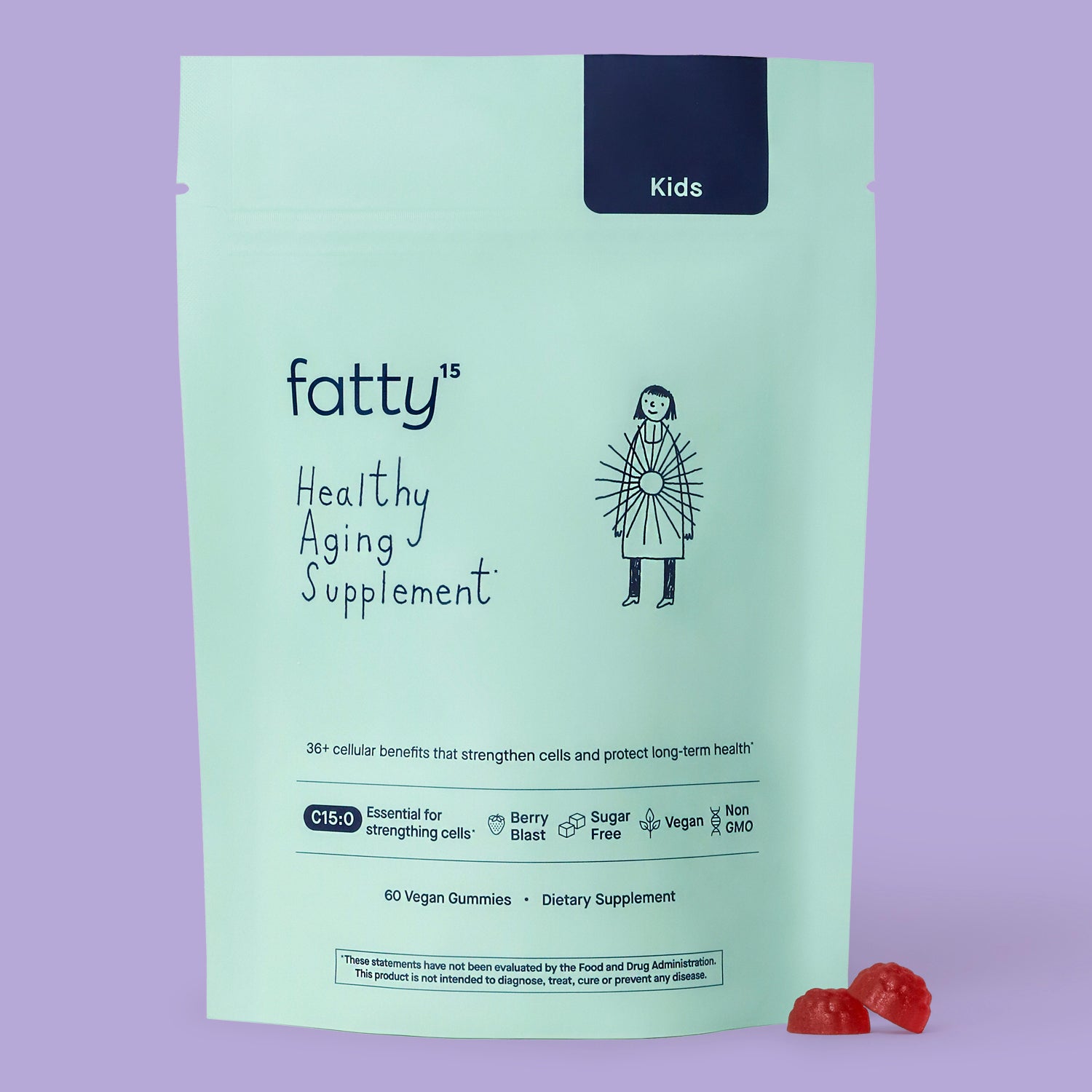
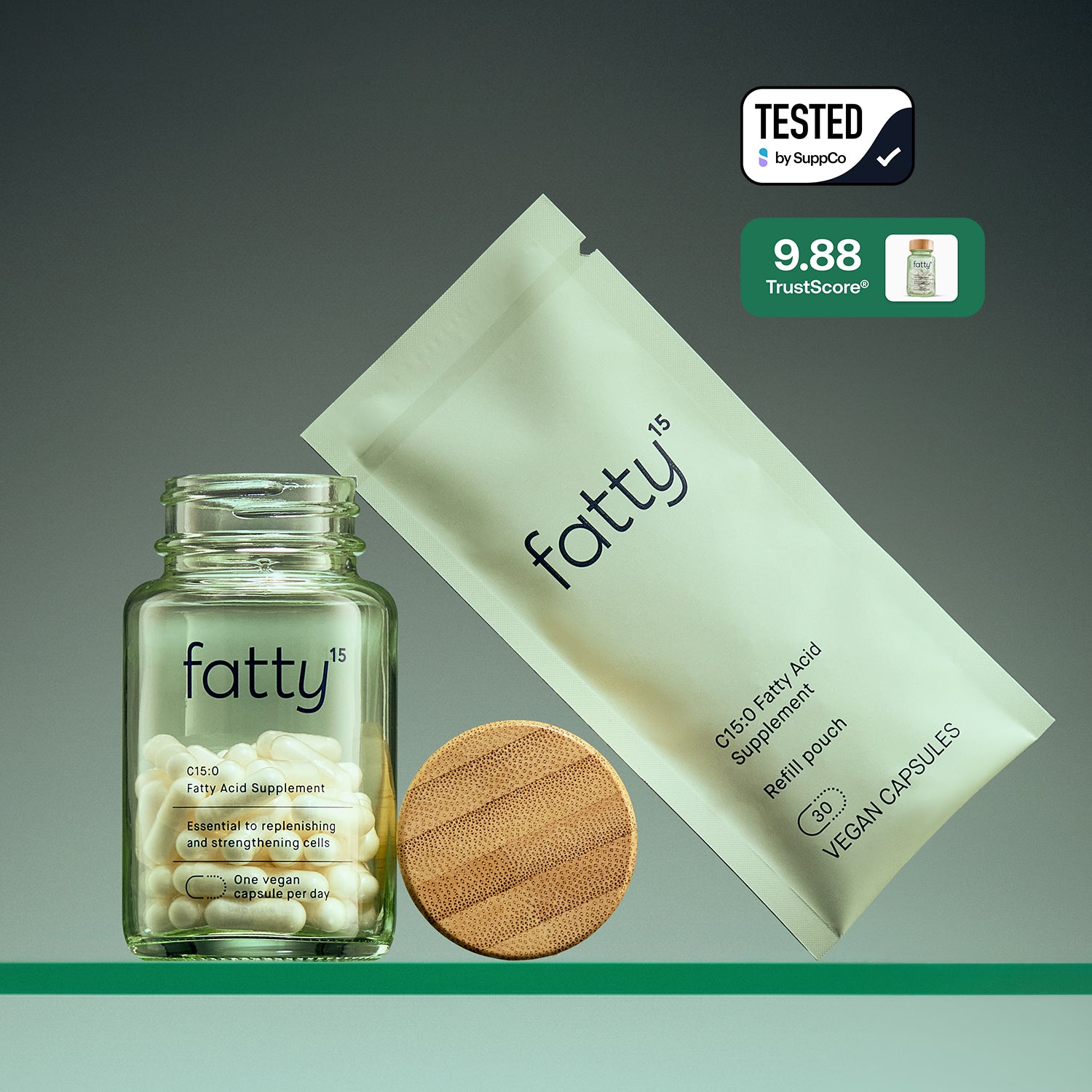
The doctors at the Navy went on to develop a pure C15:0 supplement called fatty15, whose benefits to our health are now supported by more than 100 peer-reviewed studies, 60 patents, and 20+ awards, including becoming a Fast Company World Changing Idea in Wellness and Inc. 5000's fastest-growing supplement brand in America.
Fatty15 is the first and only supplement that contains the pure, vegan-friendly version of C15:0, an essential fatty acid you may be deficient in. Not having enough C15:0 can lead to Cellular Fragility Syndrome, a condition in which cells become weak, and aging accelerates. This deterioration has been associated with chronic metabolic, heart, and liver conditions.*
Benefits of The Longevity Nutrient
In addition to mitigating Cellular Fragility Syndrome, C15:0 also plays a role in supporting longevity in the cells. Dubbed “the longevity nutrient,” C15:0 targets 6 out of the 12 hallmarks of aging, slowing and even reversing the processes that cause us to age faster.*
Studies of C15:0 show that it:
- Strengthens cell membranes by 80%*
- Improves mitochondrial function by up to 350%*
Additionally, it helps lower bad LDL cholesterol and improves liver enzymes, promoting not just longevity, but healthspan too. Taking fatty15 once per day can help improve the health of your cells and paired with staying active and eating healthily, can bolster your chances of reaching centenarian status.*
100 Candles
The chances you’ll have a birthday cake with 100 candles aren’t enormous, but they aren’t zero. Current centenarians remind us that longevity is rarely the result of one dramatic intervention. It is built gradually through daily choices, supportive environments, and biological resilience maintained over a lifetime.
While reaching 100 isn’t a given, improving your cellular health, maintaining daily movement, eating well, and prioritizing close social connection can help you age with strength, function, and vitality, no matter how many candles end up on the cake.
FAQs
Which U.S. state has the most centenarians?
California has the largest number of centenarians, followed by New York, and then Florida.
What percentage of Americans reach 100 years old?
Centenarians currently make up just 0.03% of the overall U.S. population, and they are expected to reach 0.1% in 2054.
What country has the most centenarians?
Japan consistently has the highest number of centenarians in the world, with recent estimates placing their total over 99,000 and rising.
What is the most common cause of death in centenarians?
The prominent causes of death of centenarians are pneumonia and other respiratory diseases, cerebrovascular diseases, ischaemic heart diseases, other circulatory diseases, dementia, and Alzheimer's disease.
|
*These statements have not been evaluated by the Food and Drug Administration. This product is not intended to diagnose, treat, cure, or prevent any disease. |
Sources:
U.S. centenarian population is projected to quadruple over the next 30 years | Pew Research.org
The Compression of Morbidity | PMC
Number Of Centenarians Skyrockets In The U.S. | Forbes.com


