


Centenarian Breakfast Habits for Longevity | Fatty15

Seraphina Therapeutics's Highlights
- Centenarians across the world start their day with nutrient-dense, balanced breakfasts. While ingredients vary by culture, their morning meals consistently include complex carbohydrates, protein, healthy fats, and produce to support steady energy and long-term health.
- Breakfast choices play a meaningful role in cellular health and longevity. Fiber, antioxidants, and healthy fats help regulate blood sugar, reduce inflammation, and support cellular integrity.
- Longevity is built through consistent habits, not single foods or trends. Centenarians pair nourishing breakfasts with regular movement, strong social connections, stress management, and supportive supplements like fatty15.*
It’s fascinating to think of reaching 100 years of age. But even more interesting may be learning how centenarians (people who live to be 100) live, and more specifically, what they eat to support such extraordinary longevity.
Breakfast, the first meal of the day, often sets the tone for metabolism, energy, and overall health. Researchers studying centenarians, particularly in the world’s famous Blue Zones, have noticed that the morning meal plays a surprisingly important role in supporting a lifetime of vitality.
Across regions like Okinawa in Japan, Sardinia in Italy, Ikaria in Greece, and Loma Linda in California, centenarians share some consistent morning patterns. They tend to start the day with meals rich in nutrients, balanced in macronutrients, and mindful in portion size. But there’s no one-size-fits-all formula.
These breakfasts reflect local culture, availability, and tradition. What ties them together is that they are deliberate, nourishing, and supportive of both body and mind.
What Centenarians Eat for Breakfast
When examining the diets of centenarians, a few clear patterns emerge, even across different continents and cultures.
Complex Carbohydrates
Oats, barley, whole-grain porridge, and even starchy vegetables like sweet potatoes provide steady energy, fiber for gut health, and a slow release of glucose that keeps metabolism balanced throughout the morning.
In Okinawa, for example, many centenarians enjoy sweet potato-based dishes, often paired with small amounts of vegetables or legumes. In Sardinia, whole-grain bread or porridge often begins the day. These foods nourish the body without spiking blood sugar or adding unnecessary inflammation.
Protein
Eggs, yogurt, beans, and occasionally fish supply the amino acids necessary for muscle maintenance, which is important as we age. Muscle strength supports mobility, balance, and independence, all of which are critical for longevity.
Centenarians rarely rely on large portions of protein; instead, they integrate it thoughtfully into a meal that complements fiber and healthy fats.
Healthy Fats
Nuts, seeds, avocado, and olive oil provide fats that support heart health, satiety, and even cognitive function. These fats, along with protein and fiber, help stabilize blood sugar, a small but cumulative effect that supports cellular resilience over decades.
Produce
Fruits and vegetables are often present at breakfast as well. Whether it’s a handful of berries, a few slices of citrus, or leafy greens incorporated into a meal, the antioxidants, polyphenols, and vitamins they provide help protect cells from oxidative stress.
While the exact produce varies regionally, the principle remains the same: start the day with foods that nourish and defend your body.
Beverages
Even beverages matter. Centenarians often drink green tea, coffee in moderation, or herbal infusions that provide hydration, antioxidants, and a gentle ritual to begin the day. These drinks are typically consumed without excess sugar, allowing the body to reap benefits without unnecessary metabolic strain.
Why These Choices Matter
Breakfast choices like these have measurable effects on long-term health.
- Whole grains and fiber-rich foods support digestive health, moderate blood sugar, and may even help reduce the risk of chronic disease.
- Protein and healthy fats help maintain muscle, metabolic stability, and satiety, preventing overeating later in the day.
- Fruits and vegetables provide antioxidants that protect the body’s cells, contributing to overall resilience.
At a deeper level, these nutrients play a role in cellular health. Cells are the workhorses of the body, responsible for energy production, detoxification, and repair. Over time, cell membranes can weaken, inflammation can accumulate, and metabolic efficiency can decline.
Regularly consuming nutrient-dense foods, like those favored by centenarians, helps maintain cellular integrity and supports the body’s natural repair systems. This combination of macronutrients and micronutrients lays a foundation for long-term health, much like a century-spanning maintenance plan for the body.
The Broader Habits of Centenarians
Breakfast is just the beginning. Centenarians demonstrate that longevity is the result of cumulative lifestyle patterns.
Exercise
Physical activity is usually integrated seamlessly into daily life: walking, gardening, chores, or light movement rather than intensive workouts. Consistent activity preserves muscle, supports cardiovascular health, and maintains balance.
Staying Socially Active
Social connection is another key ingredient. Many centenarians maintain strong family ties, community involvement, and purposeful routines. Regular interaction reduces loneliness, supports mental health, and is linked to lower cognitive decline.
Centenarians often speak of having a sense of purpose, whether through caregiving, hobbies, or contributing to their communities, which provides motivation, resilience, and emotional balance.
Managing Stress
Stress management, whether through napping, meditation, or simply taking the day slowly, also plays a role. Emotional well-being, adaptability, and contentment are traits observed consistently among people who live past 100. Longevity is as much about cultivating balance and mental resilience as it is about food or exercise.
Practical Steps To Support Your Longevity
While most of us won’t immediately join the centenarian ranks, adopting similar habits can support long-term health:
- Prioritize nutrient-dense breakfasts with whole grains, protein, fruits, vegetables, and healthy fats.
- Avoid highly processed, sugary, or fried foods that spike blood sugar and promote inflammation.
- Stay physically active in manageable ways every day.
- Nurture social connections and maintain purposeful routines.
- Manage stress and prioritize restorative sleep.
Nutrition and lifestyle form the foundation, but supporting the body’s biology directly is increasingly recognized as an essential component. One essential nutrient, known as pentadecanoic acid (C15:0 for short), is at the forefront of the fight to help us lead longer, healthier lives.*
Understanding C15:0
Discovered by researchers studying healthy aging and longevity in bottlenose dolphins, C15:0 is an odd-chain saturated fatty acid that is essential to our bodies. That means we have to get it through diet or supplements, because our bodies cannot make it on their own.*
Researchers observed that dolphins with higher C15:0 levels had fewer occurrences of age-related illness than those with lower C15:0 levels. Fast forward 10 years, over 100 peer-reviewed publications, and over 60 patents now support that the same geroprotective long-term health benefits of C15:0 are available to humans, too.*
C15:0 works by integrating into our cells to support, strengthen, and repair them. Studies of the effects of C15:0 show that it:
- Strengthens cell membranes by 80%.*
- Improves mitochondrial function, improving ATP levels by up to 350%.*
- Regulate glucose uptake*
- Lower “bad” LDL cholesterol*
- Improve liver enzymes*
- Improve gut health*
C15:0 specifically targets 6 out of the 12 hallmarks of aging, which are processes in cells that cause us to age. Further, C15:0 is an essential nutrient, which we must obtain in our diets to help our bodies thrive.*
But if we are all getting plenty of C15:0, why aren’t we seeing a massive trend in healthier bodies? The answer is because most of us are no longer getting the essential C15:0 we need.
Where To Find C15:0
C15:0 is found in trace amounts in full-fat dairy products like full-fat butter and whole milk, and in some fish. Increasing your intake of whole milk or butter would help elevate your C15:0 levels, but would also increase your levels of ‘bad’ proinflammatory fats.
These foods also pack a lot of extra calories, excess sugar (from lactose), and even-chain saturated fats that are consistently associated with poorer health outcomes. This is probably why there’s a big debate over whether whole dairy is good for us or bad for us.
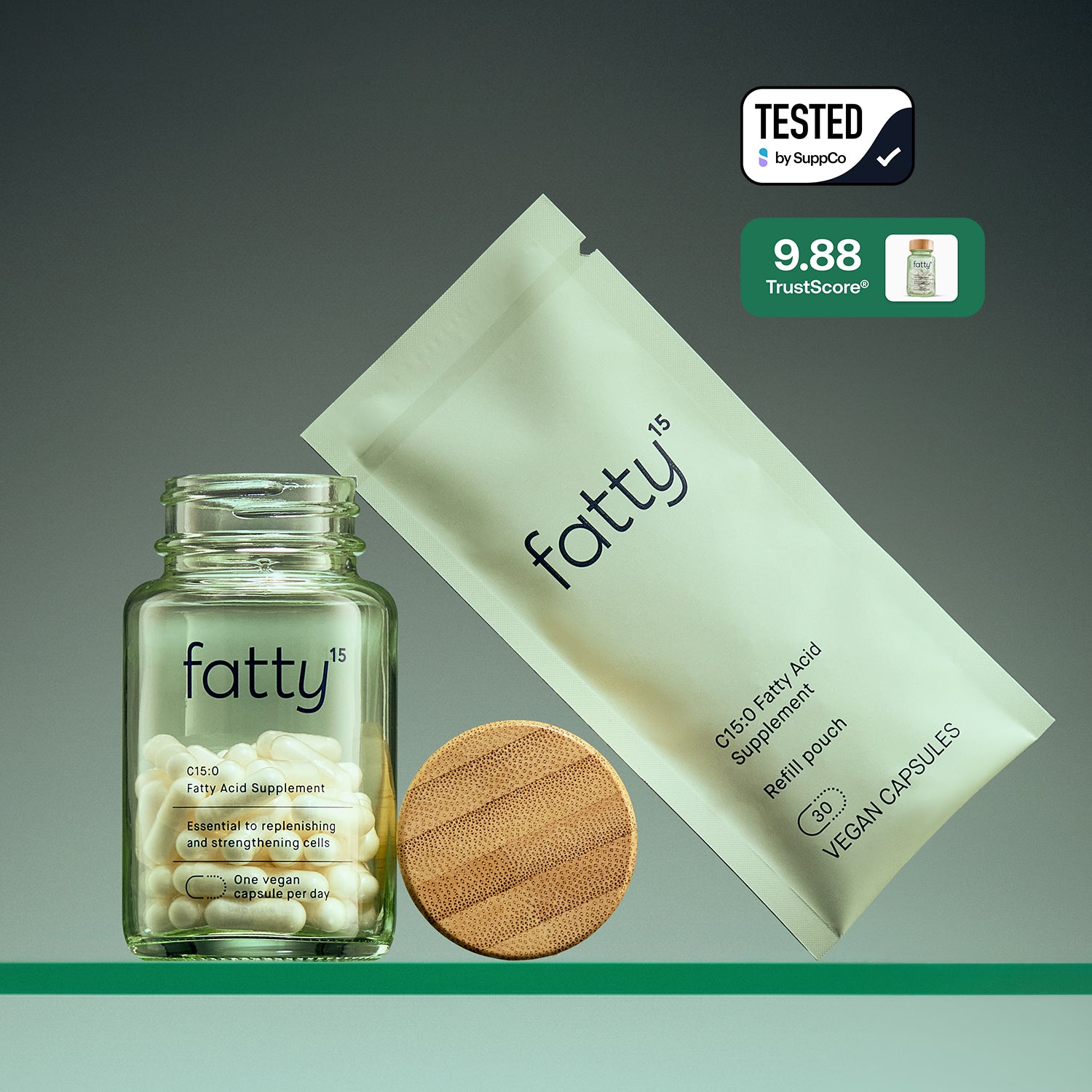
A solution? Fatty15™. Fatty15 is the first and only supplement, born of scientific research and supported by numerous peer-reviewed papers, that contains the pure, vegan-friendly version of C15:0 known as FA15™. Just one fatty15 capsule per day is enough to restore your C15:0 levels and help support your metabolic, red blood cell and long-term health.*
How Much C15:0 Do You Need?
C15:0 levels, when measured in your blood, should be greater than 0.2% of your total fatty acid count. Unfortunately, it’s estimated that one in three people globally have levels of C15:0 that are lower than this standard. It’s worth noting that in Blue Zones, the levels of C15:0 are much higher, around 0.64%.
Because C15:0 is an essential nutrient, not getting enough can lead to a deficiency syndrome. Cellular Fragility Syndrome is caused by a C15:0 nutritional deficiency and results in fragile cells that can break down and fragile and accelerates the aging process. Cellular Fragility Syndrome is associated with chronic metabolic, heart, and liver conditions that are sometimes considered synonymous with aging.
If you aren’t sure of your levels, you can have your doctor order a C15:0 test or click here to order an at-home test kit. It only requires a finger-prick blood sample that is mailed back to our partner lab for analysis.
Once you know your levels, you can determine how much C15:0 you need to add to your diet. In addition to eating a hearty, nutrient-dense breakfast, supplementing your diet with fatty15 support your long-term health.
What NOT To Do
Equally important to making the right decisions about diet and longevity is knowing what to avoid. High-sugar cereals, pastries, and heavily processed breakfast foods provide quick energy but contribute to metabolic stress and inflammation.
Skipping breakfast entirely or relying on stimulants like excessive caffeine can also strain energy systems. Extreme diets or inconsistent eating patterns may disrupt nutrient balance and cellular function. Longevity is cumulative: small missteps repeated over decades can have larger consequences, while thoughtful, consistent choices build resilience.
Breakfast of Champions
Centenarians remind us that living to 100 is a lifetime of intentional habits. Breakfast, as the first meal, sets a daily tone of nourishment, balance, and mindfulness. Coupled with activity, social engagement, stress management, and support for cellular health, these patterns help create the conditions for a long, vibrant life.
While reaching 100 remains rare, everyone can take cues from centenarians to optimize their healthspan. By focusing on nutrient-rich breakfasts, daily movement, meaningful social connections, and supporting the health of your cells with fatty15, you can build a foundation for decades of vitality.
The road to longevity may be long, but it begins with choices that feel simple, sustainable, and entirely within your reach, starting with the very first meal of the day.
FAQs
What do centenarians eat for breakfast?
In the world's Blue Zones, where people actually live to 100, breakfast is savory, simple, and fiber-rich. Think beans and rice, avocado toast, or even minestrone soup.
What is the #1 healthiest breakfast?
There's no single "world #1" healthy breakfast, but oatmeal (especially steel-cut) with berries, nuts, and seeds is a top contender, favored by many doctors for its fiber and sustained energy.
Do Blue Zone centenarians eat oatmeal for breakfast?
In Loma Linda, centenarians often eat a hearty breakfast of oatmeal or a non-traditional tofu scramble.
|
*These statements have not been evaluated by the Food and Drug Administration. This product is not intended to diagnose, treat, cure, or prevent any disease. |
Sources:


