



What Is Normal A1C by Age: The Ultimate Guide

Seraphina Therapeutics's Highlights
- A person’s A1C level indicates their blood glucose levels over a three-month period. Higher A1C levels (>5.6%) can indicate problems with blood sugar regulation, like prediabetes or diabetes. With age, a person’s A1C levels rise, but taking a supplement like fatty15 supports healthy glucose response and helps keep blood glucose levels balanced.
Your yearly checkup usually involves routine bloodwork. A part of that bloodwork will typically measure your A1C levels, and your healthcare provider may have told you that lowering your A1C levels can protect you against the development of type 2 diabetes.
With age, our blood glucose levels naturally rise, but this doesn’t mean we are destined to develop diabetes. It means we need to be a bit more proactive with our healthcare and make a few adjustments to ensure our blood sugar levels remain balanced.
Many people wonder what the ideal A1C level should be for a person their age. We’ll cover blood glucose levels by age, and also discuss ways to keep your levels within a healthy range, including the addition of a daily supplement that is scientifically proven to help support healthy glucose maintenance.
What Is A1C?
The A1C blood test, also known as the hemoglobin A1C test (HbA1c), the glycated hemoglobin test, or glycohemoglobin test, is a test that helps your healthcare provider determine a person’s average blood sugar levels over the previous three months. As such, there’s no way to “trick” the test by avoiding certain foods or including certain foods before your bloodwork.
A1C is a measure of how many red blood cells have glucose-coated hemoglobin. Hemoglobin is contained in red blood cells and helps move oxygen throughout the body. When you consume food that is broken down into glucose, the glucose binds to hemoglobin in your bloodstream. The more glucose in your bloodstream, the more glucose-coated hemoglobin you’ll have.
Why Is the A1C Test Important?
Understanding how many of your red blood cells have glucose-coated hemoglobin gives your healthcare provider a clear picture of how your body metabolizes and uses glucose. It can help your doctor determine whether or not you are prediabetic or have diabetes. The A1C test also helps your doctor examine how well your diabetes treatment is working.
A test that reveals you are prediabetic can help you make necessary adjustments to your diet and lifestyle, which may reduce your risk of developing type 2 diabetes. Likewise, an A1C test that shows you have type 2 diabetes can ensure you get the treatment you need to help manage your diabetes well.
Untreated type 2 diabetes can lead to serious health problems, cardiovascular disease, blindness, and nerve-related illnesses.
What Is the Ideal A1C Level?
Normal A1C levels are generally considered under 5.7%. This means you’ll want an A1C reading no higher than 5.6%. It’s also possible to have A1C levels that are too low.
A test that shows levels <5% could indicate hypoglycemia, or blood sugar levels that are too low. If your A1C level falls below 5, it doesn’t mean you automatically have hypoglycemia, but it may be something your doctor would like to monitor.
As you age, you might notice your A1C levels begin to change. Typically, a person’s A1C levels gradually rise.
Normal A1C Levels for Every Age
Aging can result in higher A1C levels, which can be normal. However, the change in A1C levels with age should be very slight. A 2019 study found that the following A1C levels are considered “normal” according to a person’s age.
|
Age |
A1C |
|
20-39 years |
4.0-6.0 |
|
40-59 years |
4.1-6.2 |
|
60-64 years |
4.4 to 6.6 |
After age 65, the guidelines get a little dicey. There are updated recommendations from the American Diabetes Association (ADA), as well as recommendations from the American Geriatrics Society (AGS) and the International Diabetes Federation (IDF).
|
Age |
ADA Recommendation |
AGS |
IDF |
|
65+ |
<7.5% |
7.5-8.0 |
– |
|
70+ |
– |
– |
7.0-7.5% |
These guidelines should be reviewed with your doctor and measured against other facets of your health, like your weight, activity levels, blood pressure levels, and ability to regulate any underlying illnesses with lifestyle changes and/or medication.
What To Do If Your A1C Levels Aren’t Great
If your doctor is concerned with your most recent A1C test results, you aren’t alone. About 98 million Americans have A1C levels that are considered prediabetic, but only eight in 10 of them know about it.
The sooner you are aware of problematic blood sugar levels, the sooner you can take steps to reduce the risk that your A1C levels will get worse. Here are a few actionable steps you can take to protect your A1C levels and keep them regulated as you get older.
1. Get Plenty of Exercise
If you are moving, you’re doing a good thing. Many Americans don’t get enough physical activity each day. A sedentary lifestyle is one of the prominent precursors to type 2 diabetes.
Getting at least 30 minutes of exercise each day is optimal. Adding in resistance training a few times a week is considered premium activity. More exercise helps you maintain a healthy weight, reduce your overall blood sugar levels, elevate your mood, build muscles, and protect your bones.
If you aren’t currently moving, start with a walk. Walking is a low-impact exercise with a myriad of health benefits.
2. Eat a Balanced Diet
Your diet is a key factor in helping regulate your blood glucose levels. Although you might think that avoiding sugar is the key to avoiding type 2 diabetes, that isn’t quite right. In reality, overconsumption of calories that leads to weight gain and insulin resistance is the path to type 2 diabetes, not simply eating a plate full of sweets.
When you consistently eat more calories than you burn, your body gains weight. Weight gain is directly linked to an increased risk of insulin resistance. Insulin resistance means that your pancreas does not produce enough insulin to remove the glucose from your bloodstream, and that the cells that need the glucose can’t effectively “take up” the glucose. Insulin resistance is a symptom of prediabetes.
3. Mellow Out
Balancing stress is a lot more than just “mellowing out.” For many, chronic stress can lead to serious negative health impacts, including unregulated blood sugar levels. Taking action to lower stress levels may mean focusing on a daily meditation, taking a yoga class, or lowering the amount of activities on your schedule (if possible).
It may also mean prioritizing sleep and rest if you aren’t getting enough. Just so you know, most adults need between seven and nine hours of sleep each night.
4. Take Medication as Directed
People who are on blood sugar regulating medication should take it as directed, making sure to never skip doses. It’s also important to have your blood sugar tested regularly. Your doctor may advise you to test your blood sugar levels several times each day. Keeping a log of your blood sugar levels helps you and your healthcare provider manage your blood sugar levels better.
5. Consider a Supplement
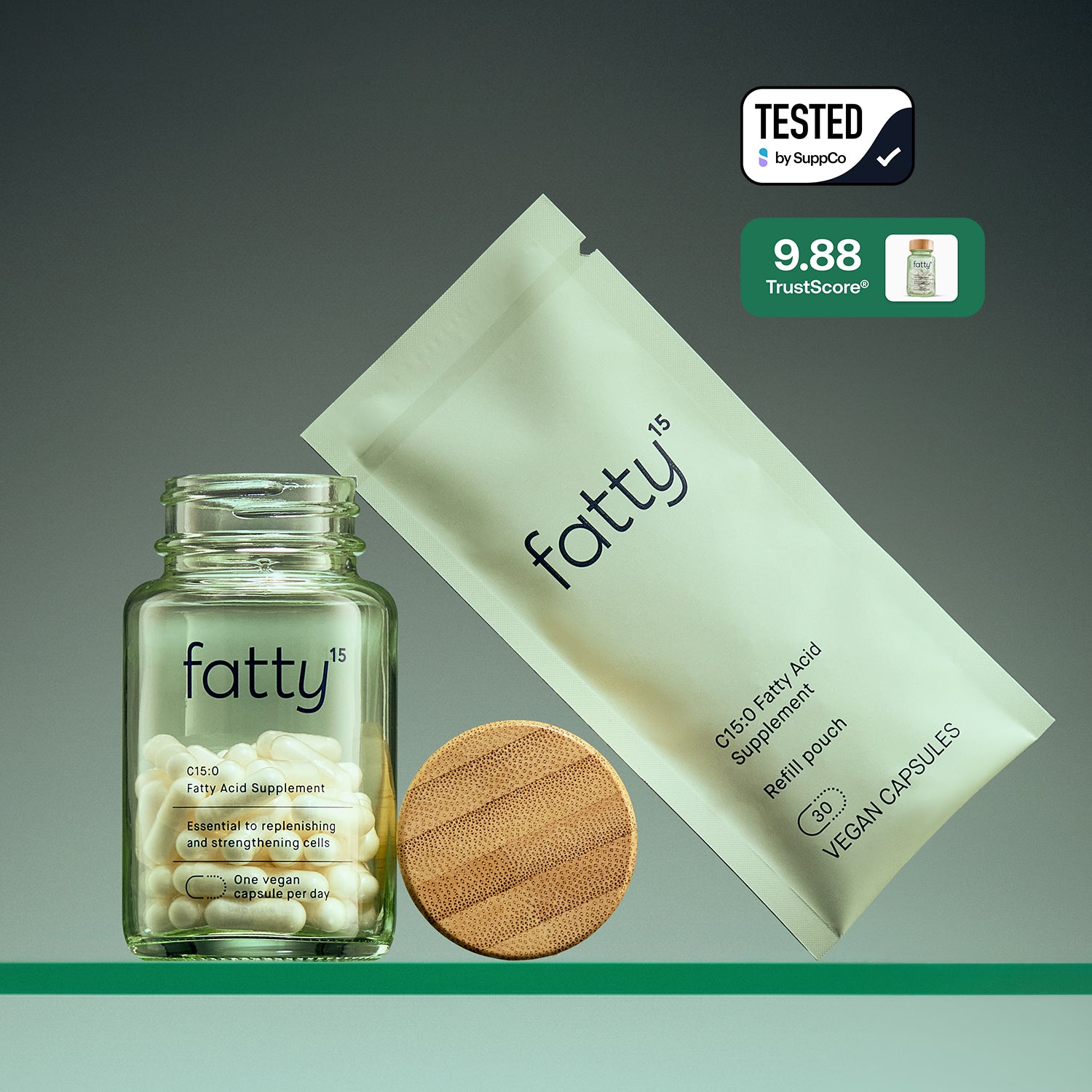
One supplement that has been shown to support a healthy glucose response by targeting key receptors, including AMPK, is fatty15. Fatty15 is a science-backed and award-winning pure C15:0 supplement that strengthens our cells, improves our long-term health, and can slow and even reverse aging at the cellular level.
What is C15:0? Let’s dive into what it is, how it works, and how you can use it to support healthy blood sugar levels as you age.
C15:0: The Longevity Nutrient
Discovered by a team of physicians and scientists working to improve the long-term health of US Navy dolphins, C15:0 is an odd-chain, saturated fatty acid that is the first essential fatty acid to be discovered in over 90 years. An essential nutrient is one that our bodies need to thrive but cannot readily make on their own. That means we have to get it from our diets or from a supplement.
C15:0 has been dubbed “the longevity nutrient” because of how it maintains metabolic health, supports red blood cell health, and bolsters long-term health.
Specifically, fatty15 has been shown to support our:
- Metabolic health
- Red blood cell health
- Cognitive health
- Liver health
- Immune health
Since the discovery of C15:0 as an essential fatty acid in 2020, there are now over 100 peer-reviewed studies from researchers from around the world supporting the health benefits of C15:0.
How C15:0 Works
C15:0 works by integrating into the very foundations of our body, our cells. Once inside, C15:0 bolsters aging cells by:
-
Strengthening cellular membranes by up to 80%.
- Clearing away damaged cells that could lead to chronic inflammation in the body.
- Activating AMPK, which regulates glucose uptake and helps us better balance our blood sugar levels.
- Improves mitochondrial function. In one peer-reviewed study, C15:0 increased ATP production by up to 350%.
In addition, research shows that C15:0:
- Activates PPARɑ and PPARẟ receptors. By activating these receptors, C15:0 has been shown in peer-reviewed studies to support metabolic, immune, heart, and liver health in relevant models. These receptors also help to improve mood and deepen sleep.
- Lowers bad LDL cholesterol
- Improves liver enzymes
- Improves the gut microbiome
So, how do we get more C15:0 in our diets, you ask?
How To Get More C15:0
Adding C15:0 to your health stack is a smart move for people who want to support their long-term health and healthy blood sugar levels.
Unfortunately, dietary sources of C15:0 have a few limitations:
C15:0 is only found in trace amounts in whole-fat dairy products like full-fat milk and butter, as well as in the skin and heads of some types of fish. While we don’t generally eat the skins and heads of fish, we can increase our intake of full-fat dairy.
However, drinking high amounts of whole-fat milk or increasing our butter intake may not be the ideal solution for a few reasons:
- Whole dairy (like whole milk) contains excess calories and sugar from lactose, which can lead to weight gain.
- While C15:0 is found in whole milk, it’s only in trace amounts. There’s a lot of “bad,” pro-inflammatory, even-chain saturated fat in whole milk.
- The absorption of C15:0 can be less efficient because your body has to break down the C15:0 from the branches of triglycerides before it can be used.
- It involves cows. Sorry, vegans — plant-based milks are completely void of C15:0.
A solution? Fatty15. Fatty15 contains a pure C15:0 ingredient that is already in its most bioavailable free fatty acid form, so it is easily absorbed. Additionally, fatty15 doesn’t contain any sugar, any of the ‘bad’ fats, has just one calorie per dose, and involves no cows. It’s an easy solution for restoring your C15:0 levels.
A1C Levels Your Doctor Loves
You can take action to improve your A1C levels, and fatty15 is a powerful tool in your arsenal. Fatty15 can armor up your cells, resulting in a healthier you, for longer.
FAQs
What is a normal A1C by age?
Observed A1C ranges in the general population do drift slightly upward with age. For adults 20 to 39, the typical observed range is 4.0 to 6.0%. For 40 to 59, it is 4.1 to 6.2%. For 60 to 64, it is 4.4 to 6.6%. Read those as population observations rather than personal targets, because the diagnostic cutoffs do not move with age: 5.7% marks the start of prediabetes and 6.5% indicates diabetes at 30 and at 60 alike. The looser numbers you may have seen for adults 65 and older are something different. They are treatment targets for people already managing diagnosed diabetes, set higher on purpose because very tight blood sugar control carries its own risks later in life. Within that group, the American Diabetes Association suggests staying below 7.5%, the American Geriatrics Society suggests 7.5 to 8.0%, and the International Diabetes Federation recommends 7.0 to 7.5% for people over 70. Your own target belongs in a conversation with your healthcare provider.
What is an A1C test and what does it measure?
An A1C test, also called HbA1c or glycated hemoglobin, measures your average blood glucose over roughly the previous three months. It works by measuring how much of the hemoglobin on your red blood cells has become coated in glucose. Because red blood cells live about three months, the result reflects a long stretch of time rather than a single morning. That is why you cannot game it by eating carefully for a few days beforehand, and it is also why A1C by age context matters when you read your number.
What A1C level indicates prediabetes or diabetes?
Below 5.7% is considered normal, and many providers aim for 5.6% or lower. Between 5.7 and 6.4% is prediabetes. At 6.5% or above, the result points to diabetes. These cutoffs apply at every age. A level below 5% can suggest hypoglycemia and is worth discussing with your doctor. Untreated type 2 diabetes carries real risk, including cardiovascular disease, vision loss, and nerve damage, which is why catching it while you are still in the prediabetic range matters so much.
Why does A1C rise with age?
Average blood glucose tends to creep upward over the years, so a modest rise is expected. The key word is modest. A meaningful jump is not a normal consequence of aging and should be looked at, even if it still falls inside the observed range for your age group. A 2019 population study is part of why age-dependent reference ranges exist at all. Tracking your A1C by age over time tells you more than any single reading, because the direction of travel is usually the more useful signal.
How can I lower my A1C levels naturally?
Aim for 30 or more minutes of daily movement, resistance training a couple of times a week, a balanced diet at an appropriate calorie level, real stress reduction, and seven to nine hours of sleep. If you have been prescribed medication, take it as directed alongside those changes rather than instead of them. For scale, roughly 98 million American adults are prediabetic and about 8 in 10 do not know it, so a large share of the benefit here comes from simply testing and paying attention.
Does eating sugar cause high A1C?
Not on its own, and this is one of the more persistent myths. The main path to type 2 diabetes runs through an overall calorie surplus, weight gain, and the insulin resistance that follows, rather than sugar in isolation. Insulin resistance means your cells stop responding well to insulin, so glucose stays in the bloodstream instead of being taken up and used. Sugar can contribute by making a calorie surplus easier to reach, but cutting it while everything else stays the same rarely changes your A1C much.
How often should I get my A1C tested?
Once a year at a routine checkup is standard for most adults. If you are prediabetic or diabetic, your provider will likely want it more often, and people with diabetes may also track daily blood sugar at home. Regular testing is what turns A1C by age from a statistic into something useful, because it lets you catch an upward trend while lifestyle changes still have the most leverage.
Can supplements help support healthy A1C levels as you age?
Some can support the underlying metabolic machinery, though none of them replace medication or medical care. C15:0 is one worth knowing about. It activates AMPK, a cellular energy sensor involved in glucose uptake, which is why it has been studied for its role in supporting a healthy glucose response. fatty15 delivers pure C15:0 in a daily capsule. Treat it as cellular support alongside diet and exercise rather than as a treatment for elevated blood sugar.
What is C15:0 and how does it relate to blood sugar and A1C?
C15:0, or pentadecanoic acid, is an essential fatty acid first identified through US Navy dolphin research. Once absorbed, it integrates into your cell membranes and activates AMPK along with the PPARα and PPARδ receptors involved in metabolic regulation. It also activates AKT, which has been shown to support insulin sensitivity and cellular signaling, helping cells respond more effectively to insulin. Alongside that, it has been shown to strengthen membranes and improve mitochondrial ATP output. When circulating C15:0 drops too low, the resulting cellular fragility syndrome has been linked to greater metabolic disease risk.
What should I do if my A1C is above normal for my age?
Bring the result to your healthcare provider and look at it against the age-specific guidance from the ADA, AGS, or IDF rather than a single generic cutoff. For prediabetes, lifestyle change is the first-line response and it works, often well. If you want to add cellular support to that plan, fatty15 can sit alongside it. It is not a diabetes treatment and should never replace prescribed care, so keep any supplement decision inside the same conversation as the rest of your plan.
*These statements have not been evaluated by the Food and Drug Administration. This product is not intended to diagnose, treat, cure, or prevent any disease.
Sources:
A1C chart: Test, levels, and more for diabetes | Medical News Today.com
Type 2 Diabetes: What It Is, Causes, Symptoms & Treatment | My Cleveland Clinic.org
Hypoglycemia (Low Blood Sugar) | Johns Hopkins Medicine
MANAGING OLDER PEOPLE WITH TYPE 2 DIABETES | International Diabetes Federation.org
Prediabetes: Could It Be You? Infographic | Diabetes | CDC
Can Eating Too Much Sugar Cause Diabetes? | University Hospitals


