


What Do Experts Actually Say About Healthy Aging Supplements?

Seraphina Therapeutics's Highlights
- Experts increasingly focus on healthspan, staying strong, resilient, and independent longer, rather than lifespan alone.
- Research supports the use of targeted nutrients such as vitamin D, B vitamins, creatine, and C15:0 to support healthy aging pathways.*
- Healthy aging starts at the cellular level, where mitochondrial health, stress management, muscle preservation, and nutrient status all play important roles.
- Healthy aging has become one of the biggest conversations in modern wellness. But despite the explosion of longevity products, biohacking trends, and anti-aging claims, most experts agree that healthy aging is about much more than simply living longer.
- Today, researchers increasingly focus on extending healthspan, or the years people remain active, independent, resilient, and free from major chronic disease, rather than just increasing lifespan alone.
- At the center of this conversation is the growing understanding that aging begins at the cellular level, long before visible signs appear.
What Is Aging and How Does It Affect Longevity?
Biologically, aging is the gradual decline in cellular and physiological function over time, resulting in increased vulnerability to disease, dysfunction, and death. Researchers have identified 12 biological pathways that drive aging, which they call the 12 hallmarks of aging . Targeting these pathways has become central to new and expanding longevity research.
Longevity experts are interested in more than just living longer. The ultimate goal is preserving function and vitality throughout those additional years.
This distinction is why researchers differentiate between lifespan and healthspan. Lifespan refers to the total number of years a person lives. Healthspan refers to the number of years spent in relatively good health, with preserved mobility, cognition, energy, and independence.
Experts now believe healthy aging depends on a combination of factors, including genetics, nutrition, sleep quality, movement, stress regulation, environment, and social connection. While genetics influences longevity to some degree, lifestyle factors play a major role in determining how well people age biologically.
Researchers also recognize that cellular resilience, or the ability of cells to repair damage and maintain healthy function over time, is a major driver of long-term health outcomes.
Cellular Effects of Aging
Aging doesn’t happen all at once. It develops gradually through the accumulation of molecular and cellular damage. This process is often referred to as cellular aging or cellular decline.
As cells age, they become less efficient at producing energy, repairing damage, maintaining membrane stability, and regulating inflammation. Over time, these changes can affect nearly every organ system in the body.
Researchers studying the biology of aging commonly focus on several interconnected mechanisms, including mitochondrial dysfunction, oxidative stress, cellular senescence, impaired regeneration, and telomere shortening.
Mitochondria, often described as the energy centers of cells, appear particularly important in healthy aging. As mitochondrial function declines, energy production becomes less efficient, and damaging reactive oxygen species may increase.
Cell membranes also become more fragile with age, which may contribute to impaired signaling and greater vulnerability to oxidative stress.
Some of the more common biomarkers researchers use to evaluate biological aging include:
-
Mitochondrial health markers
-
Inflammatory markers
-
Telomere length
-
Glucose regulation
-
Muscle mass and mobility measurements
-
Cognitive performance metrics
Because aging unfolds gradually at the cellular level, many experts believe supporting cellular health early may help improve long-term resilience later in life.
When Does the Body Begin To Show Signs of Aging?
Many people assume aging begins much later in life, but measurable biological changes often start far earlier than expected. Research suggests that some biomarkers associated with aging begin to shift in the 30s, while more noticeable functional changes commonly emerge in the 40s and 50s.
One of the earliest changes many adults experience is a gradual loss of lean muscle mass. Experts consider muscle preservation one of the strongest predictors of healthy aging because mobility and strength are closely tied to long-term independence and resilience.
Other early changes may include:
-
Slower metabolism
-
Reduced recovery capacity
-
Lower energy levels
-
Poorer sleep quality
-
Mild cognitive changes
-
Reduced skin elasticity
These shifts often develop slowly, making them easy to overlook until they become more pronounced. Stress exposure, poor nutrition, inadequate sleep, and physical inactivity may accelerate these age-related changes by increasing inflammation and oxidative stress at the cellular level.
What Longevity Research Says About Healthy Aging
Some of the most influential research on healthy aging comes from the study of Blue Zones , regions of the world with unusually high concentrations of people living into their 90s and beyond. These regions include Sardinia, Okinawa, Nicoya, Ikaria, and Loma Linda.
Researchers studying Blue Zones consistently identify similar lifestyle patterns among long-lived populations. While diets vary somewhat between regions, the shared themes are remarkably consistent: regular physical activity, strong social relationships, stress reduction, nutrient-dense foods, and a strong sense of purpose.
Importantly, healthy aging in Blue Zones does not appear driven by extreme biohacking or highly restrictive routines. Instead, longevity-supportive behaviors are integrated naturally into daily life.
These findings reinforce the idea that healthy aging is influenced not just by individual nutrients or supplements but by overall cellular and metabolic resilience built over decades.
In Blue Zones like Sardinia, Italy, residents consume cheese made from the milk of local, mountain-dwelling goats, which is naturally high in C15:0.
This explains why their C15:0 levels are typically three times those of the rest of the world's population. In Sardinia, residents typically have circulating C15:0 levels of about 0.68% of their total fatty acid content. Most people outside these Blue Zones have C15:0 levels under 0.2%.
Which Healthy Aging Supplements Have the Strongest Evidence?
Although many supplements are marketed for longevity, experts generally recommend focusing first on nutrients with strong evidence supporting specific age-related needs or deficiencies. Research suggests roughly 75% of Americans take supplements routinely, yet experts caution that supplementation should ideally be personalized rather than trend-driven.
One important principle repeated by many clinicians is that more supplementation is not always better. Excessive or unnecessary supplementation may create unintended stress on the body, particularly for the liver and kidneys. Instead, many experts recommend screening for deficiencies and targeting nutrients with meaningful clinical support.
Some of the most commonly recommended supplements include:
-
Vitamin D. Vitamin D remains one of the most evidence-backed supplements for healthy aging, particularly for maintaining muscle function and bone health in older adults.
-
B vitamins. B vitamins, especially B6, B12, and folate, are also widely studied for their potential to support cognitive function and neurological health, particularly before significant impairment develops.
-
Creatine. Creatine has emerged as another highly researched supplement for preserving lean muscle mass, strength, and mobility during aging. Many experts now view muscle preservation as one of the most important pillars of healthy aging because declines in strength strongly predict reduced healthspan later in life.
-
Magnesium. Magnesium is frequently discussed for its possible role in sleep quality and nervous system regulation.
It’s important to remember that vitamin D, B vitamins, and magnesium supplements aren’t necessary to take unless you aren’t getting enough of them from your diet. As with any supplement, excess amounts can actually do more harm than good.
There is, however, one supplement that an increasing body of scientific evidence has established as essential and the potential key to sustaining our longevity and healthspan. Research has also shown that most of us (as many as 1 in 3 people globally) are deficient in it.
C15:0: The Longevity Nutrient
C15:0 was identified in healthy aging studies involving Navy dolphins , in which researchers observed that dolphins with higher circulating C15:0 levels showed healthier metabolic aging markers over time. Ten years and over 150 peer-reviewed publications later, C15:0 is now recognized as the first newly identified essential fatty acid in more than 90 years.
Research suggests C15:0 may support:
-
Healthy inflammatory responses*
-
Cardiovascular and cognitive health markers*
Further, research confirmed that low levels of C15:0 can lead to fragile cells that are susceptible to ferroptosis , a type of cellular death that accelerates aging and is directly linked to the development of chronic heart, liver, and metabolic conditions. The good news is that “fixing” Cellular Fragility Syndrome is as simple as increasing your C15:0 levels.
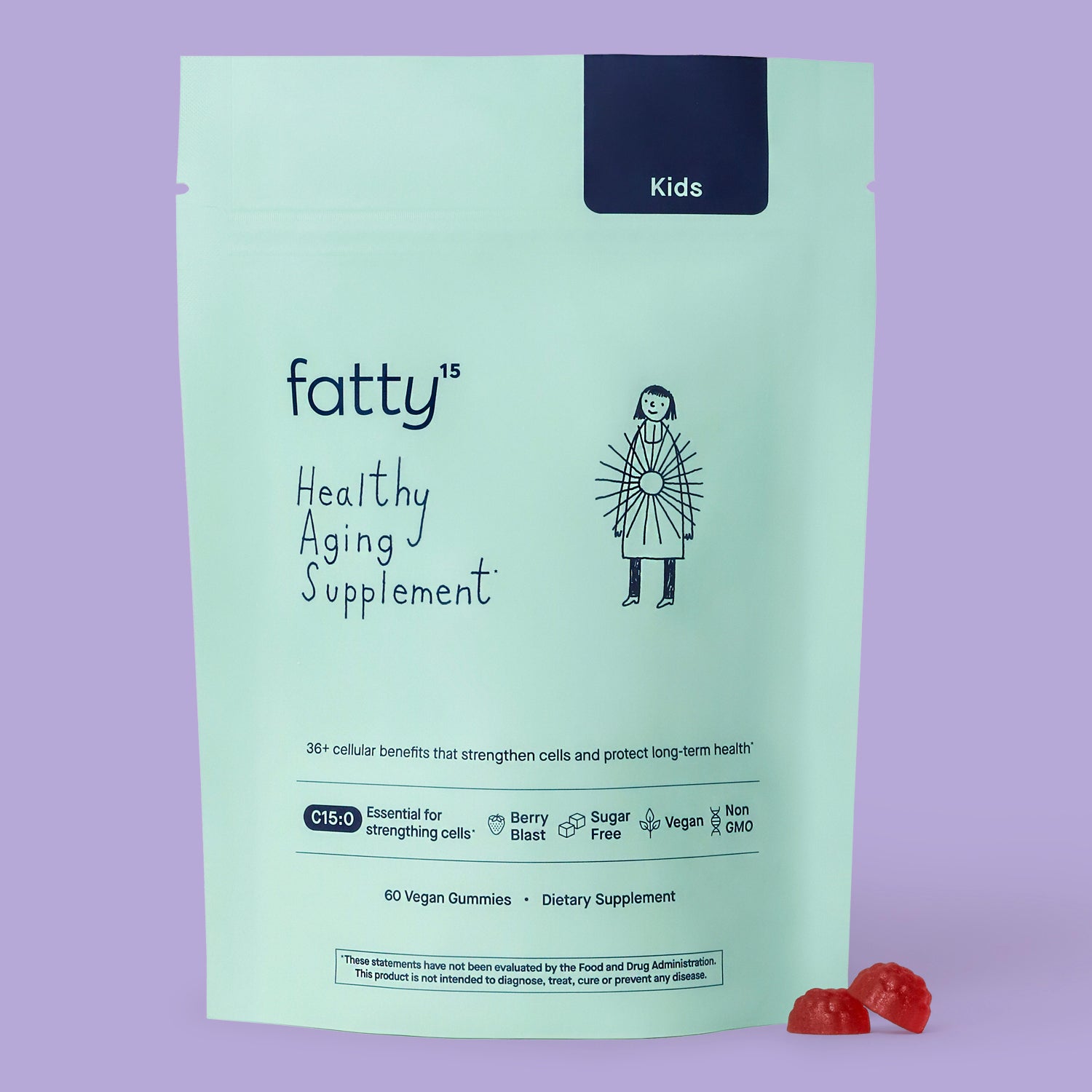
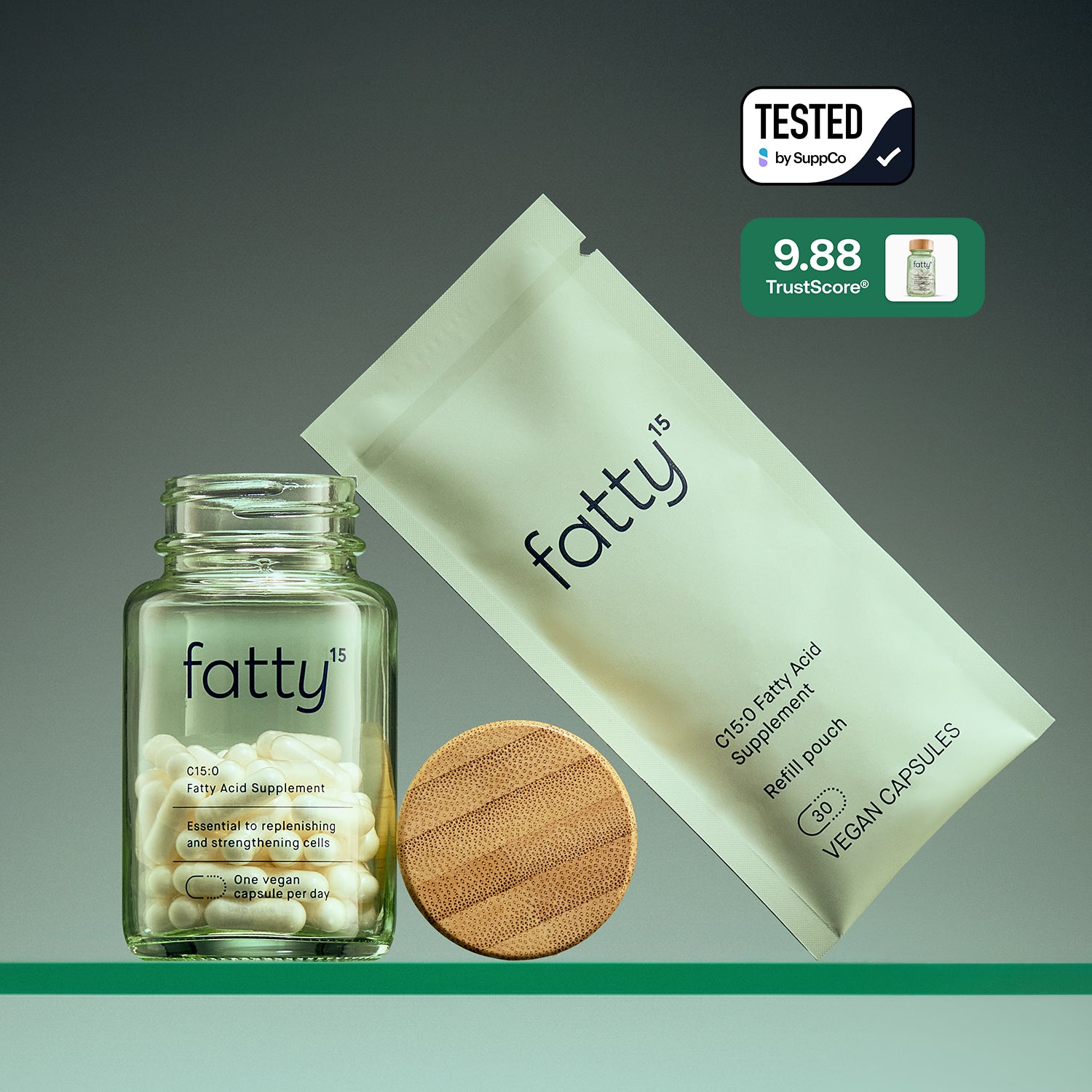
The best way to do it? With Fatty15’s C15:0 supplement .
Getting C15:0 from food is tricky. It’s found only in trace amounts in full-fat dairy products like whole milk and full-fat butter.
Those foods contain excess calories and bad, pro-inflammatory saturated fats that could make consuming them detrimental to your health. Fatty15’s C15:0 supplement was developed specifically to provide pure, bioavailable C15:0 in a ready-to-absorb free fatty acid form. It contains just one calorie and no other fats, making it the best solution for increasing your C15:0 levels.
|
*These statements have not been evaluated by the Food and Drug Administration. This product is not intended to diagnose, treat, cure, or prevent any disease. |
Frequently Asked Questions About Healthy Aging Supplements
Which supplements work best for healthy aging?
Experts generally prioritize targeted supplements with strong clinical evidence, including vitamin D for bone and muscle health, B vitamins for cognition, creatine for muscle preservation, and emerging nutrients like C15:0 for cellular health support.*
What supplements should older adults use cautiously?
Older adults should be cautious with unnecessary high-dose supplementation, especially fat-soluble vitamins and large multi-supplement stacks, because excessive intake may increase side effects or interact with medications.
Do I need supplements if I eat a balanced diet?
A well-rounded diet remains the foundation of healthy aging. However, modern dietary patterns may still leave some people low in key nutrients, including vitamin D, magnesium, B vitamins, and emerging essential fatty acids like C15:0.
Sources:
Hallmarks of aging: An expanding universe | PubMed
Humans Age Faster at 2 Sharp Peaks, Research Shows


