


Prenatal Nutrition News for 2026: 10 Things To Know

Seraphina Therapeutics's Highlights
- Prenatal nutrition in 2026 is shifting toward cellular health and nutrient bioavailability, not just basic supplementation.
- Emerging research is focusing on how maternal nutrition supports long-term health outcomes for children.
- C15:0 (pentadecanoic acid) is gaining attention as an essential fatty acid associated with cellular strength, longevity, and maternal-child health.*
- Prenatal nutrition has evolved beyond folic acid and iron. In 2026, we’re seeing a more advanced, science-driven approach that focuses on preventing deficiencies and optimizing health at the cellular level for both mom and baby.
- We now understand that the nutrients a mother consumes during pregnancy (and while breastfeeding) support lifelong health outcomes, from metabolic function to immune resilience. As research continues to unfold, several key trends are shaping how we think about prenatal nutrition today.
1. The Shift Toward Cellular Health
One of the biggest changes in prenatal nutrition is a move toward supporting cellular health as a foundation of wellness. Researchers are looking at how nutrients influence cell membrane stability, mitochondrial function, and cellular signaling pathways.
Every system in the body depends on the health of individual cells. During pregnancy, this is important because cellular processes are responsible for building new tissue and supporting the healthy growth of the baby.
This shift reflects a deeper understanding that healthy cells create healthy systems, including those involved with fetal development. Emerging nutrients, like C15:0, are being studied for their broad cellular benefits. By focusing on cellular health, we move to a foundational type of nutrition that supports healthy development and promotes long-term health during every life stage.
2. Bioavailability Matters More Than Ever
How well nutrients are absorbed and used by the body is just as important as identifying the nutrients we need. Many traditional prenatal supplements rely on forms that require multiple conversion steps before the body can use them. Newer approaches prioritize forms that are ready to be absorbed and offer lower, more efficient dosing.
3. Maternal Nutrition Shapes Long-Term Outcomes
One of the most exciting developments in prenatal research is the growing evidence that maternal nutrition plays a role in a child’s long-term health trajectory. Studies are exploring links between material nutrient status and metabolic health , immune system development, and cognitive health in children.
This concept, known as developmental programming, reinforces the importance of supporting the body at a foundational level during pregnancy and breastfeeding.
No single nutrient determines outcomes. However, getting the nutrients a baby needs supports overall balance and cellular function during pregnancy. It’s one of the reasons prenatal nutrition is viewed as an investment in long-term health and not just a temporary necessity during pregnancy.
4. Healthy Fats Are Back in Focus
For years, fat was misunderstood in nutrition conversations. Today, we know that certain fats are essential, and this is especially true during pregnancy.
These fats help promote cell membrane integrity, brain development, and hormonal balance. While omega-3 fatty acids have long been part of prenatal recommendations, emerging research is expanding the conversation to include odd-chain fatty acids like C15:0 , which are being studied for their role in supporting healthy growth and development.
5. The Microbiome-Pregnancy Connection
Another major trend in 2026 is the growing awareness of the maternal microbiome and its influence on both pregnancy and infant health. A balanced microbiome may help support nutrient absorption, immune system function, and a healthy inflammatory response.
Nutrition plays a central role here with certain nutrients helping to create an environment that supports microbial balance. This system-based approach aligns with the broader shift toward cellular and metabolic health.
6. Supporting a Healthy Inflammatory Response
Inflammation is a natural part of the body’s defense system, but maintaining a balanced inflammatory response is key during pregnancy. Emerging research is focusing on nutrients that help support this balance at the cellular level.
C15:0, for example, has been studied in preclinical models for its ability to support a healthy inflammatory response , which highlights its role in maintaining overall wellness during pregnancy.* Rather than suppressing inflammation, the goal is to support the body’s ability to respond appropriately and then return to balance.
7. Metabolic Health During Pregnancy
Metabolic health is receiving increased attention in prenatal care, particularly in relation to maintaining balanced blood sugar and energy levels. Nutrition strategies in 2026 emphasize a stable glucose response and efficient energy production that helps support metabolic pathways.
Certain nutrients are being studied for their role in supporting these systems, including C15:0 , which has been shown to promote metabolic health during pregnancy. This is part of a broader effort to ensure that both mother and baby have access to the nutrients they need to function optimally.
8. Liver Health and Detox Pathways
The liver plays a central role in processing nutrients and supporting overall health during pregnancy. Recent research is exploring how nutrition supports liver function at the cellular level.
C15:0 has demonstrated a positive relationship with liver health function and is being further studied for its role in supporting liver health. This reinforces the idea that prenatal nutrition is about supporting systems.
9. Cognitive and Neurological Development
Brain development begins early, and maternal nutrition plays a key role in supporting this process. In 2026, researchers are looking beyond traditional nutrients to better understand how different compounds interact with cellular receptors involved in cognitive health.
C15:0 is being studied for its receptor-level activity to support cognitive health and neurological function . While research is still ongoing, this area highlights the importance of choosing nutrients that support multiple layers of development, not just structural growth.
10. The Rise of Essential Fatty Acids Like C15:0
Perhaps one of the most exciting developments in prenatal nutrition is the growing recognition of C15:0 as an essential fatty acid that has broad health benefits. Higher circulating levels of C15:0 have been associated with markers of better overall health and longevity and its role in supporting cellular health , metabolic function, immune balance, and red blood cell health.*
This combination of bioavailability and broad cellular activity is why it’s gaining attention in prenatal nutrition conversations.
Supporting Pregnancy and Breastfeeding
Pregnancy and breastfeeding are times when nutrient demands increase, and the body becomes the primary source of nutrition for a developing child. During this time, nutrients are transferred from mother to baby, supporting cellular formation and growth and development.
C15:0 is part of this discussion because of its role in supporting cellular stability and its presence in circulation. Research is exploring how maintaining healthy levels of this essential fatty acid may help support both maternal health and developing systems in children.*
Supporting Moms and the Next Generation
As prenatal nutrition continues to evolve, it’s clear that supporting the mother at the cellular level supports the developing child as well. During pregnancy and breastfeeding, nutrients are passed from mother to baby, helping to support growth, development, and overall health.
Ongoing research is now exploring how maternal levels of essential fatty acids may help support developing systems in children. For mothers, it’s important to choose nutrients that are well-absorbed and efficiently utilized. This combination can help create a strong foundation for both their own health and their child’s future.
Getting Enough C15:0
C15:0 is tricky. It’s found primarily in full-fat dairy products, like whole milk and full-fat butter. Unfortunately, increasing our intake of these foods, during pregnancy or not, may not be the best way to get the C15:0 you need.
In addition, these foods come along with certain downsides.
-
High amounts of “bad” even-chain saturated fat are consistently associated with poor health outcomes. This is probably why there’s such a debate about whole dairy. For decades, it’s been demonized, but many people find it healthful.
-
Increasing whole-fat dairy leads to excess calories and sugar from lactose. It’s no secret that whole-fat dairy packs a large amount of calories. For pregnant women who may only need to consume an additional 300 calories per day , this could represent the entirety of those calories without providing enough nutrition for a growing baby.
-
Animal engagement (because whole-fat dairy comes from, well, cows). For vegans or anyone trying to reduce their carbon footprint, using animal products is a no-go.
Finally, getting C15:0 from whole-fat dairy is less efficient because the C15:0 found in whole-fat dairy is attached to branches of triglycerides, which must be broken down by the gut before being usable by the body.
A solution? Fatty15 .
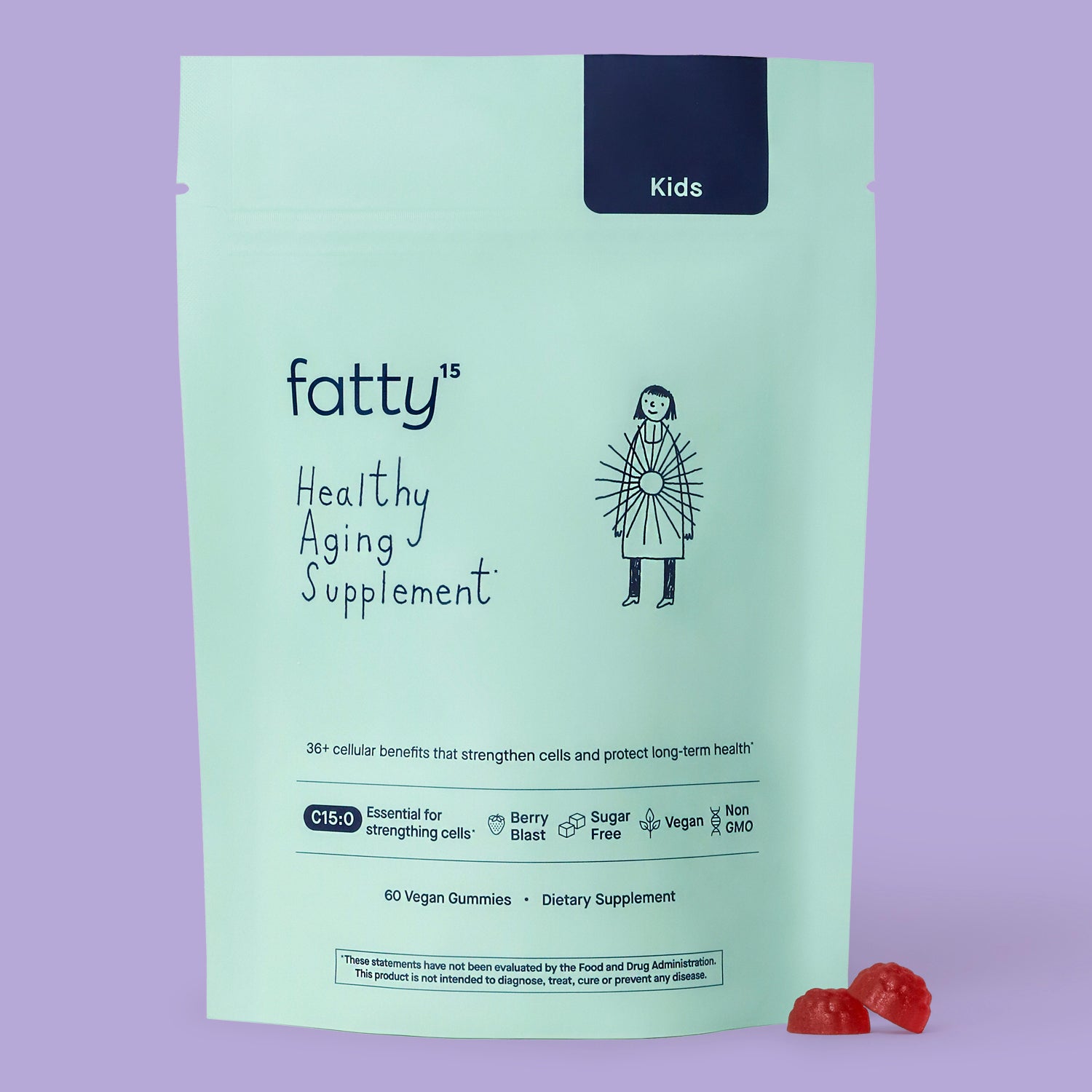
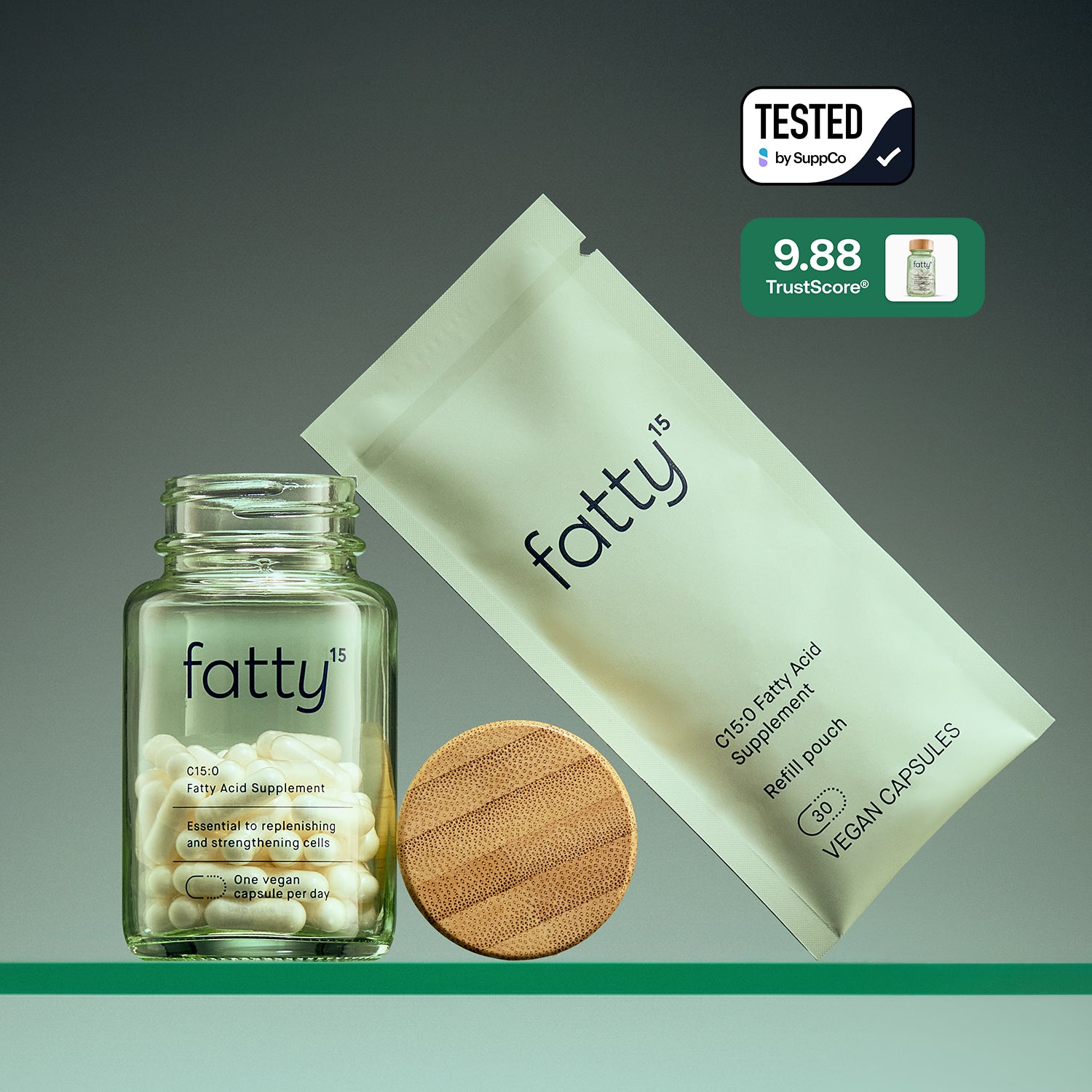
Fatty15 is the first and only supplement that contains the pure, vegan-friendly version of C15:0. It gives you all the C15:0 you need, and nothing you don’t. Best of all, it’s already in free fatty acid form and readily absorbed.
How Much Do You Need?
Most people today have C15:0 levels around 0.2% of total fatty acids. While studies support that people need to maintain circulating C15:0 levels between 0.2% and 0.4% to protect against Cellular Fragility Syndrome, there is evidence that higher C15:0 levels can further support longevity and long-term heart health.
A prospective cohort study that followed more than 4,000 people over 16 years showed that those with C15:0 levels between 0.40% to 0.55% had the lowest risk of developing heart disease .*
If you aren’t sure where your levels are, that’s okay. You can have your healthcare provider draw labs, or you can order an at-home test kit by clicking here.
A Foundation for the Next Generation
What we’re seeing in 2026 is a shift toward foundational, systems-based nutrition. Instead of focusing on isolated outcomes, we’re asking more intricate questions. We’re focusing on how we can support both the mom and baby and create resilience at the cellular level. Finally, we’re focusing on how prenatal health can help the next generation get the strongest possible start.
Prenatal nutrition is now thought of as a foundational system that supports long-term health in children. We support delivering pure, C15:0 that helps fill the nutritional gap many people have with this essential nutrient. As nutritional science continues to evolve, we remain committed to helping families support their health, starting with the cell.
FAQs
What is the nutrition trend in 2026?
Nutrition trends in 2026 are heavily focused on fiber-forward eating ("fibermaxxing"), sustained high-protein demand, and gut health optimization.
What is prenatal nutrition?
Prenatal nutrition is the essential intake of healthy foods, vitamins, and minerals—particularly folic acid, iron, calcium, choline, and omega-3s—before and during pregnancy.
What is the theme for Nutrition Day 2026?
The theme for National Nutrition Month ® 2026 is "Discover the Power of Nutrition."
Sources:


