


C15:0 & Children’s Health

Seraphina Therapeutics's Highlights
- Mounting studies support that C15:0 is a foundational nutrient that promotes our long-term health, including children’s health
- This article covers the science supporting how C15:0 promotes children’s health and how this translates into long-term health for life
- Restoring and maintaining healthy C15:0 levels in kids is part of our global movement to support Healthy Aging for All
More and more studies support that C15:0 is a foundational nutrient that promotes our long-term health, including children’s health. This is important because kids’ primary dietary source of C15:0 is full-fat dairy, which has been declining in our diets since the 1970s.
In this article, we cover the science supporting how C15:0 promotes children’s health, how this translates into long-term health for life, and how to help kids maintain healthy C15:0 levels. Which is all part of our global movement to support Healthy Aging for All.
But First, What Is C15:0?
Good question. C15:0 (also called pentadecanoic acid) is a dietary odd-chain saturated fatty acid. Multiple independent teams have published peer-reviewed papers supporting C15:0 as an emerging essential fatty acid - which would be the first to be discovered in over 90 years (since the omegas). In turn, an essential fatty acid is a nutrient needed in the diet to maintain physiological health.
Studies On C15:0 And Children’s Health
There are mounting studies supporting C15:0’s role in promoting children’s health. This includes support for healthy body growth, cognitive development, blood pressure, and skeletal muscle mass, as well as liver health in children. Let’s take a closer look, starting with the earliest stages of life.
Healthy body growth. Prospective cohort studies that followed mother-infant pairs have shown that babies who received more C15:0 from their mother during their first year had associated healthier body growth. Beyond association, studies with neonatal mouse and piglet models showed that C15:0 supplementation directly improved body growth. This healthy growth benefit of C15:0 has been attributed to its role as a PPARɑ agonist, as well as supporting healthy mitochondrial function.
Healthy cognitive development. Similarly, a prospective cohort study in France followed mother-infant pairs and showed that children who received more C15:0 from their mother during their first year were associated with better cognitive development as children (ages 3 and 6 years old). These findings align with a study showing that C15:0 alone, in the absence of all other nutrients, restored healthy neuronal development in postembryonic C. elegans, a relevant nematode model. This neuronal development benefit of C15:0 was attributed to its role as an mTOR inhibitor.
Liver health. A cross-sectional study with 237 children (ages 8 to 17) showed that higher circulating C15:0 levels independently predicted lower fat in the liver. Lower liver fat was also correlated with higher dairy fat intake. In this study, the median dairy fat intake was 10.6 grams (range 0 to 44.5 grams) per day, which translates to approximately 106 mg of C15:0 (range 0 to 445 grams) per day. Beyond association, pure C15:0 supplementation has demonstrated direct, positive effect on liver function in multiple preclinical models. And in a randomized, controlled clinical trial in young adults with obesity, C15:0 supplementation raised C15:0 levels; those who achieved C15:0 levels > 5 ug/ml had improved liver function. The positive effect of C15:0 on supporting liver health, including children, has been attributed to its role as a PPARɑ/δ agonist, antioxidant, and immune balancer.
Healthy skeletal muscle mass. In another study, fatty acid patterns of 452 children aged 6 through 9 years old were evaluated for associations with skeletal muscle mass. In this study among Asian children, participants had circulating C15:0 levels of 0.1% (approximate range of 0.06% to 0.25% of total fatty acids). Kids who had higher C15:0 levels (as well as higher C14:0, C16:0 and C16:01 n-7) were associated with higher skeletal muscle mass. While more studies are needed on this front, C15:0’s demonstrated direct role in supporting mitochondrial function in preclinical models could explain how C15:0 could promote healthy muscle development in children.
Healthy blood pressure. A cross-sectional study with 421 children showed that higher levels of odd-chain saturated fatty acids (including C15:0 and C17:0) were associated with a 55 to 59% greater likelihood of having healthy blood pressure. This study is aligned with similar associations found between higher C15:0 and healthier blood pressure in adults. Further, multiple prospective cohort meta-analyses have repeatedly shown associated dose-response improvements in protected long-term cardiovascular health in adults. Beyond association, C15:0 directly lowers multiple pro-inflammatory cytokines in human cell systems mimicking cardiovascular health. Further, a randomized clinical trial showed that C15:0 supplementation supported healthy LDL-cholesterol levels. Another cross-over clinical trial with healthy adults showed that increased dairy fat intake raised C15:0 levels, and these raised C15:0 levels were associated with supported vascular function. Combined, these studies support that C15:0 protects long-term cardiovascular health, and these protective benefits may start during childhood.
In summary, the science behind C15:0’s broad beneficial activities as a foundational nutrient have been translating to whole-health benefits not only for adults, but for children, too. To learn more about how C15:0 is meeting the evidence-based criteria of a nutrient, click here.
What Are Children’s Dietary Sources Of C15:0?
Kids’ primary dietary source of C15:0 is full-fat dairy, where C15:0 represents about 1% of all fatty acids in dairy fat. Dairy fat is such an important source of C15:0 for humans, that nutritional studies have long used circulating C15:0 levels as a biomarker to measure how much dairy fat people eat. This holds true for youth, too - the more dairy fat children and adolescents eat, the higher their circulating C15:0 concentrations.
Clinical trials including children have shown that every 100 mg of pure C15:0 raises circulating C15:0 concentrations by an average of 10 µM (about 0.1% of total fatty acids). Population studies support that the average person has C15:0 levels around 20 µM (about 0.2% of total fatty acids), which is also emerging as a threshold for healthy, potentially non-deficient C15:0 levels. Let’s look at why these numbers are important.
The Impact of Reduced-Fat Dairy Products on Children’s C15:0 Levels
A double-blinded randomized controlled clinical trial with healthy 4 to 6 year-olds showed that children who ate reduced-fat versus whole-fat dairy products had significantly lower circulating C15:0 levels. Given an average decline of 12.9 g dairy fat intake per day in the reduced- vs. whole-fat dairy groups, this translates to children on the reduced-dairy fat diets getting 129 mg less C15:0 per day. This suggests that children on reduced-dairy fat diets may have circulating C15:0 levels of 0.13% - about half of what is emerging as healthy levels.
A Call to Action
Due to the 1977 Congressional recommendations to dramatically lower whole dairy fat intake for all Americans, we have undergone a 50-year experiment of decreasing our C15:0 intake - including infants, children, and adults. This half-century experiment helps to explain why prospective cohort studies have been so reliable - and why studies have repeatedly shown that 1) infants and children with lower C15:0 intake have been associated with poorer body growth and cognitive development, and 2) adults with lower C15:0 have been associated with poorer long-term cardiometabolic health.
The emerging hypothesis, now from multiple research teams backed by 100+ peer-reviewed studies, is that nutritional C15:0 deficiencies may be contributing to the rise in a new form of cell death, called ferroptosis, which can lead to poorer cardiometabolic and liver health, including among younger and younger people. More importantly, studies are supporting that getting C15:0 back into our lives can help protect healthy development during our earliest years, as well as long-term health throughout our adult years.
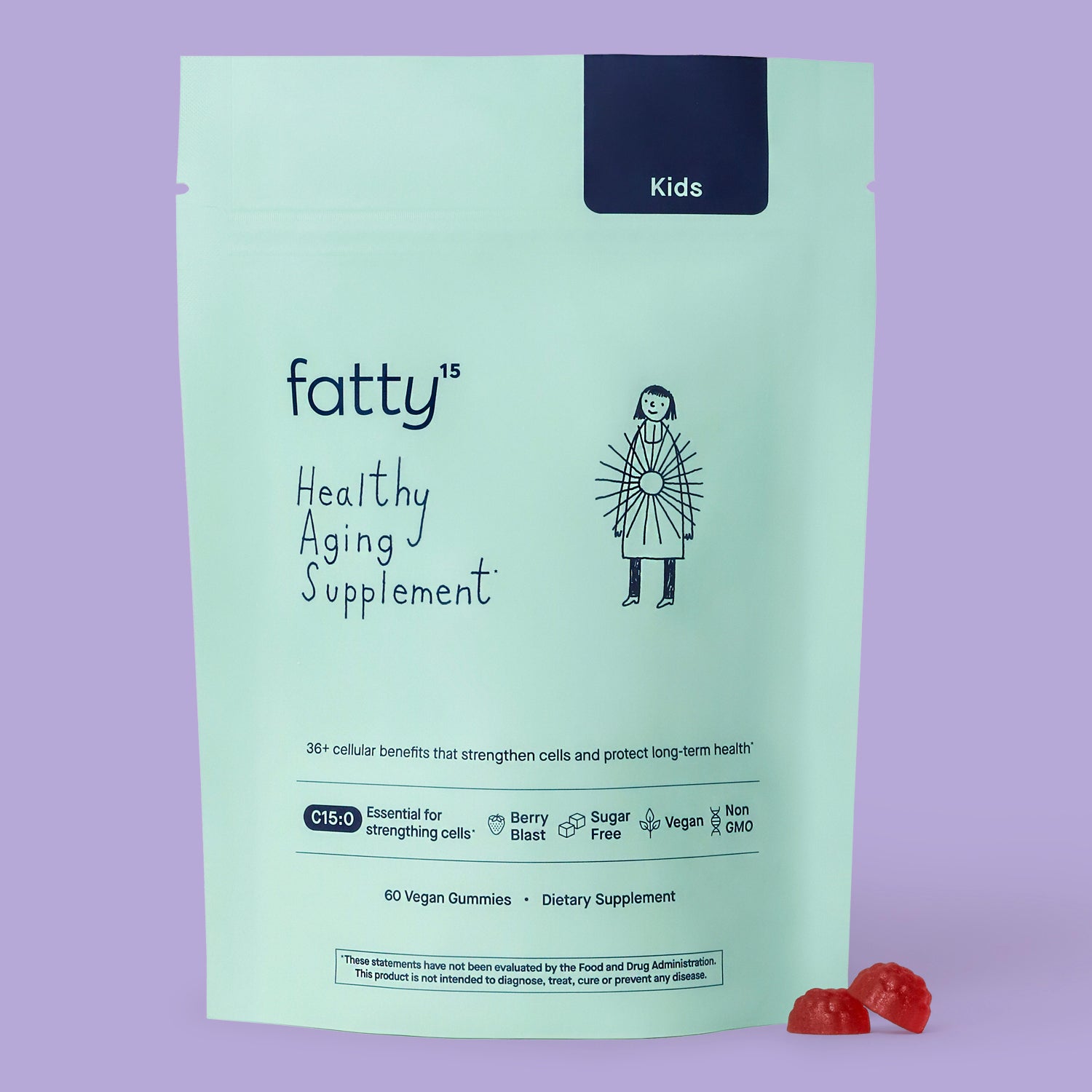
Importantly, the newly updated Dietary Guidelines for Americans (2026-2030) have brought full-fat dairy products back to the table, including children. The updated guidelines recommend 3 servings of full-fat dairy per day, which could meaningfully help restore children’s healthy C15:0 levels. Given the growing science behind C15:0 as a foundational nutrient, a combined approach of increasing children’s intake of high-quality full fat dairy with C15:0 supplementation, could help restore children’s long-term health, too.
Relevant Studies
Nerd out on all the C15:0 studies at DiscoverC15.com/resources.
Stewart et al. Fluid milk consumption continues downward trend, proving difficult to reverse. USDA (2022)
Venn-Watson, S., Lumpkin, R., Dennis, E.A. Efficacy of dietary odd-chain saturated fatty acid pentadecanoic acid parallels broad associated health benefits in humans: could it be essential? Sci Rep 10:8161 (2020)
Dornan, K. et al. Odd chain fatty acids and odd chain phenolic lipids (alkylresorcinols) are essential for diet. J Am Chem Soc 98:813-824 (2021)
Ciesielski, V. et al. New insights on pentadecanoic acid with special focus on its controversial essentiality: a mini-review. Biochimie 227:123-129 (2024)
George, A.D. et al. The fatty acid species and quantity consumed by the breastfed infant are important for growth and development. Nutrients 13:4183 (2021).
Duan et al. Odd-chain fatty acid-enriched fats improve growth and intestinal morphology and function in milk replacer-fed piglets. J Nutr 155: 1298-1310 (2025).
Ciesielski, V. et al. Dietary pentadecanoic acid supplementation at weaning in essential fatty acid-deficient rats shed light on the new family of odd-chain n-8 PUFAs. J Nutritional Biochemistry 137:109814 (2025)
Yuan, W.L. Associations between perinatal biomarkers of maternal dairy fat intake and child cognitive development: results from the EDEN mother-child cohort. Eur J Clin Nutrition 79:320-328 (2025).
Ruan, M. et al. Free long-chain fatty acids trigger early postembryonic development in starved Caenorhabditis elegans by suppressing mTORC1. PLOS Biol 22:e3002841 (2024).
Zhou et al. Erythrocyte fatty acid patterns are associated with skeletal muscle mass in Chinese children. J Nutr 155:736-744 (2025).
Sawh et al. Dairy fat intake, plasma pentadecanoic acid, and plasma iso-heptadecanoic acid are inversely associated with liver fat in children. J Pediatr Gastroenterol Nutr 72:e90-e96 (2021).
Aabis, M. et al. Pentadecanoic acid attenuates thioacetamide-induced liver fibrosis by modulating oxidative stress, inflammation, and ferroptosis pathways in rat. Nauyn Schmied Arch Pharmacol doi: 10.1007/s00210-025-04143-6 (2025).
Wei et al. Parabacteroides distasonis Uses Dietary Inulin to Suppress NASH via Its Metabolite Pentadecanoic Acid. Nature Microbiology 8, 1534–1548 (2023).
Robinson et al. C15:0 Supplementation in Young Adults at Risk for Metabolic Syndrome: A Randomized Controlled Trial. Journal of Clinical Nutrition 154, 2763-2771 (2024).
Huang et al. Associations of erythrocyte membrane fatty acids with blood pressure in children. Clin Nutr 46, 30-36 (2025).
Chen et al. Associations between serum pentadecanoic acid (C15:0) and heptadecanoic acid (C17:0) levels and hypertension: a cross-sectional analysis of NHANES data. Lipids Health Dis 24, 219 (2025)
Li et al. Saturated Fatty Acid Biomarkers and Risk of Cardiometabolic Diseases: A Meta-Analysis of Prospective Studies. Frontiers in Nutrition 9, 963471 (2022).
Shi et al. Association of circulating fatty acids with cardiovascular risk: analysis of individual-level data in three large prospective cohorts and updated meta-analysis. Eur J Prev Cardiol 32, 233-246 (2024)
Venn-Watson et al. Pentadecanoic Acid (C15:0), an Essential Fatty Acid, Shares Clinically Relevant Cell-Based Activities with Leading Longevity-Enhancing Compounds. Nutrients 15, 4607 (2023).
Chooi et al. Effect of An Asian-Adapted Mediterranean Diet and Pentadecanoic Acid on Fatty Liver Disease: The TANGO Randomized Controlled Trial. American Journal of Clinical Nutrition 119, 788-799 (2024).
Arghavani et al. Impact of dairy intake on circulating fatty acids and associations with blood pressure: A randomized crossover trial. Nutr Metab, Cardiovasc Dis In Press (2025).
Golley et al. Evaluation of the relative concentration of serum fatty acids of C14:0, C15:0, and C17:0 as markers of children’s dairy fat intake. Ann Nutr Metab 65, 310-316 (2014).
Slim et al. Evaluation of erythrocyte fatty acids C15:0, t-C16:1n-7 and C17:0 as biomarkers of dairy fat consumption in adolescents. Prost Leuko Essen Fatty Acids 149, 24-29 (2019).
Nicholl et al. Red blood cell fatty acid composition is detrimentally affected by changes from whole-fat to reduced-fat dairy products in children. Proc Nutr Soc 82, E135 (2023).
Mascarenhas et al. Malabsorption blood test: Assessing fat absorption in patients with cystic fibrosis and pancreatic insufficiency. Journal of Clinical Pharmacology, 55, 854–865 (2015).
Venn-Watson et al. The cellular stability hypothesis: evidence of ferroptosis and accelerated aging-associated diseases as newly identified nutritional pentadecanoic acid (C15:0) deficiency syndrome. Metabolites 14, 355 (2024).
Dixon et al. Ferroptosis: an iron-dependent form of nonapoptotic cell death. Cell 149, 1060-1072 (2012).


