


Is Butter Bad for You? Science Explained | Fatty15

Seraphina Therapeutics's Highlights
- The new U.S. Dietary Guidelines recognize that whole-fat dairy, including butter, may play a different role in health than once believed.
- Not all saturated fats are equal. Even-chain fats are linked to inflammation, while odd-chain fats, such as C15:0, are associated with metabolic protection.
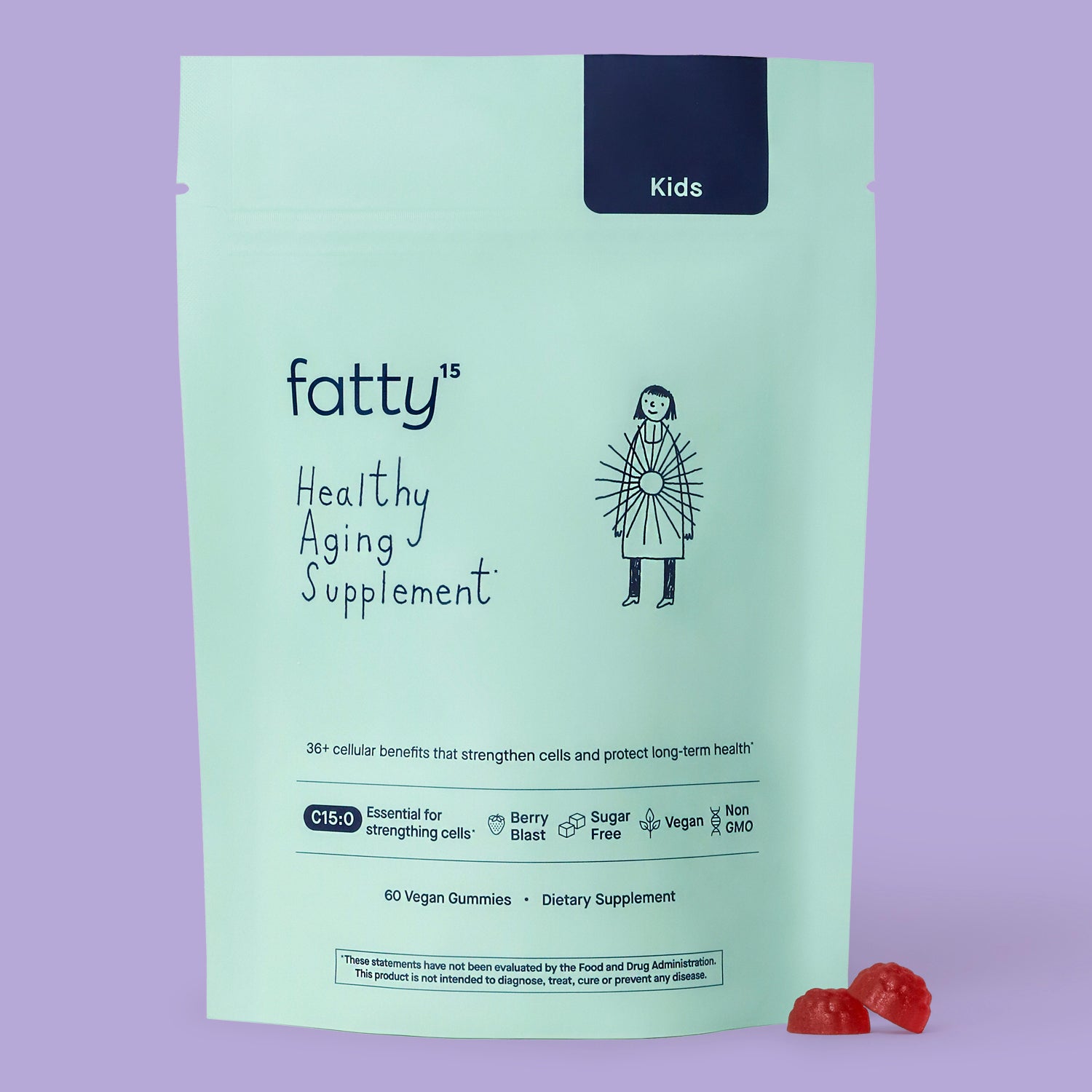
- Fatty15™ offers a targeted way to support optimal C15:0 levels without increasing total saturated fat intake.
- The new U.S. Dietary Guidelines recognize that whole-fat dairy, including butter, may play a different role in health than once believed.
Butter has gotten a bad rap over the past few decades. It’s been blamed for clogging arteries, raising cholesterol, and expanding waistlines.
If you grew up in the 80s and 90s, you’ll remember the low-fat fad, which took butter almost completely off the table. In recent years, the conversation around fat has begun to change in a way that few people expected.
The newly released Dietary Guidelines for Americans (2026–2030) quietly but decisively brought whole-fat dairy back to the table. That shift, paired with several large, peer-reviewed studies, has reignited an old question with new urgency: Is butter actually bad for you, or did we misunderstand it all along?
The answer turns out to be far more nuanced than a simple yes or no.
Why Butter Became the Villain
To understand why butter has such a complicated reputation, you have to go back nearly 50 years.
In 1977, the first federal dietary guidelines urged Americans to reduce their intake of saturated fat. At the time, the country was grappling with rising rates of heart disease, type 2 diabetes, and obesity. Saturated fat, abundant in red meat and dairy fat, became a prime suspect.
Butter, as a concentrated source of saturated fat, was one of the first foods to be pushed aside. Margarine, vegetable oils, and low-fat dairy products took its place. The message was simple and sweeping: Avoid saturated fat to protect your heart and health.
While saturated fat intake fell, something unexpected happened. Rates of chronic disease didn’t actually improve. In fact, they worsened.
Since the original guidelines were introduced, the number of Americans with type 2 diabetes has risen from about 3 million to more than 24 million, and obesity now affects over 40 percent of the population. Clearly, reducing saturated fat alone did not deliver the health outcomes policymakers hoped for.
New Dietary Guidelines: The Rollout of a New Era of Nutrition
Fast forward to January 2026. The Dietary Guidelines for Americans (2026–2030) were released amid intense media attention and political debate. Chances are that you saw them sparking controversy on social media. Headlines ranged from excitement to alarm, with some outlets claiming the federal government was now encouraging butter, red meat, and whole milk.
The reality is less dramatic than the headlines, but still signals a major shift from the guidelines of the 1970s, which hadn’t really changed since their debut.
The updated Guidelines acknowledge that not all sources of saturated fat behave the same in the body, and that whole-fat dairy products can be part of a healthy dietary pattern. This marks a meaningful departure from decades of blanket advice to avoid dairy fat.
But before you grab a buttered biscuit and a glass of whole milk, it’s important to understand the rest of the story. The new guidelines still recommend limiting total saturated fat intake at the population level.
What has changed is the recognition that food sources, dietary context, and fatty acid types matter. That nuance has opened the door to a more evidence-based discussion about butter.
Is Butter a Saturated Fat?
Yes, butter is a saturated fat. Most of the fat in butter comes from saturated fatty acids, which is why it has long been grouped with foods thought to raise cholesterol and increase cardiovascular risk.
Here’s the interesting part of the story: Saturated fat is not a single substance. It’s a category that includes dozens of different fatty acids, each with distinct biological effects. Treating all saturated fats as nutritionally identical turns out to be an oversimplification, and butter is a perfect example of why.
The Saturated Fat Limit: A Tricky Metric
The current dietary guidance still suggests keeping saturated fat intake below 10 percent of daily calories. This recommendation is designed for population-wide risk reduction, not individualized nutrition strategies. It reflects decades of research showing that replacing certain saturated fats with unsaturated fats can lower LDL cholesterol.
What the guideline does not account for is the growing body of research showing that some saturated fatty acids behave very differently from others, particularly when it comes to inflammation, metabolic health, and long-term disease risk.
Even-Chain vs. Odd-Chain Saturated Fat
Here’s the rub: Most saturated fats in the modern diet are even-chain fatty acids. These fats are abundant in red meat, processed foods, and many refined oils.
High levels of even-chain saturated fats have repeatedly been associated with inflammation, insulin resistance, higher LDL cholesterol, and an increased risk of cardiovascular disease and type 2 diabetes.
Butter, however, contains something different as well: Odd-chain saturated fatty acids, particularly C15:0 (pentadecanoic acid). The science consistently shows that odd-chain saturated fats behave in almost the opposite way from their even-chain counterparts.
Higher levels of C15:0 have actually been associated with balanced cholesterol and better metabolic health.* This distinction helps explain why lumping all saturated fats together has led to confusion and potentially misguided dietary advice.
What the Latest Science Says
Several recent peer-reviewed studies have added clarity to the saturated fat debate.
Reducing saturated fat
A 2025 review published in Annals of Internal Medicine found that reducing saturated fat intake provided little to no benefit for people at low cardiovascular risk over five years. For individuals at higher risk, reductions may still be beneficial, suggesting that context matters more than previously recognized.
Dairy intake and certain health risks
Another long-term study published in Neurology followed participants for 25 years and found that higher intake of whole-fat dairy products, particularly cheese and cream, was associated with a lower risk of developing dementia.
This finding challenges the idea that dairy fat is universally harmful and suggests protective effects tied to specific components of whole-fat dairy.
C15:0 levels and metabolic protection
Perhaps most compelling is a 2026 meta-analysis published in Advances in Nutrition, which examined fatty acid biomarkers across 27 prospective cohort studies involving more than 100,000 people worldwide.
The researchers found that higher levels of C15:0 and C17:0 were the strongest predictors of metabolic protection, including a markedly lower risk of developing type 2 diabetes. In contrast, higher levels of C16:0 (an even-chain saturated fatty acid) were associated with increased risk.*
Bottom line: The type of saturated fat matters more than the label “saturated fat” itself.
Why Whole-Fat Dairy Is Different
Butter comes from dairy fat, and dairy fat behaves differently from the saturated fat found in red meat or ultra-processed foods. The structure of dairy fat, the presence of fermentation products in foods like cheese, and the inclusion of odd-chain fatty acids all contribute to distinct metabolic effects.
Studies like the ones linked above increasingly show that whole-fat dairy does not carry the same risk profile as other saturated fat sources. In some cases, it appears to be neutral or protective when consumed as part of a balanced diet.
This helps explain why the new dietary guidelines no longer treat all dairy fat as something to avoid.
C15:0: The Beneficial Saturated Fat
C15:0 is an odd-chain saturated fatty acid found primarily in dairy fat. Over the past decade, it has emerged as the first essential fatty acid discovered in nearly a century.*
Led by groundbreaking work from Stephanie Venn-Watson, more than 100 peer-reviewed studies have examined C15:0’s role in cellular health.
Unlike even-chain saturated fats, C15:0 strengthens cell membranes, supports mitochondrial function, and has been repeatedly shown to have a variety of cellular benefits that support metabolic health, red blood cell health, liver health, cognitive health, immune health, and glucose control.
As whole-fat dairy consumption declined over the past 50 years, population-wide C15:0 levels declined as well. Unfortunately, this trend had unintended consequences.
Cellular Fragility Syndrome
Researchers have identified a newly described nutritional deficiency known as Cellular Fragility Syndrome, characterized by weakened cell membranes and impaired cellular resilience. This condition may affect as many as one in three people globally and is thought to be driven, in part, by inadequate intake of essential fatty acids like C15:0.*
Cellular Fragility Syndrome is related to a type of cell death called ferroptosis, which is known to accelerate the aging process. This discovery offers a new lens through which to view the rise in poor health outcomes, particularly among younger populations who followed decades of low-fat dietary advice.
The good news is that Cellular Fragility Syndrome can be addressed by elevating your levels of C15:0.*
How To Support Healthy C15:0 Levels
Although the new dietary guidelines put butter back in our fridge (or on the counter, another great debate), it’s still not advisable to consume large amounts of full-fat dairy.
If you increase your consumption of butter or whole dairy, you’ll be increasing your beneficial C15:0 levels, unfortunately, you would also be increasing your consumption of even-chain saturated fats that have negative health impacts. In addition, you’ll be consuming a massive amount of excess calories, sugar (from lactose), and an animal-based product (a no-go for vegans).
A solution? Fatty15.
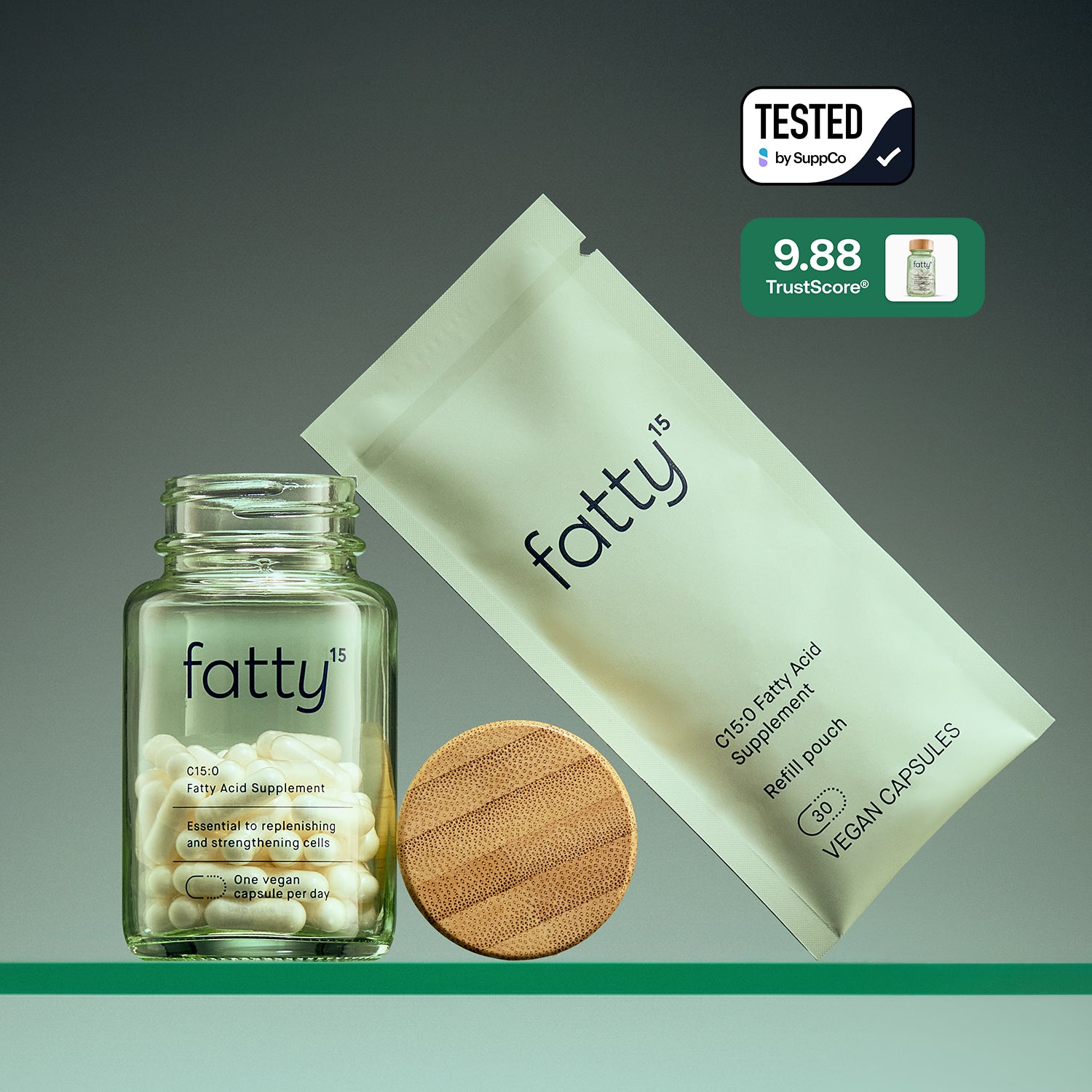
Fatty15 is the first and only supplement containing the pure, vegan-friendly version of C15:0 known as FA15™. This once-a-day supplement is enough to elevate your circulating C15:0 levels without increasing your levels of the bad, even-chain saturated fats.
At just one calorie per dose, it fits nicely into your health stack and can help support your long-term health and wellness.*
So, Is Butter Bad for You?
Butter is a saturated fat, but that fact alone no longer tells the full story. The latest science shows that saturated fats are not all created equal and that odd-chain fats like C15:0 are beneficial for our health, while the even-chain fats are not.
The updated dietary guidelines reflect this new information, acknowledging that whole-fat dairy can play a role in a healthy diet. Butter isn’t a superfood, and it’s not something to consume without thought, but it’s also no longer accurate to label it simply as “bad.”
As nutrition science continues to evolve, one thing is becoming clear: it’s time to stop judging foods by outdated categories and start understanding the nutrients within them.
FAQs
Is it true that butter is bad for you?
Butter has a high fat content. A large proportion of this is saturated fat. High intakes of saturated fat have been linked to higher cholesterol levels and can raise your risk of heart disease.
However, a growing body of evidence supports that C15:0 is an essential saturated fatty acid that is both essential in maintaining the strength of our cells and beneficial for our long-term health.
What do cardiologists say about butter?
Cardiologists generally advise limiting butter due to its high saturated fat content, which can raise bad cholesterol (LDL) and increase heart disease risk. However, there is growing support in the medical literature that some saturated fats in butter are actually beneficial for our long-term health.
Is butter inflammatory or anti-inflammatory?
Grass-fed butter is a rich source of conjugated linoleic acid (CLA) and C15:0, fatty acids associated with anti-inflammatory properties.
What happens when you stop eating butter?
Eating less butter may improve health and protect against heart disease and cancer. However, a growing body of evidence supports that some saturated fatty acids in butter such as C15:0 are beneficial for our long-term health.
|
*These statements have not been evaluated by the Food and Drug Administration. This product is not intended to diagnose, treat, cure, or prevent any disease. |
Sources:
Dietary Guidelines for Americans
High- and Low-Fat Dairy Consumption and Long-Term Risk of Dementia | Neurology


