


How Can You Get C15:0 Naturally? What To Know

Seraphina Therapeutics's Highlights
- C15:0 is an odd-chain, saturated fatty acid that is essential. Having too little C15:0 can result in a deficiency known as Cellular Fragility Syndrome. Naturally occurring sources of C15:0 are now more limited, and increasing your intake of foods that contain C15:0 may not support better health outcomes. Taking the only pure C15:0 supplement, fatty15, is the best solution for supporting your C15:0 levels and fixing Cellular Fragility Syndrome.
You’ve likely heard about C15:0 in the news recently... Now, you’re ready to learn more about C15:0 and how it can enable your ability to live a longer, healthier life.
Like many people, you want to level up your circulating levels of this essential fatty acid the natural way, through your diet. However, that is likely only half the solution.
C15:0 is a reclusive fatty acid, hiding in trace amounts in foods, many of which can include ingredients that are less healthy. Increasing your intake of some of these foods can lead to potentially negative health outcomes. Together, we’ll walk through where C15:0 is found naturally, how it works in the body, and the best way to optimize your C15:0 levels.
What Is C15:0?
C15:0 is an odd-chain saturated fatty acid that was recently discovered to be an essential nutrient that we must have in our diets to maintain our health. Interestingly, this discovery was made by chance.
Researchers studying Navy dolphins observed that dolphin populations with higher levels of C15:0 in their bloodstream had fewer instances of age-related illness and lived healthier, longer lives than populations with lower C15:0 levels. Taking their research further, they discovered that these same longevity-protective benefits applied to humans, too.
This led to the discovery that C15:0 (also known as pentadecanoic acid) is not only good for you but also essential. Essential means our bodies need it to thrive but cannot readily make it on their own.
Thus, we must get essential fatty acids like C15:0, vitamins, and minerals from the foods we eat or from supplements we take. The discovery of a new essential fatty acid is big news because the only other essential fatty acids (one type of omega-3 and one type of omega-6) were discovered over 90 years ago.
How Does C15:0 Work?
C15:0 supports the body by integrating into and strengthening our cells. Our cells are the foundations of human health, creating every tissue, organ, and system in the body. Cells are also what causes our bodies to age.
Scientists have identified 12 hallmarks of aging inside the cells and are actively looking for ways to slow these cellular phenomena. C15:0 addresses 6 out of the 12 hallmarks of aging and has been shown to have more longevity-enhancing benefits than even rapamycin and metformin, the currently leading longevity molecules.
C15:0 restores cell function, protects our cells from breakdown, and reverses cellular aging by:
-
Strengthening cell membranes. When cells age, the membranes become weak. Weakened cell membranes can cause cells to lose their shape and function. In studies, C15:0 strengthened cell membranes by 80%.
-
Increasing cellular energy. The mitochondria inside our cells produce ATP, a molecule that serves as energy currency inside the cells. As we age, ATP production slows, but in one peer-reviewed study, C15:0 increased ATP production by 350%. C15:0 also helps decrease reactive oxygen species by 45%.
- Clearing damaged cells. C15:0 activates AMPK and inhibits mTOR, which help to clear out those damaged ‘zombie’ cells.
C15:0 supports our cells, but also our bodies as a whole by:
- Regulating inflammatory response. C:15:0 significantly calms and lowers proinflammatory cytokines, a key driver of aging.
- Activating AMPK. C15:0 restores cellular and whole-body homeostasis, regulates glucose uptake, and calms our immune systems.
- Activating PPARɑ and PPARẟ receptors. By activating these receptors, C15:0 has been shown in peer-reviewed studies to support metabolic, immune, heart, and liver health in relevant models. These receptors also help to improve mood and deepen sleep.
- Lowering “bad” LDL cholesterol.
- Improving liver enzymes.
- Improving the gut microbiome.
Higher circulating levels of C15:0 are consistently associated with more positive health outcomes, which may explain why levels of C15:0 are higher in people who live in Blue Zones.
The Blue Zone Connection
The Blue Zones are five areas in the world where people consistently live healthfully up to 100 years of age and beyond. In one particular zone, Sardinia, Italy, residents have a C15:0 level that is about three times higher than the levels of most people worldwide.
How? These residents have a diet that is comprised of cheese made from local, mountainous grazing goats that is naturally high in C15:0 levels. Unfortunately, most of us don’t have access to local, mountainous grazing goats, but that doesn’t mean we can’t still improve our C15:0 levels.
That brings us to our primary focus. How can we increase our C15:0 levels naturally?
Natural Sources of C15:0
We noted earlier that C15:0 is a reclusive fatty acid found only in trace amounts in our food. Let’s take a look at the places where C15:0 is found in the food system.
Whole-Fat Dairy
C15:0 is found primarily in whole-fat dairy products, like whole milk and full-fat butter. This likely explains why our levels of C15:0 are so low. We’ve spent an entire generation avoiding fat.
Most American homes use skim or 2% milk and have dramatically reduced the amount of butter used in the dishes we make and serve. Additionally, many Americans have stopped drinking milk entirely, instead opting for plant-based milk replacement products like oat or soy milk, which contain very little C15:0.
Fish
Some fish contain C15:0. This is how the Navy dolphins ended up with higher levels of C15:0 than some other dolphin populations; their diets consisted of fish that contained more C15:0.
Fish that contain C15:0 include mackerel, salmon, and sardines. However, these fish don’t contain a lot of C15:0, so you’d need to consume a dolphin diet’s worth of these fish to improve your C15:0 levels. Further, the C15:0 in these fish is primarily in the skin and heads, which are not commonly consumed in the American diet.
Plants
Plants are the least abundant source of C15:0. C15:0 can be found in trace amounts in chia seeds, peanuts, and dried rosemary. Most of these foods have such small amounts that getting the C15:0 you’d need would mean consuming large amounts of each. Does anyone want 25 tablespoons of dried rosemary a day?
The Dietary C15:0 Issue
Getting C15:0 from your diet is possible, but there are a few reasons why it might not be the ideal source. First, let’s assume you level up your whole-fat dairy intake since C15:0 is found in the highest concentrations in whole-fat dairy products.
Calories
It’s no secret that whole-fat dairy packs in a massive amount of calories. Compared to skim milk, it has nearly double the calorie content per eight-ounce serving. While you’d be getting some C15:0, you’d also be adding additional calories that might make it harder for you to maintain a healthy weight or lose weight if weight loss is a goal.
Sugar
Whole-fat dairy is also a source of sugar. Lactose in whole-fat dairy adds up to about 12 grams per cup. If you’re concerned with your sugar intake or are on a diet that strictly limits your sugar intake, consuming whole milk may not be a viable option for C15:0 due to the high sugar content.
“Bad” Fats
Whole-fat dairy contains C15:0, but it contains much more even-chain saturated fats, which are consistently associated with negative health outcomes. This is probably why there’s such a large debate over whether or not whole-fat dairy is good for us.
One group says it is, and another says it is not. Studies on the consumption of dairy show that adults who drink more dairy milk are likely to have a higher body weight.
Absorption
In whole-fat dairy, C15:0 is attached to branches of lipids called triglycerides. To separate the C15:0 into free fatty acid form, the body must break down the triglyceride branches. This extra step creates more work for the gut and makes C15:0 absorption less efficient.
Cows
The movement to more plant-based milk and meat replacements is driven by a desire for more animal-free products, as well as a desire to veer from cows and cattle because of concerns around methane production.
Interestingly, plant-based milk replacements lack C15:0 altogether. If you’re attempting to reduce your carbon footprint or simply avoid animal products, more milk isn’t the solution.
What is? Fatty15.
[[blog-purchase-cta-v1]]
Fatty15: The C15:0 Solution
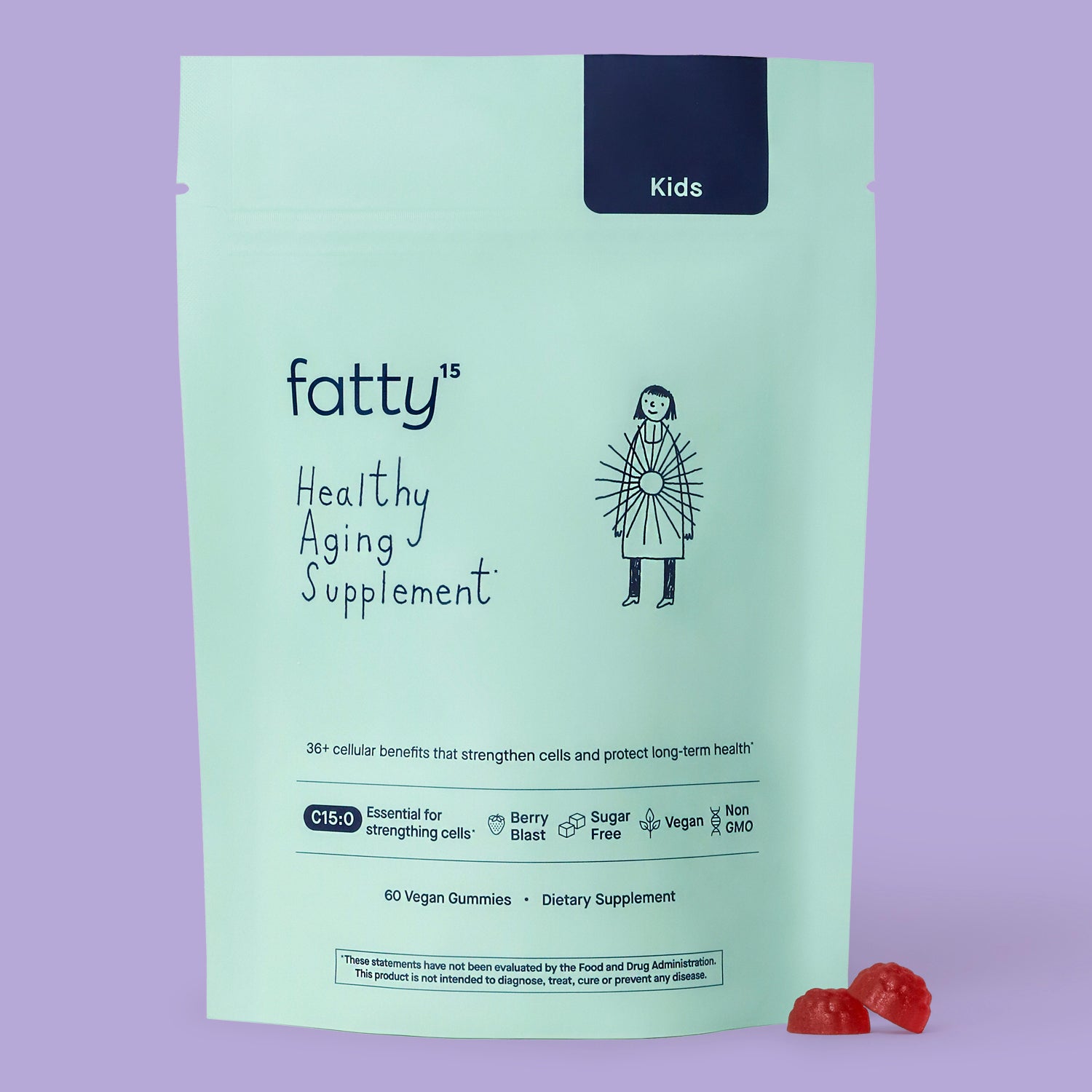
Fatty15 was created to supplement our diets with C15:0 in its most pure and easily digestible form. Fatty15 is a science-backed, pure, bioavailable, vegan-friendly, patented and award-winning C15:0 supplement that was created to help improve our long-term health and longevity.
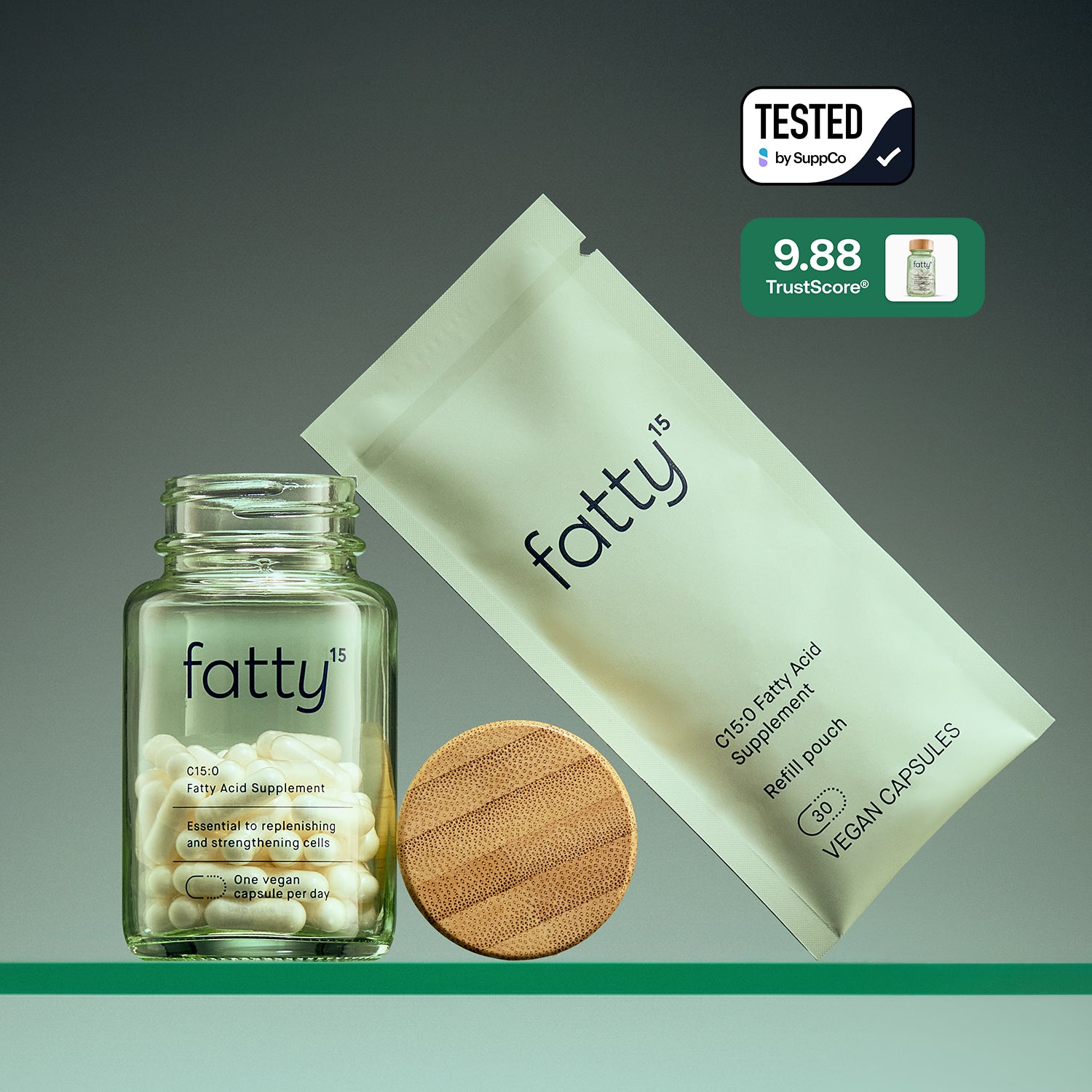
The sustainably produced ingredient comes in a once-per-day capsule that weighs in at just one calorie per day and gives you 100mg of the beneficial C15:0 your body needs. No added sugar, no bad fats, no calories, and no cows. You get all the C15:0 you need in easy-to-digest, free fatty acid form and nothing you don’t need.
Speaking of what you need, let’s talk about how much C15:0 you need, how to find out your current C15:0 levels, and what happens if you don’t have enough.
The Right Amount of C15:0
Healthy C15:0 levels are between 0.2% and 0.4% of total fatty acids. Note that levels of C15:0 in Blue Zone residents are much higher, averaging 0.64%. Testing your C15:0 levels requires a simple blood test.
You can ask your healthcare provider to order a C15:0 blood test to measure your fatty acid count, or you can order an at-home test by clicking here. This test requires a finger-prick blood sample which can be sent back to the lab. You’ll get the scoop on where your C15:0 levels measure so you can take steps to improve your levels.
If you’re asking yourself what happens if your C15:0 levels are low, that’s a valid concern.
Cellular Fragility Syndrome
Just as important and rare as discovering a new essential fatty acid is discovering a new nutrient deficiency. Low levels of C15:0 lead to a deficiency called Cellular Fragility Syndrome, which is the first nutritional deficiency syndrome to be discovered in over 75 years. The good news: nutritional deficiencies, once identified, can be easily prevented and treated
Cellular Fragility Syndrome weakens cells and causes them to be more susceptible to a particular type of cell death known as ferroptosis, which can negatively influence our health. Numerous studies have shown that people with low C15:0 levels have a higher risk of developing type 2 diabetes, heart disease, and nonalcoholic fatty liver disease. A recent clinical trial with C15:0 found that restoring C15:0 levels prevented ferroptosis and improved metabolic, liver and heart health.
Addressing Cellular Fragility Syndrome is important because it could mean the difference between having strong, healthy cells and fragile cells that place you at a higher risk for certain illnesses. The good news is that fatty15 fixes Cellular Fragility Syndrome, giving your cells a fighting chance in the aging process.
Naturally Fatty
While it may be difficult to get all the beneficial C15:0 you need from foods alone, you can easily increase your levels by supplementing your diet. Fatty15 is the pure C15:0 product that can help protect your cells, reverse cellular aging and improve your long-term health and wellness.
FAQs
How can you get C15:0 naturally?
The main natural sources are whole-fat dairy, including whole milk, full-fat butter, and cream, which carry the highest concentrations. Fish comes next, particularly mackerel, salmon, and sardines, with C15:0 concentrated in the skin and heads. Chia seeds, peanuts, and dried rosemary contribute trace amounts. There is a tradeoff worth understanding before you build a plan around dairy. Those foods also carry much higher levels of pro-inflammatory even-chain saturated fats like C16:0, which may counteract the benefits of the C15:0 you are after. One tablespoon of butter contains about 75 mg of C15:0 and more than 3,000 mg of C16:0.
What foods naturally contain the most C15:0?
Whole-fat butter, whole milk, and cream top the list, with fish close behind. Mackerel, salmon, and sardines all carry C15:0, which is how the Navy dolphins in the original research were getting theirs, and brown algae rounds out the top five. The clearest real-world example is Sardinia, where Blue Zone residents reach C15:0 levels around 0.64% largely through goat cheese made from local mountain grazing. That is a food supply tied to a specific place and a specific way of farming, which is why most people cannot copy it just by shopping differently.
Can diet alone provide enough C15:0 naturally?
Diet is likely only half the solution. The amounts in food are small, absorption is inefficient because food-based C15:0 arrives bound to triglycerides, and hitting a meaningful dose means taking on calories, lactose, and even-chain saturated fats you may not want. That does not make food useless. It makes supplementation the practical way to finish the job your diet starts.
Why is C15:0 hard to get naturally today?
Several things stacked up at once. Dietary guidelines from the 1970s told people to avoid fat, and skim and 2% milk took over the dairy aisle. Plant-based milks arrived and contain no C15:0 at all. And the milk itself changed, because the shift from grass-fed to corn-fed livestock has lowered the C15:0 content of dairy over the past 40 years. So how to get C15:0 naturally is a harder question to answer now than it would have been for your grandparents.
How much C15:0 do you need, and how do you test your levels?
A healthy circulating level is 0.2 to 0.4% of total fatty acids, with Blue Zone populations averaging around 0.64%. Below 0.2% is cellular fragility syndrome. Research indicates humans need roughly 100 to 200 mg of C15:0 daily to maintain healthy circulating levels. You can test yours through a blood panel ordered by your physician, or with an at-home finger-prick kit. fatty15 provides 100 mg a day at one calorie.
What is Cellular Fragility Syndrome?
Cellular fragility syndrome is a newly identified nutritional deficiency syndrome caused by low levels of C15:0, and the first new nutritional deficiency syndrome discovered in more than 75 years. It sets in when circulating C15:0 levels fall below a healthy threshold of 20 µM, or 0.2% of total fatty acids. At the cellular level, the syndrome is characterized by weakened cell membranes that are more susceptible to lipid peroxidation. That fragility leads to ferroptosis, a form of iron-dependent cell death that accelerates biological aging and has been linked to the early onset of chronic diseases such as type 2 diabetes, heart disease, and fatty liver disease. Like other nutritional deficiencies, it is straightforward to address once identified, because restoring C15:0 levels works on the cause directly.
Why is absorbing C15:0 from whole milk inefficient?
In dairy, C15:0 is attached to branches of lipids called triacylglycerides. Before your body can use it, gut enzymes have to break those apart to release C15:0 as a free fatty acid. Only then is it ready to absorb. Those extra digestive steps make food-based C15:0 less efficient than fatty15's FA15, which arrives already in free fatty acid form.
What are the downsides of getting C15:0 naturally from dairy?
Whole milk carries nearly double the calories of skim, along with about 12 g of lactose per cup. It also delivers high levels of even-chain saturated fats, C16:0 chief among them, which have been associated with poorer health outcomes, and large cohort studies have linked higher dairy milk intake to higher body weight. Then there is the practical problem. Dairy is not an option for vegans or for anyone lactose-sensitive, which rules it out for a large share of the people asking how to get C15:0 naturally.
What is the Blue Zone connection to natural C15:0 intake?
Sardinia residents carry C15:0 levels around three times higher than average, close to 0.64% of total fatty acids. That elevated intake is linked to a diet of local dairy from high-altitude, grass-fed sheep and goats. The Sardinian lifestyle appears to help as well, since low meat consumption and high physical activity further optimize how C15:0 is absorbed and released into the bloodstream. Those high C15:0 levels are believed to be one factor behind the island's cardiovascular health and its exceptional number of centenarians. Most people cannot access an equivalent food supply, which is where supplementation closes the gap.
Is fatty15 a natural way to get C15:0?
FA15 is pure pentadecanoic acid in free fatty acid form, the most bioavailable version of the same molecule found in dairy and fish. It is vegan, sustainably produced, and patented. It complements dietary sources rather than replacing them. One capsule a day helps restore your C15:0 levels without the excess dairy, the extra calories, or the cows.
*These statements have not been evaluated by the Food and Drug Administration. This product is not intended to diagnose, treat, cure, or prevent any disease.
Sources:


