


Which C15:0 Supplement Should You Buy? A Guide to Third-Party Testing, Purity, and What to Look For

Seraphina Therapeutics's Highlights
Not all C15:0 (pentadecanoic acid) supplements are created equal. Purity, dosage, and third-party testing all affect quality and reliability. Look for a Certificate of Analysis (COA), cGMP-certified manufacturing, third-party testing, and published peer-reviewed research before choosing a supplement. Fatty15’s C15:0 supplement provides 100 mg of C15:0 per vegan capsule, is independently tested, and is backed by over 150 peer-reviewed studies and 60 patents.*
More of us are seeking evidence-based ways to support healthy aging, and C15:0 (also known as pentadecanoic acid) has become one of the more discussed additions to that conversation. As a relatively new essential fatty acid, C15:0 remains unfamiliar to many consumers, and as demand grows, so does the number of products claiming to contain it.
That growth is encouraging news for anyone interested in science-backed longevity supplements. However, it also means we need a clear way to distinguish a rigorously tested product from one riding a trend.
This guide walks through what to look for in a C15:0 supplement, from purity and dosage to third-party testing and published research, so we can make informed, confident decisions about what we put in our bodies.
Understanding C15:0 and Its Benefits For Healthy Aging
C15:0 is an odd-chain saturated fatty acid found naturally in whole-fat dairy products and some fish, and it has recently been recognized as an essential nutrient, meaning our bodies need it but cannot produce enough on their own.*
At the cellular level, C15:0 plays a role in cellular resilience and metabolic health, helping to support the structures and processes that keep our cells functioning well as we age.*
Science supports the broad health benefits of C15:0, including several markers of long-term health. Studies have also linked higher circulating C15:0 levels to improvements in liver enzymes, mitochondrial function, and inflammatory response.*
The discovery of C15:0's essentiality has an unusual origin story. While working to improve the health and welfare of aging Navy dolphins, veterinary epidemiologist Dr. Stephanie Venn-Watson noticed that dolphins with higher circulating levels of C15:0 experienced fewer age-related health issues.
That observation led to years of additional research, eventually showing that C15:0 met the scientific criteria for an essential fatty acid, the first to be discovered in over 90 years.
Two terms worth knowing as you research: an essential fatty acid is a fat our bodies require for normal function but cannot synthesize on their own, meaning we have to get it through diet or supplementation. A PPAR agonist is a compound that activates PPAR receptors, which help regulate metabolism, immune response, and other homeostatic functions throughout the body.*
How To Choose a C15:0 Supplement With Proven Results
Because C15:0 supplements vary widely in formulation and quality, choosing one with proven results comes down to four foundational factors: ingredient purity, third-party testing, published clinical data, and manufacturing transparency.
Here's a quick checklist to compare across brands:
Confirm Dose and Active Ingredient Purity
Purity is one of the first things worth checking. Look for a supplement with ≥99% C15:0 purity, verified by a published Certificate of Analysis (COA).*
A COA is an independent laboratory report confirming a supplement's identity, ingredient content, and purity for each batch. It's an important piece of documentation for consumer trust, and reputable brands should make it available.
Dosage matters, too. Most clinical and preclinical research on C15:0 has used daily doses of 100–200 mg, so it's worth checking how a product's per-capsule dose compares to those doses.*
Verify Third-Party Testing and Certifications
Third-party testing is one of the clearest safeguards against label inaccuracies and contamination. Look for supplements bearing seals from recognized independent organizations such as SuppCo, NSF, USP, ISO, BSCG, or Informed-Sport.
Third-party testing means an independent laboratory tests the supplement to confirm that what's on the label matches what's in the capsule. It doesn't guarantee a specific health outcome, but it is an essential part of quality control and one of the simplest ways to verify a brand's claims.
Before buying, it's worth requesting documentation or checking whether a brand publishes its batch testing reports directly on its website.
Check Manufacturing Standards and Facility Inspections
Manufacturing standards matter as much as what's in the capsule. Reputable supplements are manufactured in cGMP-compliant facilities, which are often inspected by the FDA to ensure safety and process controls.*
Current Good Manufacturing Practice (cGMP) is an FDA-regulated system that ensures products are consistently produced and controlled in accordance with established quality standards.
Beyond cGMP compliance, look for brands that disclose lot-by-lot testing for heavy metals, microbes, and residual solvents. This kind of transparency is a meaningful signal that a company is holding itself to a higher standard than the minimum required.
Evaluate Ingredient Source and Supplement Format
Ingredient source and format affect both purity and suitability for different dietary needs. The cleanest options tend to use vegan capsules containing pure C15:0 powder, without oils or other ingredients.*
It's also worth understanding where the C15:0 itself comes from. For example, Fatty15's C15:0 is made from plants and purified to over 99% pure. This pure powder ingredient is considered a natural ingredient because it exactly matches the form of C15:0 found in nature.*
Review Published Research and Transparency
Finally, prioritize brands that invest in research and use their exact ingredient in the studies. A supplement supported by published, peer-reviewed research, ideally with accessible citations for both clinical and preclinical studies, offers a level of credibility that marketing language alone cannot.
It's common for supplement marketing to reference "numerous studies" without linking to any of them. Further supplement brands commonly reference studies that were not conducted with their specific product and ingredient(s).
When evaluating a brand's claims, make sure the research was done on their product, look for direct publication links, clear disclosure of any sponsor involvement in the research, and enough trial detail to understand what was actually studied.
A peer-reviewed study is a scientific paper that independent experts have has been evaluated by independent experts before publication, which helps ensure both credibility and methodological rigor. There have been more than 150 peer-reviewed studies supporting the long-term health benefits and safety of C15:0.
Interpreting Certificates of Analysis (COAs) for C15:0
Once you've found a supplement that provides a COA, it helps to know what you're actually looking at.
A thorough COA should include:
-
Confirmation of C15:0 identity and assay percentage, along with the measurement method used (typically GC-MS or HPLC)
-
The mg of C15:0 per capsule and the corresponding batch number
-
An impurity profile, including other fatty acids present, plus results for heavy metals, microbial contamination, and residual solvents
-
Confirmation that the COA is recent and was issued by an accredited, independent laboratory
Reading a COA doesn't require a science background. It just requires knowing what to look for. If a brand can't or won't provide one, that's worth factoring into your decision.
Why Fatty15’s C15:0 Supplement Stands Out
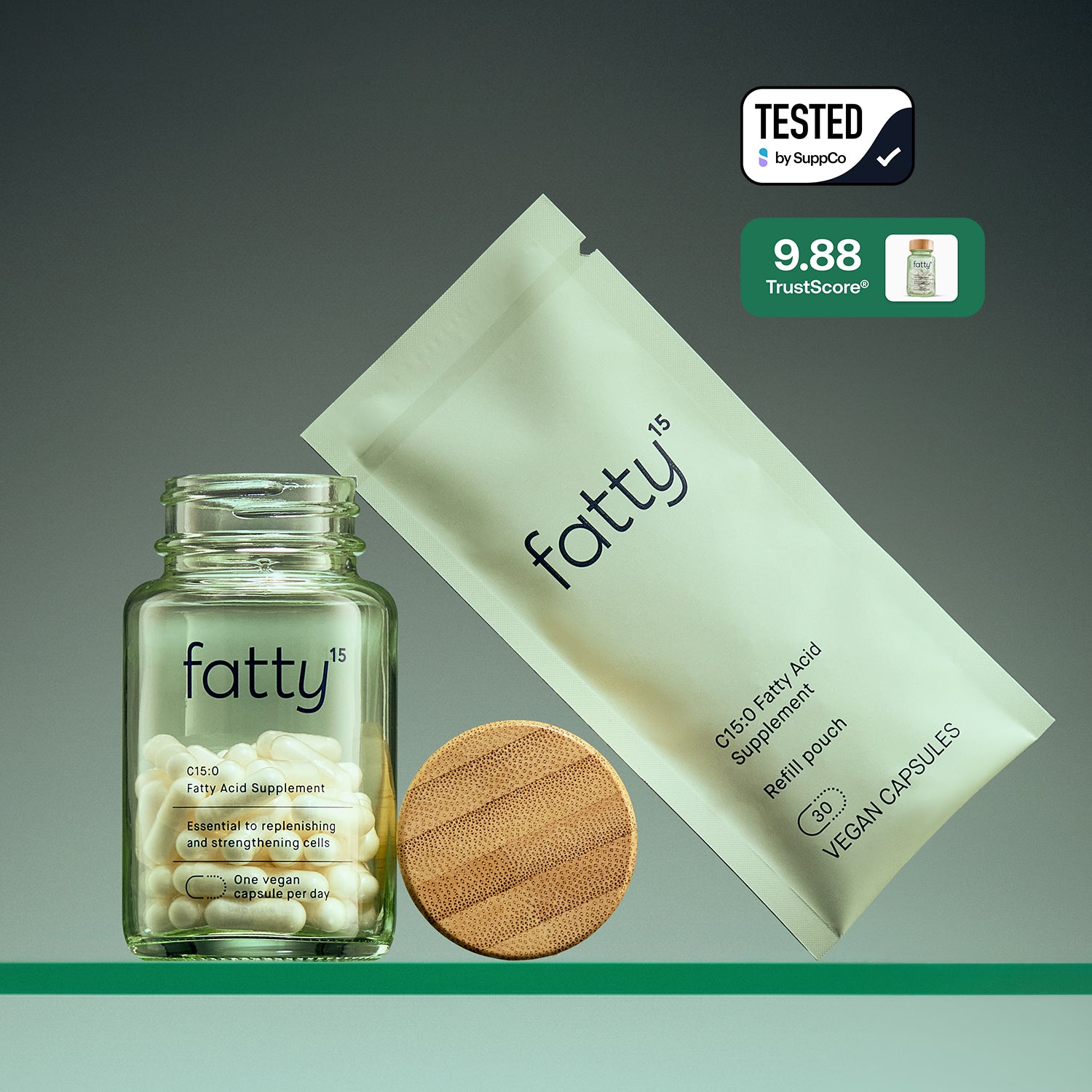
Fatty15 provides 100 mg of C15:0 per vegan capsule, undergoes independent third-party batch testing, and is manufactured in an FDA-inspected, cGMP-compliant facility. Fatty15 is also backed by multiple patents and licensing rights from the U.S. Navy, reflecting the depth of the underlying science and the years of research that underpin it.
Fatty15’s pure, patented, vegan-friendly C15:0 supplement is certified by TESTED by SuppCo, one of the highest bars in supplement testing, earning a TRUST score of 9.88, which puts it in the top 1% of over 160,000 supplements tested. This first-of-its-kind program independently verifies supplement quality by anonymously purchasing products off the shelf and sending them to ISO 17025-accredited labs.
Fatty15 is supported by over 150 peer-reviewed studies, 60 patents, and 30 awards, all of which no other C15:0 supplement can claim.
|
*These statements have not been evaluated by the Food and Drug Administration. This product is not intended to diagnose, treat, cure, or prevent any disease. |
FAQs
What is C15:0, and why supplement instead of diet alone?
C15:0 is an odd-chain saturated fatty acid that supports cellular health and metabolic function. While it’s found in dairy and some fish, supplementation provides a controlled, pure dose without added fats or calories.
How can I confirm a supplement’s purity and avoid contaminants?
Check that the supplement provides a Certificate of Analysis (COA) from an independent lab, showing ≥99% purity of C15:0 and screening for contaminants, such as heavy metals or fillers.
What certifications should I look for in third-party testing?
Look for seals from SuppCo, NSF, USP, or similar independent organizations confirming that the supplement’s ingredients match the label and that it is tested for quality.
Sources:
Pentadecanoic acid (C15:0) and cardiovascular disease: A narrative review | PMC
Current Good Manufacturing Practice (CGMP) Regulations | FDA


