


What Makes a Supplement “Science-Backed?” The Standards That Actually Matter

Seraphina Therapeutics's Highlights
- Science-backed supplements are supported by human clinical evidence, transparent research, proper dosing, and verified quality testing.
- Third-party certifications help confirm purity and label accuracy, but they do not guarantee a supplement’s effectiveness.
- Fatty15 combines peer-reviewed C15:0 research, clinically relevant dosing, and third-party testing to support healthy aging and cellular health.*
- In reality, “science-backed” is not an official certification or regulatory category. There is no single organization that approves supplements as scientifically validated before they hit the market. Instead, the term should describe products supported by meaningful evidence, transparent research practices, and verified quality standards.
- Understanding the difference between evidence-based longevity supplements and clever marketing is becoming increasingly important as more people turn to supplements to support healthy aging and cellular health.
What “Science-Backed” Really Means
A truly science-backed supplement is supported by legitimate scientific evidence showing that the product may provide benefits at the dose and formulation being sold. Interestingly, many supplements rely on broad claims built around individual ingredients rather than the finished product itself.
Strong scientific support usually includes:
-
Clinical studies
-
Transparent research methods
-
Appropriate dosing
-
Quality manufacturing
-
Third-party testing
Importantly, supplements are regulated differently from pharmaceutical drugs in the United States. Under the Dietary Supplement Health and Education Act (DSHEA) of 1994, supplements are legally classified as foods, not medications.
That means companies don’t need FDA approval for safety or effectiveness before bringing products to market. As a result, consumers are often responsible for evaluating product quality and credibility themselves.
Why Clinical Research Matters
One of the most important factors separating a credible supplement from a marketing-driven one is the quality of the evidence behind it. The strongest evidence comes from the totality of data supporting the product, including randomized clinical trials, large prospective cohort metaanalyses, dose dependent pre-clinical studies, all consistent with mechanism of action studies
However, an important nuance is often overlooked in supplement marketing: ingredient research is not the same as product research. A company may advertise that an ingredient “has been clinically studied.” However, the actual supplement being sold may use a different dose, formulation, or delivery system than the one researchers tested.
Bioavailability also plays a major role in whether a supplement actually works. Bioavailability refers to the efficiency with which a nutrient is absorbed and utilized by the body. Two products may contain the same ingredient on paper, yet deliver very different real-world results due to differences in purity, formulation, or absorption.
Consumers should also be cautious of proprietary blends that hide exact ingredient amounts. If a label doesn’t disclose how much of each ingredient is included, it becomes difficult to determine whether the supplement provides meaningful doses supported by research.
Quality and Third-Party Testing Are Essential
Scientific evidence only matters if the product consistently contains what it claims on the label. For supplements, third-party testing helps ensure the claims are factual. Independent organizations such as USP, NSF, ConsumerLab, Informed-Choice, and BSCG evaluate supplements for purity, potency, and contamination.
These organizations help verify that:
-
Listed ingredients are actually present
-
Dosage levels match the label
-
Heavy metals or undeclared substances are absent
However, third-party testing doesn’t prove a supplement works. It only confirms product quality and manufacturing integrity. That’s important because many consumers mistakenly assume certification logos indicate proven health benefits. In reality, they simply demonstrate that the supplement meets certain safety and quality standards.
Still, reputable brands often prioritize third-party testing because it builds trust and accountability in an industry where oversight can be inconsistent.
Transparency Is a Major Sign of Credibility
Another major difference between trustworthy supplements and questionable ones is transparency.
Science-backed companies are generally willing to explain:
-
How their products are manufactured
-
Where ingredients come from
-
What studies support their claims
-
Who funded the research
-
How testing was performed
Transparency matters because much supplement research is industry-funded. That doesn’t automatically make the science unreliable, but it does make open disclosure important.
Peer review, publicly available studies, disclosed funding sources, and reproducible methods all help strengthen scientific credibility. Consumers should be cautious of companies making dramatic health claims without providing accessible research or clear explanations about how their products were studied.
Why the Supplement Industry Creates Confusion
It’s no secret that the supplement industry is confusing to consumers. The market exists in a regulatory gray area that doesn’t necessarily prioritize rigorous scientific validation.
Because supplements don’t require pre-market FDA approval, companies can launch products more quickly than pharmaceutical drugs. While the Federal Trade Commission (FTC) can take action against misleading advertising and the FDA can intervene when products become unsafe, enforcement often occurs after products are already widely available.
This creates an environment where some products are heavily promoted despite limited evidence. Researchers have documented hundreds of supplement recalls tied to undeclared drug ingredients, contamination, inaccurate labeling, or manufacturing problems.
For instance, one independent study found that approximately 1 in 10 widely popular fish-oil supplements were rancid on store shelves before they were even purchased.
What Science-Backed Supplements Have in Common
Although the supplement industry can feel confusing, genuinely science-backed products often share several important characteristics.
They typically provide clear ingredient amounts, avoid hiding behind vague proprietary blends, reference peer-reviewed studies, invest in third-party testing, and communicate realistic claims rather than exaggerated promises.
The strongest brands also continue to support ongoing research rather than relying on a single marketing headline. Consumers don’t necessarily need to read scientific journals to make informed decisions, but they should look for products that demonstrate a commitment to evidence, transparency, and quality.
Fatty15 and the Science of C15:0
One example of a supplement ingredient that represents science-backed longevity research is C15:0.
C15:0, also known as pentadecanoic acid, was identified through healthy aging research involving Navy dolphins . Researchers observed that dolphins with higher circulating C15:0 levels consistently demonstrated healthier metabolic aging markers, leading scientists to explore whether humans also rely on adequate levels of this odd-chain saturated fatty acid.
Today, C15:0 is increasingly recognized as the first newly identified essential fatty acid in more than 90 years.*
Research on C15:0 includes human, animal, mechanistic, and cellular longevity studies. These studies provide evidence that C15:0 supports mitochondrial function , strengthens cell membranes , supports healthy inflammatory responses, and improves cellular signaling tied to healthy aging pathways.*
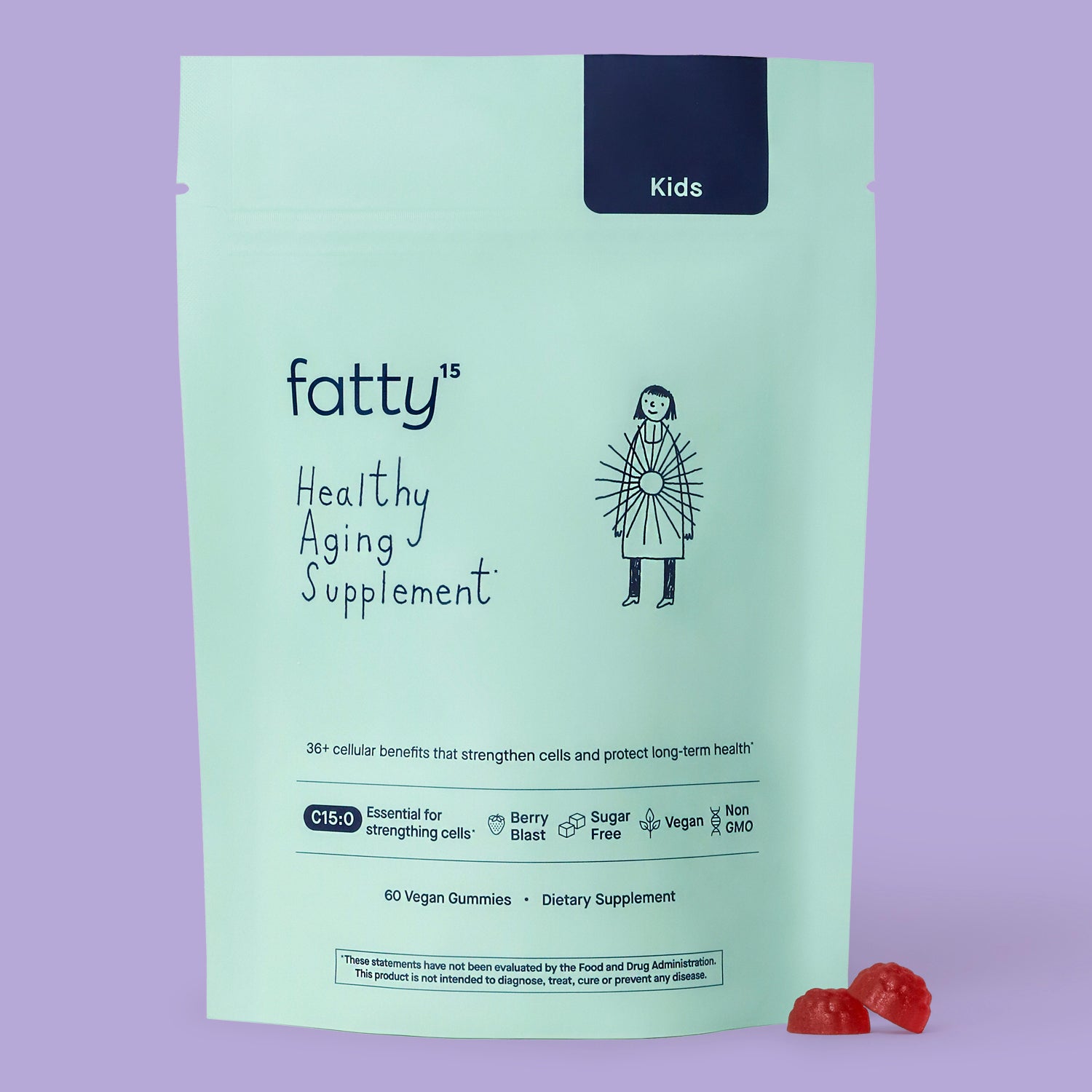
Fatty15 developed the first and only C15:0 supplement and has positioned itself as a science-backed C15:0 supplement by emphasizing clinically relevant dosing, transparent scientific communication, peer-reviewed research support, and third-party testing standards. The company also references more than 150 peer-reviewed studies and over 60 patents related to C15:0 science and longevity mechanisms.
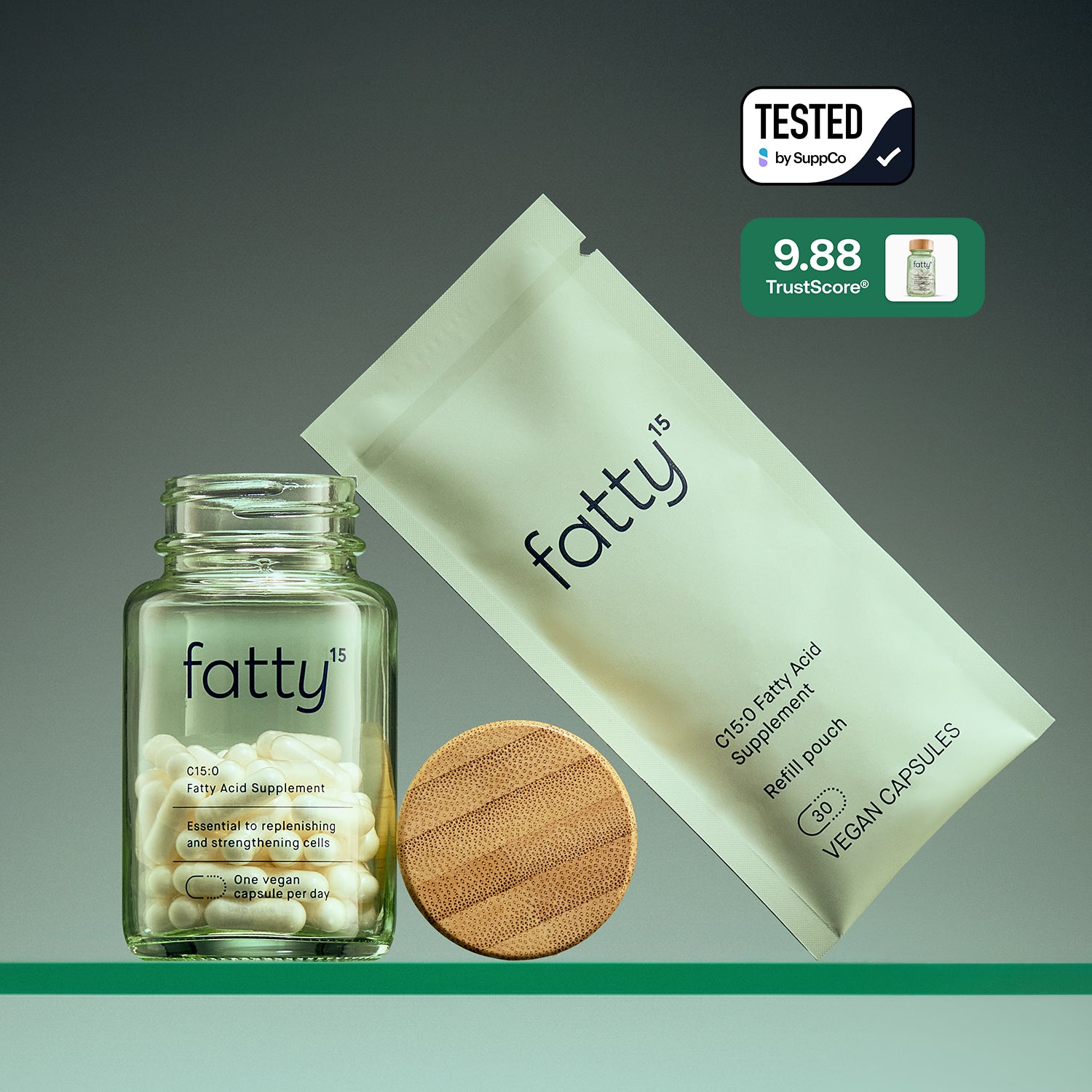
In addition, it’s worth noting that fatty15’s C15:0 supplement just passed the highest supplement test, TESTING by Suppco , earning a TRUST score of 9.88 (in the top 1% of all supplements tested).
Another factor distinguishing fatty15’s C15:0 supplement is its use of a pure, bioavailable free fatty acid form of C15:0 rather than relying on trace dietary intake alone. C15:0 is found primarily in full-fat dairy products that contain excessive calories and “bad” even-chain saturated fat. This makes it difficult to get the C15:0 your body needs through diet alone. *
Why Scientific Standards Matter More Than Ever
As interest in healthy aging and longevity science grows, consumers are becoming more aware that flashy marketing is not the same thing as scientific validation. The supplements most likely to earn long-term trust are those that invest in rigorous testing, transparent reporting, clinically relevant dosing, and high manufacturing standards.
Science-backed supplementation is not about hype or viral trends. It is about whether a product can stand up to scrutiny when people ask the most important question in wellness: where is the evidence? Fatty15’s C15:0 supplement is a well-researched, evidence-backed solution you can trust to deliver. Taking it once per day is an investment in your wellness that will pay dividends in your longevity.
|
*These statements have not been evaluated by the Food and Drug Administration. This product is not intended to diagnose, treat, cure, or prevent any disease. |
Frequently Asked Questions
What’s the difference between ingredient research and product testing?
Ingredient research looks at an individual nutrient, compound, or extract, often in a lab, animal model, or general human study. Product testing studies the actual supplement formula, dose, and form being sold. That matters because a product can contain a researched ingredient without using the same dose, delivery method, or formulation that was shown to be effective.
How can I confirm a supplement is truly science-backed?
Look for peer-reviewed research, multiple types of peer-reviewed studies supporting a supplements claims, transparent dosing, third-party testing, and clear reporting about study methods and funding. A truly science-backed supplement should make it easy to understand what was studied, how it was tested, and whether the product you are buying matches the evidence behind it.
What does “clinically proven” really mean for supplements?
For supplements, “clinically proven” should mean that human clinical studies were performed using the specific product and dose being marketed. It should not simply mean that one ingredient in the formula was studied separately or that early lab research showed potential.
How reliable are supplement certifications and third-party testing?
Third-party testing and certifications can help confirm product quality, label accuracy, purity, and the results of contaminant screening. However, they do not prove that a supplement provides health benefits. The strongest products combine quality testing with credible clinical evidence.
Sources:
What is the science behind ‘science-backed’ supplements? | Nature
Revealed: many common omega-3 fish oil supplements are ‘rancid’ | The Guardian
Pentadecanoic acid promotes basal and insulin-stimulated glucose uptake in C2C12 myotubes


