


What Makes a Fatty Acid “Essential?” And Where C15:0 Fits

Seraphina Therapeutics's Highlights
An "essential" fatty acid is one your body cannot make in sufficient amounts on its own, meaning it has to come from your diet. For more than 90 years, only two fatty acids met that bar: one omega-3 fatty acid and one omega-6 fatty acid. Researchers have proposed C15:0, an odd-chain saturated fatty acid, as the third essential fatty acid to be discovered, representing a new and developing field of nutritional science.
For more than 90 years, nutrition science has recognized exactly two essential fatty acids. That's how strict the definition of "essential" actually is. So when researchers began proposing a third candidate in 2020, it was worth paying attention to, if for no other reason than that this list changes so rarely.
In short, an essential fatty acid is one that the body cannot synthesize in adequate amounts on its own, meaning it must be obtained through diet. Two fatty acids, alpha-linolenic acid (an omega-3) and linoleic acid (an omega-6), have held that status for roughly 90 years.
More recently, a growing body of scientific publications supports C15:0 (pentadecanoic acid), an odd-chain saturated fatty acid, as the third essential fatty acid ever discovered. Further, over 150 peer-reviewed publications support the broad health benefits of this essential nutrient.
The Actual Scientific Definition of “Essential”
"Essential" is a precise term in nutrition science, not a marketing adjective. A nutrient earns essential status when it meets a specific set of criteria:
-
The body cannot synthesize it in sufficient quantities to meet its physiological needs.
-
It must therefore come from external dietary sources.
-
Its absence or insufficiency leads to a defined, identifiable deficiency condition with real health consequences.
This is different from a "non-essential" nutrient, which the body can produce on its own, even if that nutrient is still important for health. Cholesterol, for example, matters a great deal to human physiology, but the liver makes plenty of it internally, so it doesn't meet the essentiality bar.
The classic examples of this idea are vitamins. Vitamin C is essential because humans lack the enzymatic pathway to synthesize it; without adequate dietary vitamin C, the resulting deficiency is scurvy. Vitamin D deficiency causes rickets.
The same logic (cannot be made internally, must come from diet, and a deficiency causes a specific condition) is exactly what nutrition scientists use to evaluate whether a fatty acid deserves essential status.
The Two Long-Established Essential Fatty Acids
Since the 1930s, exactly two fatty acids have carried this designation: alpha-linolenic acid (ALA), an omega-3 fatty acid, and linoleic acid (LA), an omega-6 fatty acid.
Both are polyunsaturated fats found in plant oils, nuts, and seeds, and both serve as precursors that your body uses to build longer-chain fatty acids and inflammatory signaling molecules it can't otherwise construct from scratch.
Deficiency in either is rare in modern diets, but when it occurs, it produces recognizable symptoms: dry, scaly skin, impaired wound healing, and growth problems in children.
It's worth noting that other well-known omega-3s, like EPA and DHA, are not classified as essential in the strict sense; the body can convert some ALA into EPA and DHA, even though that conversion is inefficient.
For nearly a century, that was the complete list.
Why C15:0 Is Now Proposed as the Third
That changed in 2020, when a team led by veterinary epidemiologist Dr. Stephanie Venn-Watson published research in Scientific Reports examining pentadecanoic acid, or C15:0, an odd-chain saturated fatty acid found in trace amounts in whole-fat dairy, some fish, and plants.
The investigation started somewhat by accident. While studying healthy aging in a population of Navy dolphins, Venn-Watson and colleagues observed that dolphins with higher circulating C15:0 levels exhibited fewer age-related health issues than those with lower levels.
That observation led to a multi-year research effort, eight separate studies, examining whether C15:0 played an active, causal role in health rather than simply correlating with it.
The resulting paper made the case for essentiality on three grounds:
-
The body does not readily synthesize C15:0 in adequate amounts.
-
Lower circulating C15:0 levels and dietary intake are repeatedly associated with higher mortality and poorer metabolic health in population studies.*
-
Supplementation with C15:0 demonstrated measurable effects in cell-based and animal models, including attenuating inflammation, anemia, dyslipidemia, and liver fibrosis, potentially through interactions with metabolic regulators such as PPAR receptors and by supporting mitochondrial function.*
Since the 2020 paper, more than 150 additional peer-reviewed publications have examined C15:0, and researchers have proposed a corresponding deficiency condition, referred to as Cellular Fragility Syndrome, to describe what happens when circulating C15:0 runs low.
What Happens With a C15:0 Deficiency?
Researchers have proposed that chronically low C15:0 levels contribute to what's been described as Cellular Fragility Syndrome, a state in which cell membranes become more fragile and susceptible to ferroptosis, a form of cell death, with downstream effects on metabolic, liver, and cardiovascular health.
Population-wide C15:0 levels have declined in recent decades, largely tracking reductions in the consumption of whole-fat dairy products.
In the body, C15:0 has been shown to support cell membrane strength, repair mitochondrial function to help cells generate energy more efficiently, and activate PPAR receptors that help regulate metabolism, immunity, mood, and sleep.*
These combined effects are the proposed basis for its role in supporting long-term metabolic, liver, and cardiovascular health.*
Where You Get C15:0
C15:0 occurs naturally in trace amounts in whole-fat dairy products, along with some fish and plants. However, low-fat dietary trends over the past several decades have substantially reduced most people's intake. Plant-based milk alternatives, notably, contain none of it.
Because getting meaningful amounts through diet alone is difficult without also taking on excess calories and less favorable even-chain saturated fats, a supplement may be a good option. Fatty15 was created with funding from the US Navy to help restore global C15:0 levels.
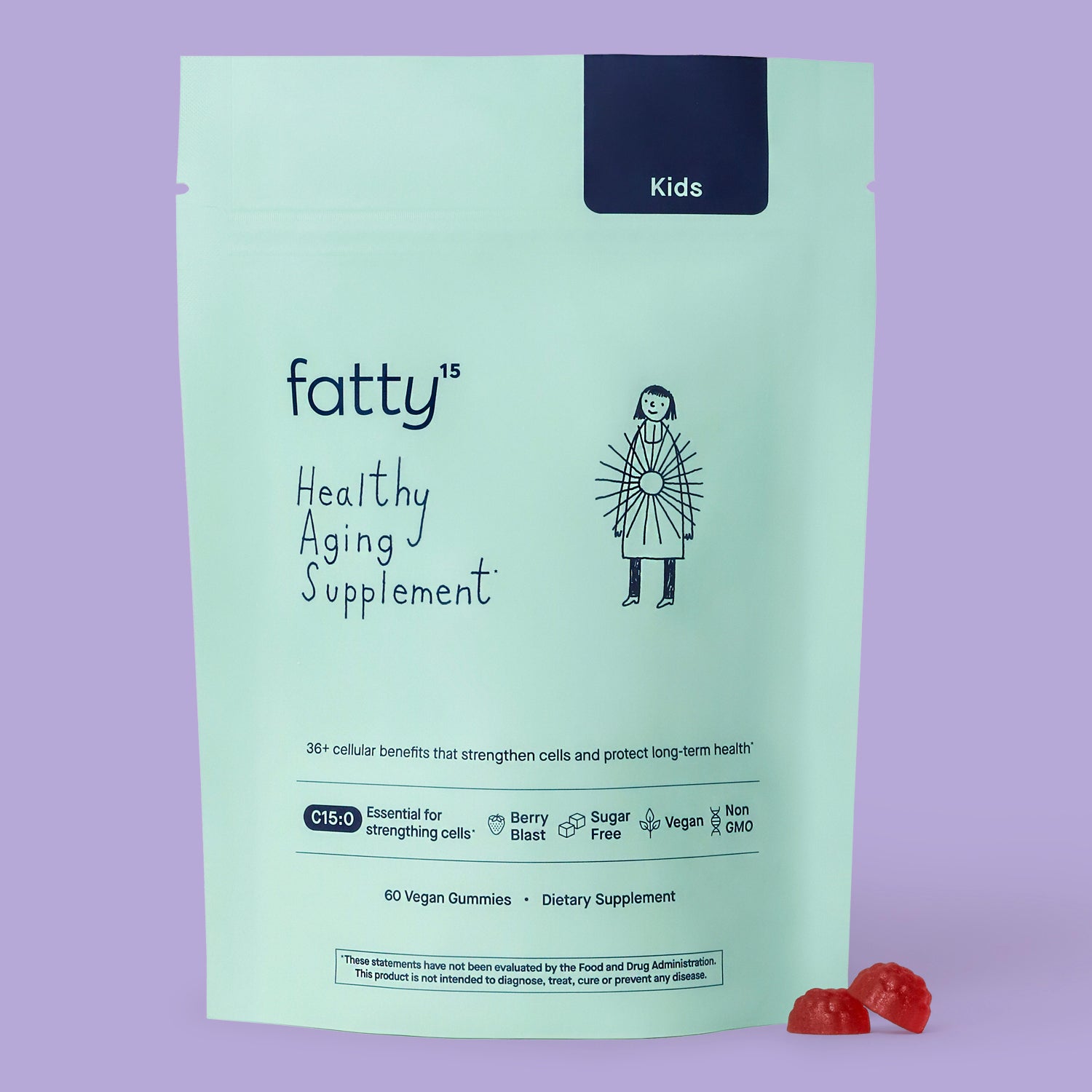
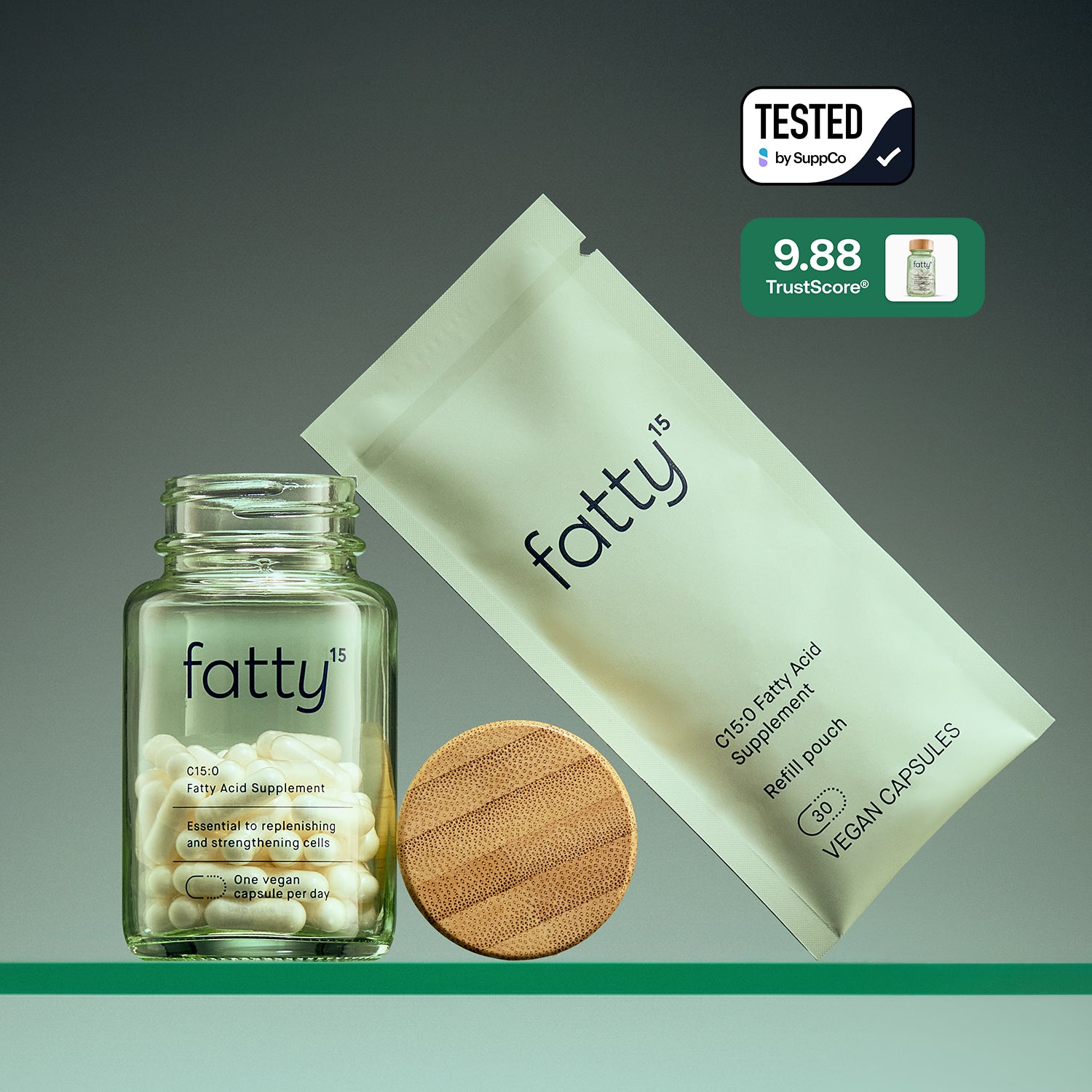
Fatty15 contains a pure, patented, vegan-friendly C15:0 ingredient that provides an easy way to elevate your circulating levels of C15:0 without consuming anything else your body simply doesn’t need.
Essential is Important
The science on C15:0 is still young compared to the 90-year track record behind omega-3 and omega-6. However, the underlying question is whether your body is getting enough of the fatty acid it needs and can't make on its own, which is the same one nutrition science has been asking for a century.
Fatty15 was developed to make that answer simple: one capsule a day delivers a pure, vegan-friendly form of C15:0, without the extra calories or even-chain saturated fats that come with whole-fat dairy.*
FAQs
What are the only essential fatty acids?
For over 90 years, the only recognized essential fatty acids were alpha-linolenic acid (an omega-3) and linoleic acid (an omega-6). A growing body of peer-reviewed publications support C15:0, an odd-chain saturated fatty acid, as the third to be discovered essential fatty acid, that also has broad health benefits.
Is C15:0 officially recognized as an essential fatty acid?
There is no official body that certifies a nutrient as being an essential fatty acid. Although the discovery of C15:0 as an essential nutrient is relatively recent, there is a growing body of evidence supporting C15:0 as an essential fatty acid, and the first to be discovered in over 90 years. Dr. George and Mildred Burr published in 1929 and 1930 that LA and ALA were essential fatty acids based on a gold standard rodent model that is used to identify essential nutrients. This same gold standard model was recently used by an independent team to evaluate C15:0, and this study showed that C15:0 met the criteria of essentiality as well as LA.
What happens if you're deficient in an essential fatty acid?
Deficiency of a true essential fatty acid leads to a specific, identifiable condition: dry skin and growth issues with ALA/LA deficiency, or, in the case of low C15:0, proposed cellular fragility and related metabolic effects.
What's the difference between omega-3, omega-6, and C15:0?
ALA (omega-3) and LA (omega-6) are polyunsaturated fats from plant sources with a 90-year history as essential nutrients. C15:0 is an odd-chain saturated fat found mainly in whole-fat dairy, proposed more recently as a third essential fatty acid based on emerging research.
|
*These statements have not been evaluated by the Food and Drug Administration. This product is not intended to diagnose, treat, cure, or prevent any disease. |
Sources:


