


Saturated vs Unsaturated Fats Explained | Fatty15

Seraphina Therapeutics's Highlights
- Saturated and unsaturated fats differ not just by chemistry, but by how they behave in the body.
- New research shows the type of saturated fat matters more than the category itself.
- An odd-chain saturated fat called C15:0 is now emerging as an essential nutrient your body needs to thrive and support longevity.*
If you’ve ever stood in the grocery store aisle, staring at labels that read ‘low-fat,’ ‘heart-healthy,’ or ‘made with good fats,’ there’s a reason. For decades, we’ve been moralizing fats into ‘good’ or ‘bad.’ We’ve learned that unsaturated fats are good, saturated fats are bad, and the fewer grams of fat on the label, the better.
But nutrition science is ever-evolving and has a way of humbling tidy rules. In early 2026, the updated Dietary Guidelines for Americans (2026–2030) quietly signaled a meaningful shift by allowing some saturated fats back into recommended eating patterns.
At the same time, a wave of large, peer-reviewed studies reignited debate around saturated fats, whole-fat dairy, heart health, diabetes, and even cognitive aging.
The nutrition tides are changing, and it’s no longer possible to keep fat in neat, good vs. bad categories. Now, it’s more important to understand the difference between saturated and unsaturated fats and which ones your body needs to thrive.
Let’s Start at the Beginning: What Are Fats?
Fats are one of the three macronutrients, including carbohydrates and protein, that provide energy and structure for the body. Fats are essential for absorbing fat-soluble vitamins (A, D, E, and K), building cell membranes, producing hormones, and supporting brain health.
Chemically, fats are chains of carbon atoms surrounded by hydrogen atoms. The way those atoms bond determines whether a fat is classified as saturated or unsaturated. That chemistry directly affects how fats behave in food, in the bloodstream, and inside your cells.
Why Unsaturated Fats Have Long Been the Favorite
Unsaturated fats are often called “healthy fats,” and for good reason. Their chemical structure includes one or more double bonds, which introduce bends into the fatty acid chain. These bends prevent the molecules from packing tightly together, keeping them liquid at room temperature.
Types of Unsaturated Fats
Monounsaturated fats have one double bond and are commonly found in olive oil, avocados, and many nuts. Polyunsaturated fats have multiple double bonds and include omega-3 and omega-6 fatty acids found in fish, seeds, and certain plant oils.
For decades, research has shown that replacing some saturated fats with unsaturated fats can improve cholesterol profiles , particularly by lowering LDL (“bad”) cholesterol. Unsaturated fats have also been linked to reduced cardiovascular risk when consumed as part of overall dietary patterns, such as the Mediterranean diet.
Because of this evidence, public health guidance for much of the past 50 years emphasized unsaturated fats as the safer, smarter choice, often without much nuance beyond that.
The Stuff We Missed
Unfortunately, it’s not all good news for unsaturated fats. Arguably the most popular, omega-3, has an Achilles’ heel. At high doses, it can cause thinning of the blood, bruising, and difficulty with clotting if an injury occurs.
In addition, fish oil supplements, which are popular for omega-3 supplementation, are often rancid before they are purchased , due to the fact that it isn’t solid at room temperature and can spoil.
How Saturated Fats Got a Bad Reputation
Saturated fats have no double bonds; their carbon chains are fully “saturated” with hydrogen atoms. This structure allows them to stack neatly, which is why saturated fats tend to be solid at room temperature. Butter, cheese, cream, and animal fats fall into this category, as does coconut oil.
Beginning in the 1970s , saturated fats were the number one suspects in rising rates of heart disease. Early observational studies suggested a relationship between saturated fat intake, higher cholesterol levels, and cardiovascular events. In response, the 1977 Dietary Guidelines encouraged Americans to reduce saturated fat intake, especially from dairy and animal sources.
The intent was good. At the time, heart disease rates were high, and scientists lacked the tools to distinguish between different types of fatty acids in the bloodstream. Saturated fat was treated as a single category, assumed to behave uniformly in the body.
Unfortunately, the crusade to make Americans more heart-healthy by avoiding fat didn’t work. While saturated fat intake declined, rates of obesity and type 2 diabetes climbed dramatically. That led nutrition scientists to propose a new question: Was the problem saturated fat itself, or our overly broad definition of it?
Why “Saturated Fat” Is an Oversimplification
Here’s where modern research fundamentally changes the conversation.
Not all saturated fats are chemically identical. One of the most important distinctions is chain length. Saturated fats can be categorized as even-chain or odd-chain, depending on the number of carbon atoms in the molecule.
Even-chain saturated fats, such as palmitic acid (C16:0), are the most abundant in meat, whole-fat dairy, and many processed foods. These fats have been repeatedly associated with inflammation, insulin resistance, and higher cardiometabolic risk when consumed in excess.
Odd-chain saturated fats, particularly pentadecanoic acid (C15:0), behave very differently. Rather than being linked to disease risk, higher circulating levels of these fats have consistently been associated with better metabolic health.*
For years, odd-chain fats were dismissed as inert markers of dairy intake. That assumption has now been overturned.
What the Latest Research Tells Us About Saturated Fats
Several major studies published between late 2025 and early 2026 reshaped how scientists understand saturated fats.
Reducing saturated fat intake did not improve heart health in low-risk populations.
A study in Annals of Internal Medicine found that among people with low cardiovascular risk, reducing saturated fat intake provided little to no benefit over five years. The takeaway isn’t that saturated fat is harmless, but that blanket reductions may not be universally helpful.
Consuming dairy fat may protect against dementia.
Another long-term study published in Neurology followed participants for 25 years and found that those who consumed more whole-fat dairy had a lower risk of developing dementia .
Higher C15:0 levels are associated with reduced risk of metabolic disease.
A large dose-response meta-analysis published in Advances in Nutrition examined fatty acid biomarkers from 27 prospective cohort studies involving more than 100,000 people worldwide. Higher circulating levels of C15:0 and C17:0 were the strongest predictors of reduced risk for developing type 2 diabetes.
For every 0.1% increase in circulating C15:0, diabetes risk dropped by 32%. In contrast, higher levels of even-chain saturated fats were associated with increased risk. These findings suggest that the long-standing “saturated fat” category has been masking important biological differences.
Why Whole Dairy Got Pardoned
Whole-fat dairy has emerged as a particularly interesting source of odd-chain saturated fats. Cheese, butter, and cream contain small but meaningful amounts of C15:0, especially when sourced from grass-fed animals.
This helps explain why studies on dairy fat often produce mixed results. Dairy contains both beneficial odd-chain fats and potentially harmful even-chain fats, along with proteins, minerals, and bioactive compounds that influence metabolism. Looking at saturated fat content alone misses the bigger picture.
It also explains why the updated Dietary Guidelines moved away from recommending exclusively low-fat dairy as they had done for decades. Science now supports a more nuanced view that is important to understand. Some whole-fat dairy foods can fit into a healthy dietary pattern without increasing cardiometabolic risk and may even offer beneficial and protective health benefits.
If you think you’ve got it figured out, there’s more. Simply adding a couple of glasses of whole-fat milk to your daily diet isn’t the key to making the most of the new dietary guidelines, and it certainly wouldn’t be the best solution for your health.
Before we go further, let’s talk about the odd-chain saturated fatty acid inside whole dairy that is making headlines in nutrition science, C15:0.
Cellular Stability and Long-Term Health
C15:0 is an odd-chain, saturated fatty acid that is essential. Essential means our bodies need it to thrive, but cannot readily make it on their own. That means we have to get it from food or supplements. C15:0 is important because of the way it supports our cells, the very foundations of our health.*
Why does C15:0 matter so much at the cellular level?
Cell membranes rely on specific fatty acids to remain strong, flexible, and resistant to oxidative damage. C15:0 has been shown in to strengthen membrane integrity , support mitochondrial function , and help regulate inflammatory signaling.*
Low levels of C15:0 are associated with a deficiency known as Cellular Fragility Syndrome , a condition in which fragile cell membranes are more susceptible to lipid peroxidation and a process known as ferroptosis, a form of iron-driven cell damage increasingly linked to aging and chronic disease.*
The good news is that fixing Cellular Fragility Syndrome is possible by simply elevating your circulating levels of C15:0. It might seem like the perfect way to accomplish this task is to consume a ton of whole-fat dairy, but not so fast. There’s a catch.
Why Eating More Whole Dairy Isn’t the Fix
There are a few reasons why consuming more whole-fat dairy isn’t the best option for increasing your C15:0 levels.
First, in whole-fat dairy, C15:0 is attached to branches of lipids called triglycerides. That means our gut has to use digestive enzymes to break down the triglycerides and free the C15:0. This makes it less efficient for absorption.
Second, and most importantly, dairy contains a lot of “bad” even-chain saturated fat and only a small amount of C15:0. While consuming whole-fat dairy to get your C15:0, you’d be consuming a lot of unwanted saturated fat that is consistently associated with negative health outcomes.
Third, whole-fat dairy contains a ton of calories and excess sugar from lactose, two ingredients that aren’t going to help with your waistline. And finally, consuming whole dairy involves cows. If you are vegan or reducing your animal product intake, consuming more dairy isn’t the answer for increasing your C15:0.
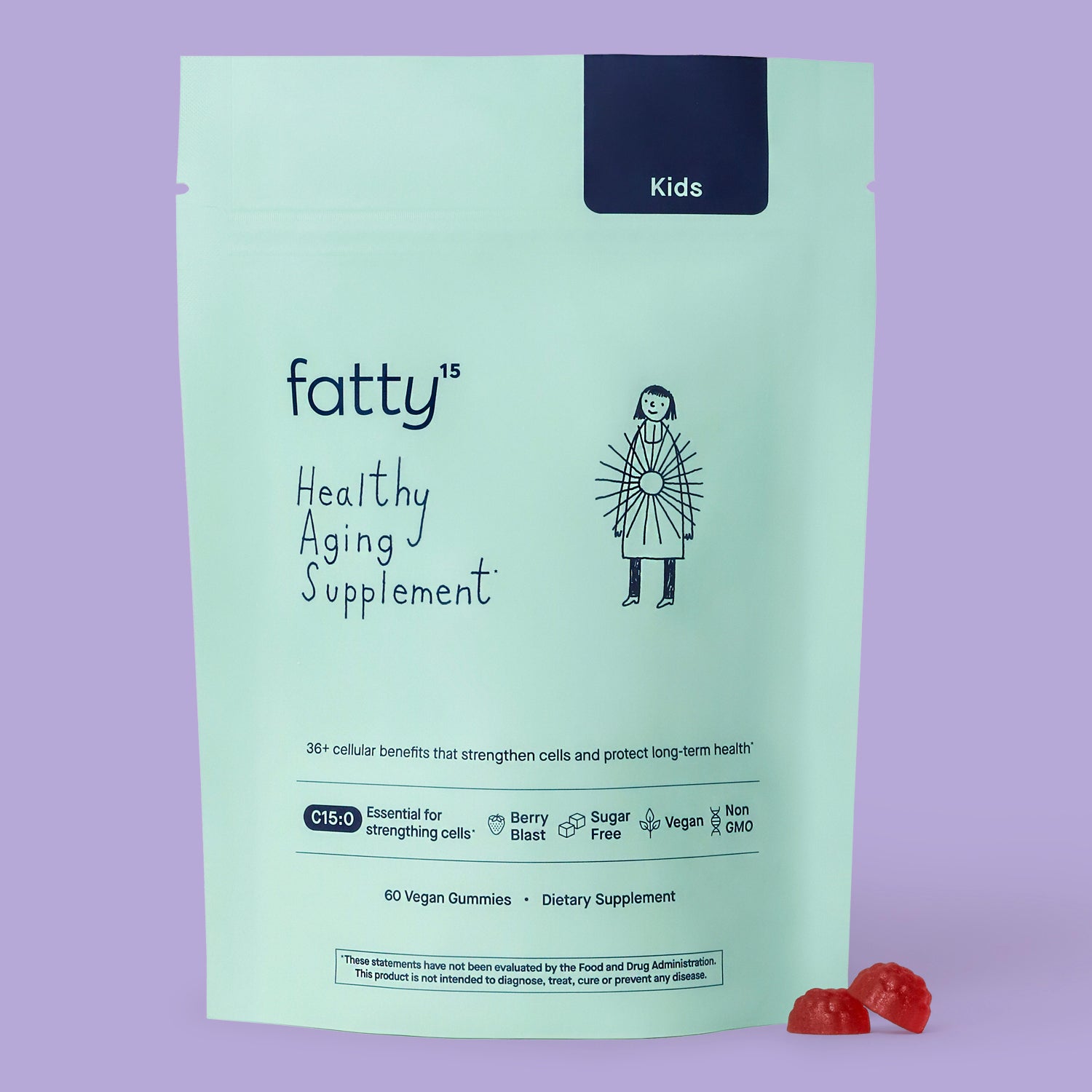
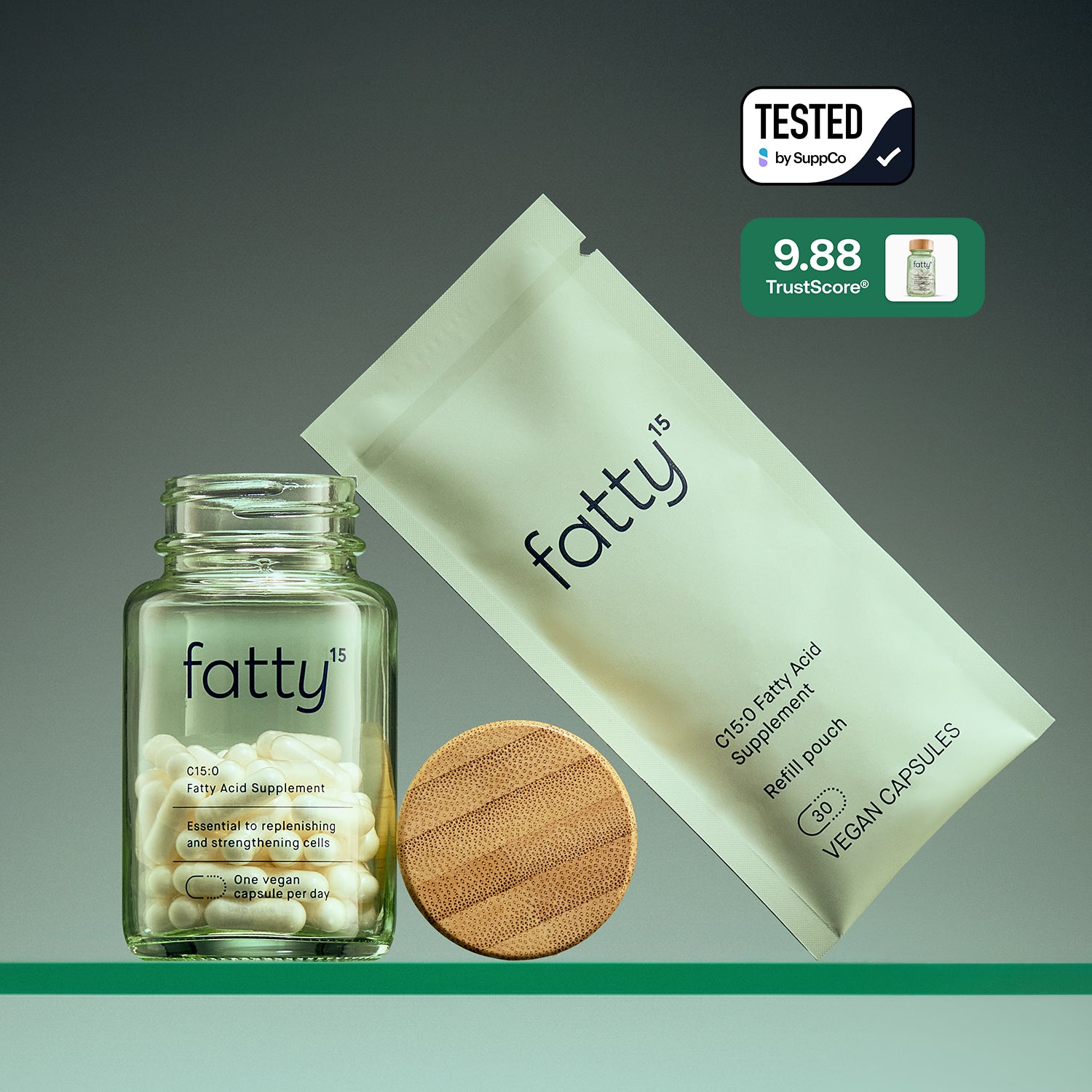
The fix? Fatty15 , the first and only supplement, born of scientific research , that contains the pure, vegan-friendly version of C15:0. At just one calorie per dose, it contains all the valuable C15:0 you need, and nothing you don’t.*
Adding it to your daily health stack is an easy way to level up wellness and stay current with the new health guidelines.
So, What’s the Takeaway?
The difference between saturated and unsaturated fats is real, but it’s no longer sufficient on its own. Unsaturated fats remain foundational to a healthy diet, yet the blanket avoidance of saturated fats is increasingly unsupported by modern evidence.
What matters most is which saturated fats you consume, where they come from, and how they function in the body. Odd-chain saturated fats like C15:0 are challenging decades-old assumptions and offering new insight into cellular health, metabolic resilience, and healthy aging.
As nutrition science becomes more precise, so should our choices. Instead of fearing fat categories, we can focus on understanding them and using that understanding to support long-term health in smarter, more individualized ways.
FAQs
Which fat is healthier, saturated or unsaturated?
Unsaturated fats (monounsaturated and polyunsaturated) are considered good fats, promoting heart health by improving cholesterol levels. It’s important to limit some types of saturated fat. However, some saturated fats, like C15:0, are associated with positive health outcomes.
What is the difference between saturated and unsaturated fats?
The difference between saturated and unsaturated fats refers to the number of hydrogen atoms attached to each carbon atom in a molecule of fat.
What are the top 5 healthiest fats to eat?
Healthy fats include avocados, fatty fish, nuts, seeds, and extra virgin olive oil. C15:0, an essential fatty acid that your body needs to thrive, is best sourced from fatty15.
Are eggs high in saturated fat?
No, eggs are not considered high in saturated fat; they contain a moderate amount (around 1.5-3.4g per large egg).
|
*These statements have not been evaluated by the Food and Drug Administration. This product is not intended to diagnose, treat, cure, or prevent any disease. |
Sources:
Dietary Guidelines for Americans
Fats in Foods | American Heart Association
High- and Low-Fat Dairy Consumption and Long-Term Risk of Dementia | Neurology


