


What Are the Best Anti-Aging Supplements?

Seraphina Therapeutics's Highlights
- The best anti-aging supplements support cellular health, mitochondrial function, and healthy aging pathways.
- Evidence-based ingredients like C15:0, omega-3s, CoQ10, vitamin D, and NAD+ precursors may help support healthspan and metabolic resilience.
- Fatty15 delivers pure, bioavailable C15:0 to strengthen cells, support mitochondrial health, and promote healthy aging from the cellular level.*
Today’s best anti-aging supplements are not just about appearance or short-term energy boosts. Instead, many are designed to support the underlying biological systems associated with healthy aging, including cellular strength, mitochondrial function, healthy inflammatory response, metabolic health, and cognitive resilience.
What Is Cellular Aging?
Over time, cells become less resilient and more vulnerable to oxidative stress, mitochondrial decline, and chronic inflammation. Scientists now understand that these deeper biological processes tie many age-related changes together.
Researchers are focusing more on supplements that support healthspan, the number of years we live in good health, rather than simply lifespan alone.
With so many products marketed as “anti-aging,” it can be hard to know which supplements science actually supports. Here are five of the most widely studied and evidence-based anti-aging supplements today, along with an explanation of why cellular health is becoming the foundation of modern longevity science.
1. Magnesium
Magnesium is one of the most important minerals involved in healthy aging and overall cellular function. It plays a role in more than 300 biochemical reactions throughout the body, including muscle function, nerve signaling, sleep regulation, energy production, and metabolic health.
Because magnesium is required for ATP production (the primary energy currency of our cells), it has become increasingly associated with healthy aging and mitochondrial support. Research suggests magnesium may help support:
-
Healthy sleep quality
-
Muscle and nerve function
-
Energy production
-
Cardiovascular health
-
Healthy stress response
-
Metabolic balance
Low magnesium levels are common, especially as people age or experience chronic stress. Modern diets also tend to provide lower magnesium intake than optimal levels.
For many adults, magnesium is a foundational wellness supplement that supports overall cellular function and resilience. Different forms of magnesium may offer slightly different benefits, including magnesium glycinate for relaxation and sleep support or magnesium citrate for digestive support.
Like many evidence-based longevity supplements, magnesium works best as part of a broader healthy aging strategy focused on nutrition, sleep, movement, and cellular health.
2. NAD+ Precursors (NMN and NR)
NAD+ precursors like nicotinamide riboside (NR) and NMN have become highly popular in the longevity space due to their role in cellular energy production. NAD+ is a coenzyme involved in mitochondrial function and metabolic processes. Unfortunately, NAD+ levels naturally decline with age.
Supplements like NR and NMN are designed to help replenish NAD+ levels and support healthy cellular energy production. Human studies have shown that these compounds can successfully raise NAD+ levels , and some studies suggest potential benefits for insulin sensitivity, energy metabolism, and healthy aging biomarkers.
Because mitochondria produce energy within our cells, maintaining healthy mitochondrial function is increasingly recognized as a critical component of healthy aging. That said, researchers continue to study the long-term effects and optimal dosing strategies for NAD+ supplementation, as much of the excitement around these compounds is still evolving.
3. Coenzyme Q10 (CoQ10)
CoQ10 is another supplement frequently associated with healthy aging and mitochondrial support. CoQ10 is naturally produced by the body and plays an important role in helping mitochondria generate cellular energy. However, natural CoQ10 production tends to decline with age.
This decline has led many researchers to investigate whether supplementation may help support the following:
-
Cellular energy production
-
Heart health
-
Exercise recovery
-
Healthy aging
-
Antioxidant protection
CoQ10 is especially popular among adults interested in maintaining energy levels and supporting cardiovascular wellness as they age. Like many longevity supplements, CoQ10 is best understood not as a miracle “anti-aging” solution, but as one piece of a broader cellular health strategy.
4. Vitamin D
Vitamin D is one of the most important nutrients for overall wellness and long-term health. While it is often associated with bone health, vitamin D also plays roles in immune function, metabolic health, muscle function, and cellular signaling.
Low vitamin D levels have been associated with numerous age-related health concerns, which is why many healthcare providers routinely monitor vitamin D as part of preventive care.
Vitamin D is particularly important because deficiencies are extremely common, especially among adults with limited sun exposure. Supporting healthy vitamin D levels may help maintain the following:
-
Immune resilience
-
Bone strength
-
Muscle health
-
Healthy aging
-
Overall wellness
5. Polyphenols Like EGCG and Resveratrol
Polyphenols are plant compounds studied for their antioxidant and cellular signaling properties. Two of the most well-known longevity-focused polyphenols are EGCG, found in green tea, and resveratrol, found in grapes and red wine.
EGCG has demonstrated cardiovascular , neuroprotective, immune-supporting, and anti-inflammatory activities in studies. Resveratrol has also attracted attention for its role in cellular signaling pathways involved in aging and metabolic function.
Researchers are especially interested in how these compounds may influence oxidative stress and cellular communication. Oxidative stress refers to an imbalance between damaging free radicals and the body’s ability to counteract their effects.
Over time, oxidative stress can accelerate cellular aging and contribute to mitochondrial dysfunction and inflammation. While polyphenols remain an exciting area of longevity research, experts also note that dosing, bioavailability, and long-term safety remain important considerations, particularly with high-dose supplementation.
6. C15:0
One of the biggest shifts in longevity research is the growing realization that healthy aging depends heavily on cellular resilience. Strong, stable cells are better able to maintain energy production, healthy signaling, and resistance to age-related stressors.
Weak cells, on the other hand, may become increasingly vulnerable to lipid peroxidation, oxidative stress, inflammation, and dysfunction over time.
This is one reason why scientists are paying closer attention to nutrients that directly support cellular stability and mitochondrial health. Among the most exciting discoveries in this area is C15:0, also known as pentadecanoic acid.
What Is C15:0?
C15:0 is the first essential fatty acid to be discovered in more than 90 years and is increasingly recognized for its role in supporting cellular resilience and healthy aging.
Unlike nutrients the body can make on its own, essential fatty acids must come from our diet or supplementation. Research suggests that declining C15:0 levels may contribute to fragile cells that are more vulnerable to age-related breakdown.* What makes C15:0 different from many anti-aging supplements is that it targets the foundation of healthy aging itself: our cells.
How It Works
C15:0 works by integrating into our cells to help restore them. Research has shown that pure C15:0 may help:
-
Support strong cell membranes and protect against lipid peroxidation*
-
Support mitochondrial function in cellular studies*
-
Maintain cellular energy production*
-
Support healthy inflammatory responses*
-
Activate AMPK and PPAR pathways involved in metabolic and cellular healt h*
-
Support healthy glucose response and liver health markers*
Getting C15:0
While C15:0 is naturally found in whole-fat dairy products like butter and full-fat milk, getting enough through food alone can be challenging. Modern diets contain significantly lower levels of C15:0 than they did decades ago, and dairy sources also come with excess calories, sugars, and higher amounts of even-chain saturated fats.
Supplementation offers a more efficient and targeted approach. A solution? Fatty15.
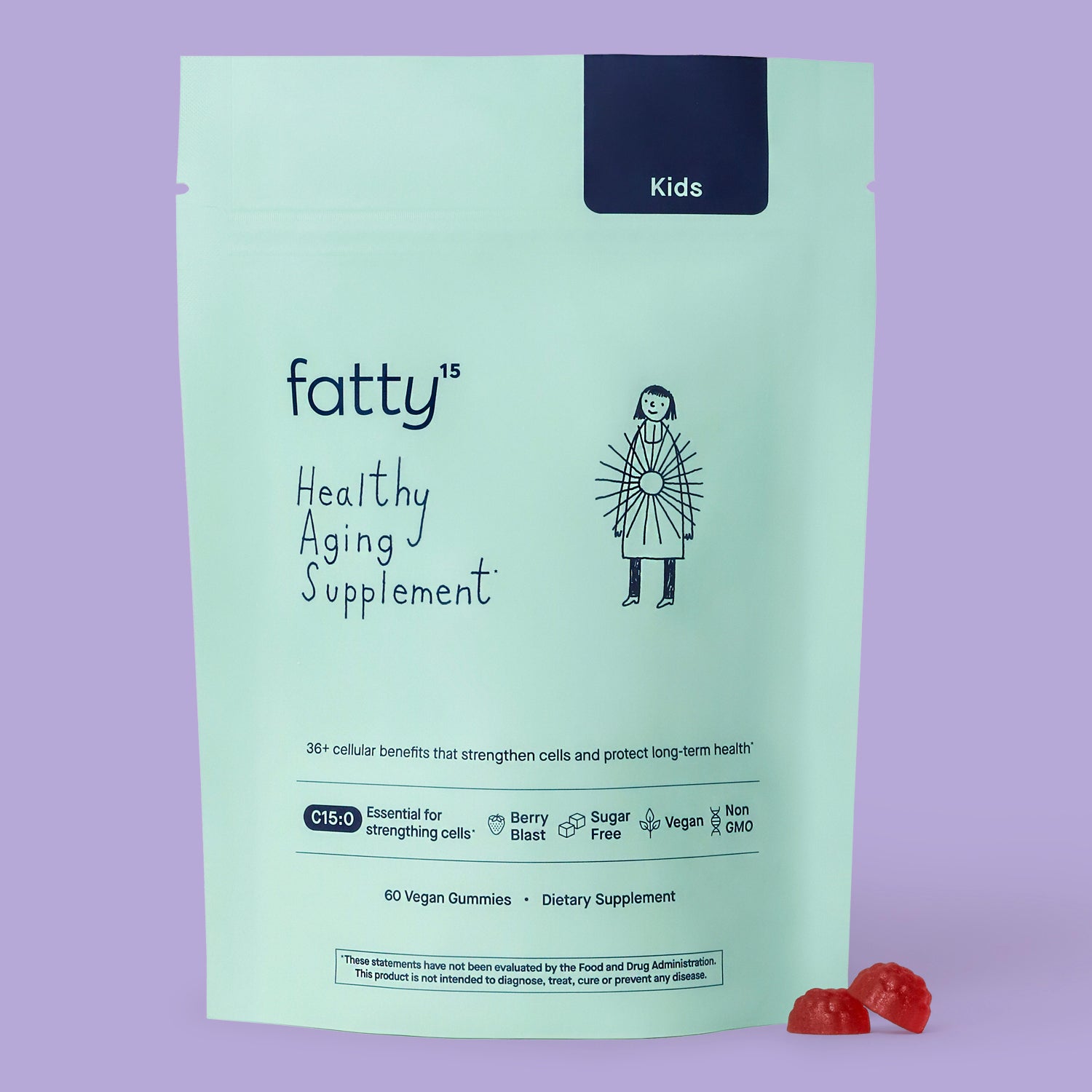
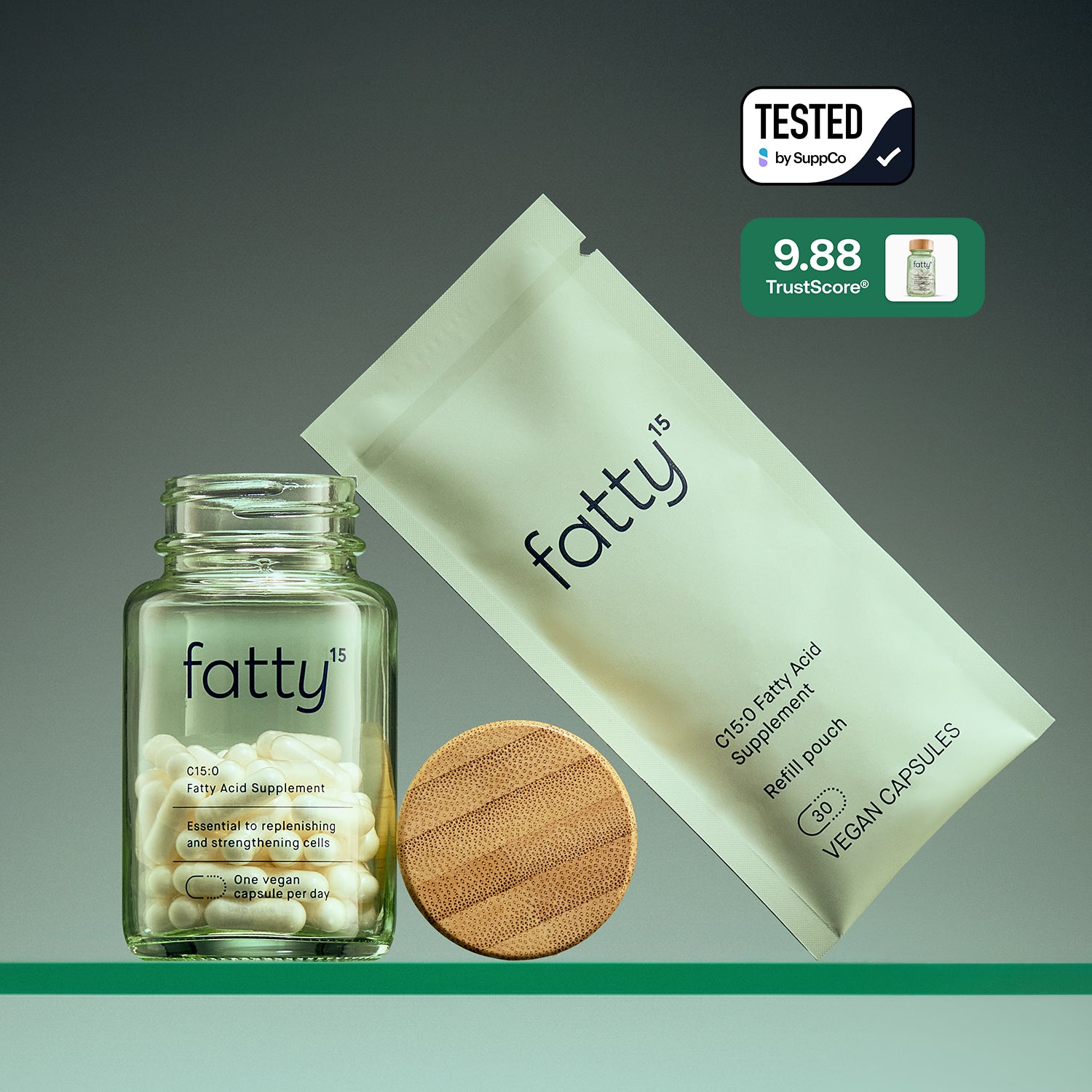
Fatty15 is the first and only supplement to contain FA15™, the pure, vegan-friendly, free fatty acid form of C15:0. At just one calorie per serving, it provides a simple way to help restore healthy C15:0 levels and support long-term cellular health. *
The Best Anti-Aging Supplements Support Healthspan, Not Just Lifespan
No supplement can stop aging entirely, and currently, no supplement has been definitively proven to extend human lifespan in large-scale clinical trials.
However, increasingly, science supports the idea that certain nutrients and compounds may help support healthier aging by improving cellular resilience, mitochondrial function, metabolic health, and inflammatory balance.
By helping strengthen cells, support mitochondrial health, and promote long-term cellular resilience, C15:0 represents an exciting new frontier in evidence-based longevity science. *
Frequently Asked Questions about Anti-Aging Supplements
What are the best anti-aging supplements?
Top science-backed anti-aging supplements include NAD+ boosters like NMN and NR, collagen peptides for skin elasticity, resveratrol for antioxidant support, vitamin D, and C15:0. Each targets distinct aspects of cellular aging to achieve a comprehensive approach.
Do anti-aging supplements really work?
Anti-aging supplements show mixed but promising results, with some improving specific health markers such as skin, cognition, or metabolic function. For best results, supplements should complement a healthy diet and lifestyle.
What is the best supplement for anti-aging?
NAD+ precursors such as NMN and NR are often considered top options due to their support for mitochondrial energy and cellular repair, but other proven choices include collagen peptides, vitamin D3, and CoQ10.
What supplements slow down aging?
Supplements like senolytics (fisetin, quercetin), spermidine, and omega-3s are linked to slowing some biological aging markers, though more human research is needed to confirm their long-term effects.
|
*These statements have not been evaluated by the Food and Drug Administration. This product is not intended to diagnose, treat, cure, or prevent any disease. |
Sources:
Hallmarks of aging: An expanding universe | PubMed


