


What Are Odd-Chain Saturated Fatty Acids, and Why Do Scientists Care?

Seraphina Therapeutics's Highlights
- Odd-chain saturated fatty acids like C15:0 are structurally different from common saturated fats and may support healthy aging pathways.*
- Emerging research links higher C15:0 levels with metabolic, heart, liver, and cellular health benefits.*
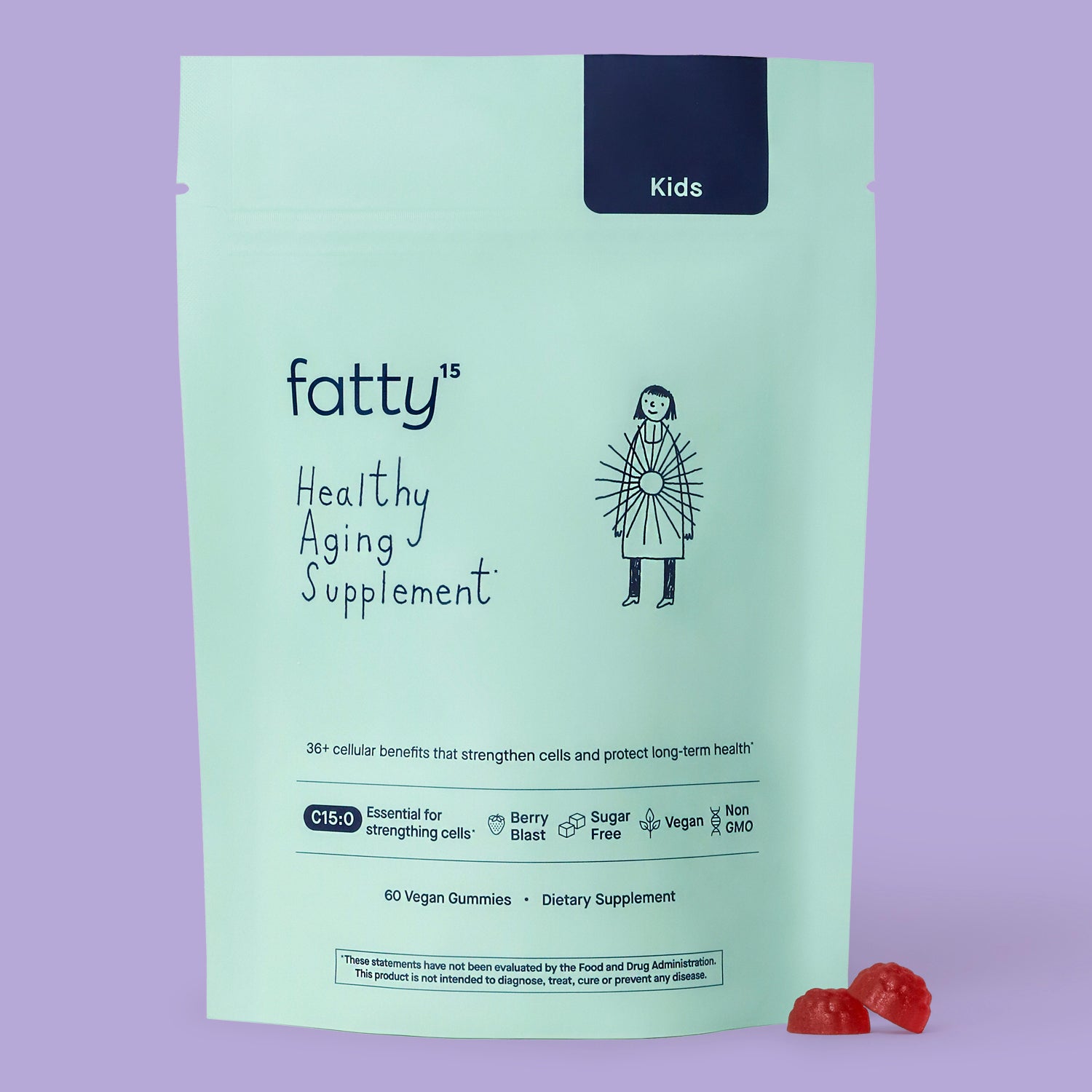
- Fatty15 provides a pure, vegan-friendly C15:0 supplement designed to support cellular resilience and long-term wellness.*
- For decades, saturated fats were often grouped into a single category in nutrition conversations: bad. But emerging longevity science is revealing that not all saturated fats behave the same way in the body. In particular, scientists are paying close attention to a unique class of fats called odd-chain saturated fatty acids (OCS-FAs), especially pentadecanoic acid (C15:0).
- These fatty acids are being studied for their roles in cellular resilience, metabolic health, mitochondrial function, and healthy aging. What began as a niche area of fatty acid research has evolved into one of the more important developments in modern nutritional science.
- Today, OCS-FAs are no longer viewed solely as biomarkers of dairy intake. Researchers are now exploring whether these fatty acids may function as essential nutrients that support long-term cellular health.
.What Are Odd-Chain Saturated Fatty Acids?
OCS-FAs are types of saturated fat whose molecular structure contains an odd number of carbon atoms.
The two most studied examples are:
-
C15:0 (pentadecanoic acid)
-
C17:0 (heptadecanoic acid)
This sets them apart from the more common even-chain saturated fats, such as palmitic acid (C16:0) and stearic acid (C18:0). Unlike polyunsaturated fats, saturated fatty acids contain no double bonds between carbon atoms. However, odd-chain fats differ because their carbon chains end in an odd number rather than an even one.
How Odd-Chain Saturated Fatty Acids Differ From Even-Chain Saturated Fats
At first glance, odd-chain and even-chain saturated fats may seem almost identical. But small structural differences can lead to bigger biological differences. Most saturated fats (like C16:0 and C18:0) found in the human diet contain even numbers of carbon atoms.
-
C16:0 (palmitic acid)
-
C18:0 (stearic acid)
Odd-chain saturated fats like C15:0 and C17:0 are less common and appear to behave differently metabolically. One key distinction involves how these fats break down during metabolism.
Even-chain saturated fats primarily generate acetyl-CoA during fatty acid oxidation. Odd-chain fatty acids, however, ultimately produce propionyl-CoA in addition to acetyl-CoA. Propionyl-CoA feeds into multiple metabolic pathways involved in energy regulation and cellular signaling, so this distinction affects how OCS-FAs behave in the body.
Natural Sources and Metabolism of Odd-Chain Saturated Fatty Acids
Odd-chain saturated fatty acids enter the body through both dietary intake and limited endogenous production. The richest dietary sources are typically ruminant-derived foods because bacteria in the rumen of grazing animals help generate OCS-FAs naturally.
Main Sources of OCS-FAs
-
Whole-fat dairy products
-
Butter
-
Cheese
-
Yogurt
-
Some ruminant meats
-
Trace amounts in certain fish
-
Limited gut microbial production
Researchers note that OCS-FAs ranging from C13 to C19 are present in trace amounts throughout human tissues, with diet being the primary determinant of circulating levels.
We used to consume greater amounts of C15:0 through traditional whole-food diets rich in dairy fat. However, decades of low-fat dietary recommendations significantly reduced the intake of these foods. This shift is one reason scientists are now studying whether modern populations may have chronically low circulating levels of C15:0.
Scientific Interest in Odd-Chain Saturated Fatty Acids
Scientific interest in OCS-FAs has increased quickly over the past decade. Initially, researchers mainly viewed these fatty acids as biomarkers that reflected dairy intake.
Higher circulating C15:0 levels were interpreted as evidence that someone consumed more dairy products. But newer research suggests something much more interesting may be happening.
Studies now indicate that some odd-chain fatty acids may actively participate in the following:
-
Cellular signaling
-
Mitochondrial regulation
-
Inflammatory balance
-
Metabolic health
-
Cellular resilience
These discoveries helped shift OCS-FAs from being viewed as passive biomarkers to potential metabolic regulators.
Why Scientists Study C15:0 Specifically
Among all odd-chain fatty acids, C15:0 has received the most scientific attention. C15:0 has a broad range of cellular activities observed in laboratory studies.
Research has shown that C15:0:
-
Protects against lipid peroxidation*
-
Improves mitochondrial function in cellular studies*
-
Activates AMPK pathways*
-
Supports healthy metabolic signaling *
-
Supports red blood cell health in relevant models*
Importantly, researchers have also reported that C15:0 demonstrated 36+ cellular benefits in cell-based longevity testing . Another reason scientists care about C15:0 is its relationship with healthy aging.
Studies examining long-lived populations have found that people with higher circulating C15:0 levels often demonstrate healthier aging-associated markers. Research involving Blue Zone populations, including Sardinia, showing that people living in these longevity zones have higher levels of C15:0, have further increased interest in the relationship between C15:0 and longevity.*
Current Scientific Debates and Future Research Directions
Researchers around the world are now looking deeper into the broad health benefits of C15:0.
Researchers are focusing on:
-
Additional randomized, placebo-controlled clinical trials
-
Long-term human outcome studies
-
Microbiome interaction mapping
-
Improved lipidomic testing methods
-
Better understanding of optimal circulating C15:0 levels
As the science evolves, the conversation around saturated fat is becoming much clearer, that some types of saturated fats are an important part of a healthy diet.
Why Fatty15’s C15:0 Supplement is Important
The growing scientific interest in C15:0 directly led to the creation of fatty15’s C15:0 supplement. The discovery story began with Navy dolphins. While studying healthy aging in dolphins under U.S. Navy care, Dr. Stephanie Venn-Watson and her research team observed that dolphins with higher circulating C15:0 levels showed healthier metabolic aging markers.
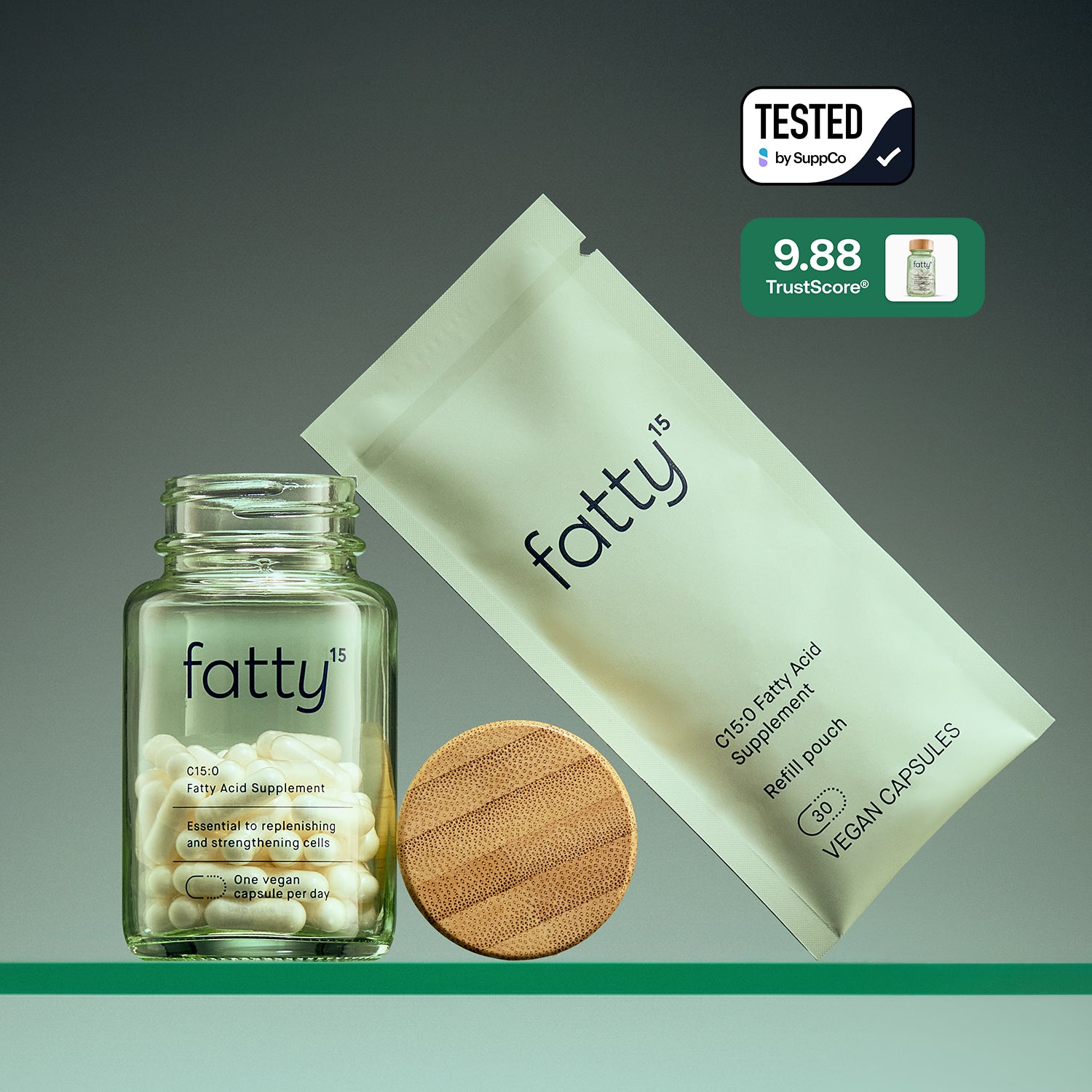
That discovery eventually led to years of follow-up research exploring C15:0’s role in cellular health and longevity science. Today, there are more than 150 peer-reviewed publications supporting the broad health benefits of C15:0. Fatty15’s C15:0 supplement provides pure FA15™, a vegan-friendly C15:0 ingredient designed to help increase circulating levels of this emerging essential fatty acid.
Unlike obtaining trace amounts of C15:0 through whole-fat dairy intake, fatty15’s supplement offers:
-
a pure powder form
-
ready-to-absorb free fatty acid delivery
-
one calorie per serving
-
vegan-friendly sourcing
-
SuppCo Tested score of 9.88 (the top 1% of all supplements tested)
Fatty15’s C15:0 supplement also avoids some of the downsides associated with increasing dairy intake, including excess calories and exposure to higher levels of even-chain saturated fats.
Research supporting C15:0 now includes:
-
multiple clinical trials
-
extensive longevity pathway testing
-
60+ patents related to discovery and applications
This combination of emerging science and practical supplementation is one reason C15:0 has become one of the most closely watched nutrients in the healthy aging category.
The Future of Fat is Odd
Odd-chain saturated fatty acids are changing how scientists think about saturated fat. Rather than viewing all saturated fats as metabolically identical, researchers are uncovering important distinctions between odd-chain and even-chain fatty acids, particularly in cellular resilience, metabolic signaling, and healthy aging.
C15:0, in particular, has emerged as one of the most compelling areas of longevity science research due to its broad cellular activities and associations with long-term health markers. As future supplementation trials and human studies continue, odd-chain saturated fatty acids may become an increasingly important part of conversations around cellular health, nutrition, and healthy aging.*
|
*These statements have not been evaluated by the Food and Drug Administration. This product is not intended to diagnose, treat, cure, or prevent any disease. |
Frequently Asked Questions About Odd-Chain Saturated Fatty Acids
What exactly are odd-chain saturated fatty acids?
Odd-chain saturated fatty acids are fats whose molecular structure contains an odd number of carbon atoms, such as C15:0 and C17:0.
How are odd-chain saturated fats different from regular saturated fats?
The primary difference involves their carbon structure and metabolism. Odd-chain fats produce different metabolic byproducts that may influence cellular and metabolic pathways differently than even-chain fats.
What is pentadecanoic acid (C15:0), and why is it important?
Pentadecanoic acid is an odd-chain saturated fatty acid being studied for its potential roles in cellular resilience, metabolic health, mitochondrial support, and healthy aging.
Where can I find naturally occurring odd-chain saturated fats?
Natural sources include whole-fat dairy products, butter, cheese, yogurt, and certain ruminant-derived foods.
Can my body produce odd-chain saturated fatty acids?
Humans appear capable of producing only limited amounts internally, meaning diet likely plays an important role in maintaining healthy circulating levels.
Is C15:0 considered essential?
Emerging evidence supports C15:0 as an essential nutrient that we must obtain through our diet.
Sources:


