


Omega-3 for Kids: Do They Need It, and Is There Something Better?

eric venn-watson's Highlights
- Most healthy children can get adequate omega-3s through a balanced diet, but emerging research suggests C15:0 may be a commonly overlooked essential nutrient.
- C15:0 helps support strong cell membranes, healthy mitochondrial function, and long-term cellular health.*
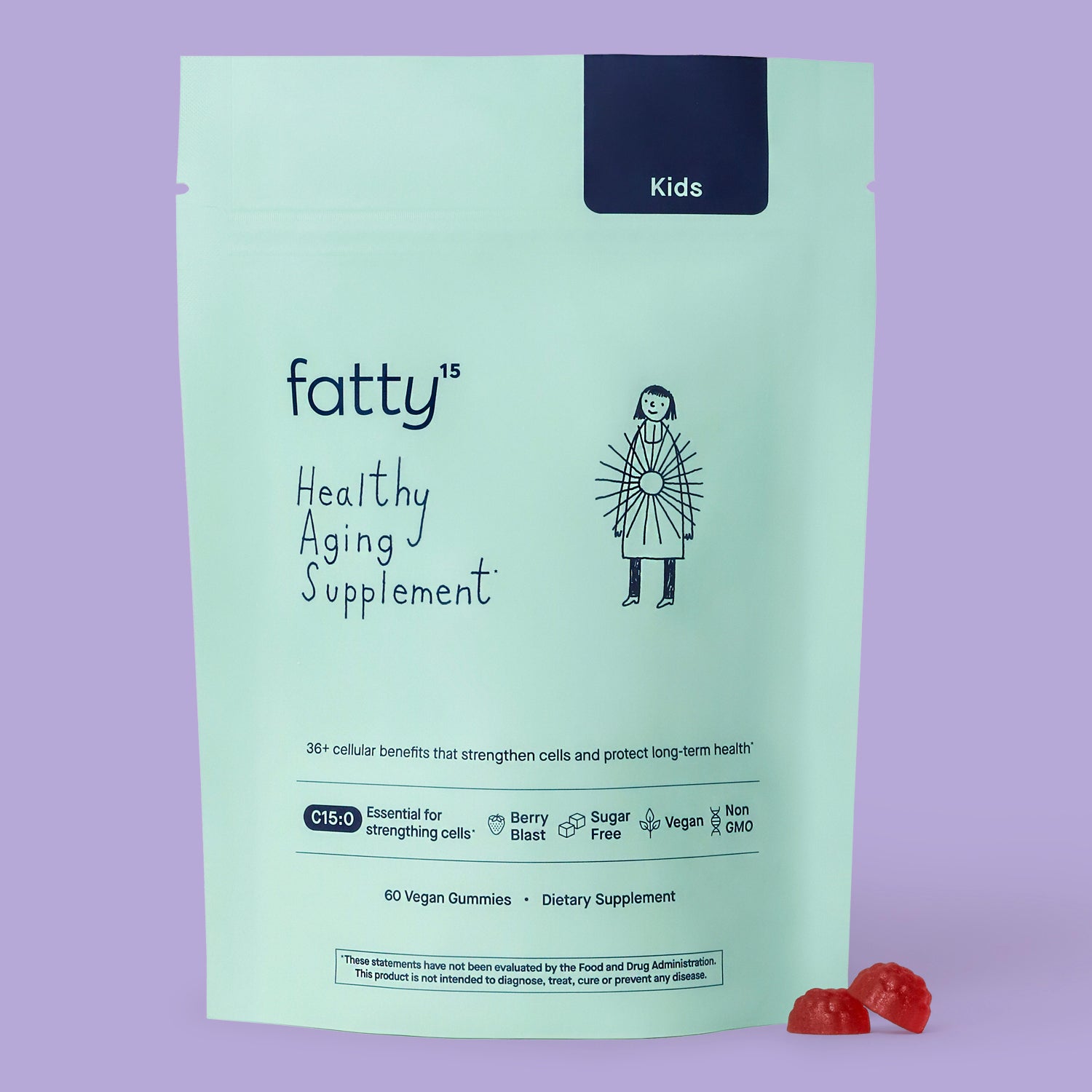
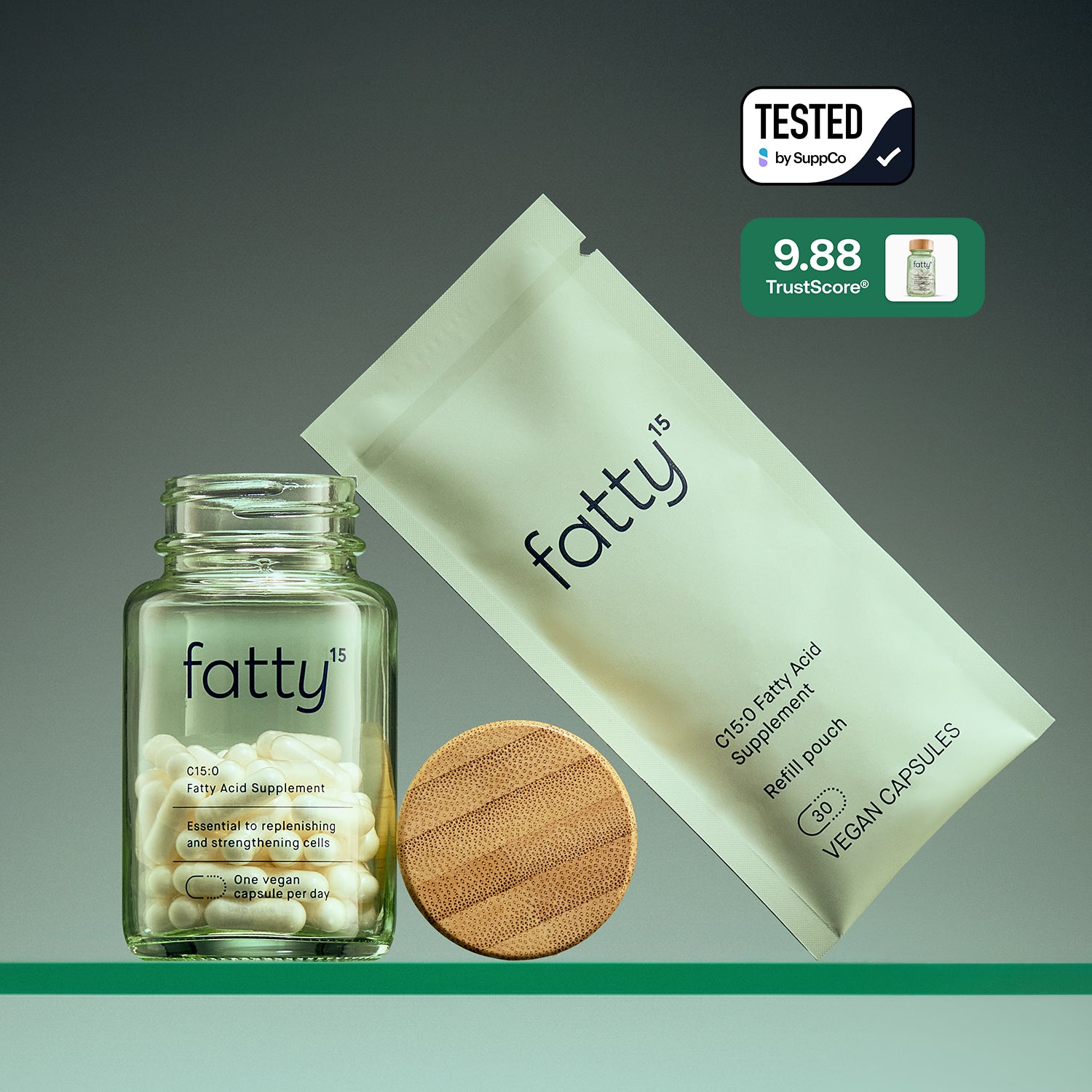
- Fatty15 provides pure, vegan-friendly C15:0 in a convenient daily supplement designed to support growing bodies and developing cells.*
- Parents today face an overwhelming number of choices when it comes to their children's nutrition. Among the most common questions is whether kids need an omega-3 supplement.
- Omega-3s are important nutrients, and they have earned their place in discussions about childhood nutrition. But as research continues to evolve, scientists are discovering that another essential fatty acid may be just as important and perhaps even more overlooked.
- That nutrient is C15:0, also known as pentadecanoic acid.
- As the first essential fatty acid to be discovered in more than 90 years, C15:0 is changing how we think about nutrition, cellular health, and long-term wellness. While omega-3s remain important, emerging evidence suggests that maintaining healthy C15:0 levels may play a foundational role in supporting strong cells, healthy metabolism, and resilience throughout life.*
- So, do kids need omega-3 supplements? And could there be something better, or at least something equally important, to consider?
- Let's take a closer look.
Do Kids Really Need Omega-3 Supplements?
Omega-3 fatty acids are considered essential because our bodies cannot produce enough of them on their own. Instead, we must obtain them from foods or supplements.
The most well-known omega-3s include:
-
ALA (alpha-linolenic acid)
-
EPA (eicosapentaenoic acid)
-
DHA (docosahexaenoic acid)
These fats are commonly found in fatty fish, fish oil, walnuts, flaxseeds, and certain fortified foods. Interestingly, only ALA is generally considered “essential.”
For children who regularly consume fish and other omega-3-rich foods, supplementation may not always be necessary. In fact, many pediatric nutrition experts agree that a varied, balanced diet can provide adequate nutrition for most healthy children.
This highlights an important point: while nutrient deficiencies certainly exist, they are often less common in children who eat a reasonably diverse diet. However, one nutrient may be increasingly difficult to obtain in adequate amounts: C15:0.
C15:0: The Newest Essential Fatty Acid
For nearly a century, scientists believed there were only two essential fatty acids: one omega-3 and one omega-6. That changed with the discovery of C15:0.
Also known as pentadecanoic acid, this odd-chain saturated fatty acid meets the scientific criteria for essentiality. In other words, our bodies require it to maintain health, but we can’t produce enough of it ourselves. This makes C15:0 only the third essential fatty acid currently recognized by science.
The discovery stemmed from more than a decade of research led by Dr. Stephanie Venn-Watson, a veterinary epidemiologist studying healthy aging in Navy dolphins . Researchers found that dolphins with higher C15:0 levels maintained better metabolic health as they aged, leading to a series of studies that ultimately identified C15:0 as an essential nutrient.*
Today, growing evidence suggests that C15:0 plays a fundamental role in maintaining healthy cells throughout the body.*
Why Cellular Health Matters for Kids
When we think about children's health, we often focus on visible milestones, such as growth, learning, sports performance, and immune function. But all of these outcomes depend on something much smaller: healthy cells.
Cells are the building blocks of every tissue, organ, and system in the body. During childhood, cells constantly divide, grow, adapt, and communicate.
Research shows that C15:0 helps support several core aspects of cellular function, including:
-
Mitochondrial health and energy production*
-
Healthy cellular signaling*
-
Cellular resilience against age-related breakdown*
-
Overall cellular homeostasis*
Supporting these processes early in life may help establish a stronger foundation for lifelong health.*
The Problem: C15:0 Levels Have Been Declining
One reason C15:0 has attracted so much scientific interest is that population levels appear to be declining. Historically, C15:0 was obtained primarily through whole-fat dairy products.
However, dietary guidelines introduced in the 1970s encouraged people to reduce consumption of full-fat dairy and saturated fats. As a result, intake of foods containing naturally occurring C15:0 decreased significantly.
At the same time, many people replaced traditional dairy products with low-fat alternatives or plant-based substitutes. While these changes were made with good intentions, they may have inadvertently reduced the intake of an essential nutrient.
Researchers now estimate that low C15:0 levels may affect a substantial portion of the population.* This trend raises an important question: If adults are consuming less C15:0 than previous generations, are children also getting less?
Cellular Fragility Syndrome: A New Nutritional Deficiency
One of the most intriguing developments in C15:0 research is the identification of what scientists call Cellular Fragility Syndrome . According to research published in the journal Metabolites, low C15:0 levels may contribute to fragile cell membranes and ferroptosis, a recently discovered form of cell death associated with aging and metabolic dysfunction.*
Researchers propose that inadequate C15:0 levels may leave cells more vulnerable to damage, oxidative stress, and breakdown.* Importantly, studies have shown that restoring healthy C15:0 levels helps strengthen cell membranes, support mitochondrial function, and improve cellular stability.*
While scientists continue to investigate the long-term implications of this discovery, it highlights the growing importance of maintaining adequate C15:0 levels throughout life.*
How C15:0 Supports Growing Bodies
Children experience extraordinary rates of growth and development. Every day, their bodies build new cells, strengthen tissues, and support complex processes that require energy and coordination. Research suggests that C15:0 helps support these functions in several ways.*
Stronger Cell Membranes*
C15:0 is incorporated into cellular membranes, where it helps stabilize and provide structural support.* Studies have shown that pure C15:0 can improve cellular strength by as much as 80% in laboratory models.* Healthy cell membranes are essential for proper communication between cells and efficient nutrient transport.*
Mitochondrial Function and Cellular Energy*
Mitochondria are often called the "powerhouses" of the cell because they generate energy. Research suggests that C15:0 supports healthy mitochondrial function and ATP production, enabling cells to operate more efficiently.* IHealthy Cellular Signaling*
C15:0 has been shown to activate important pathways involved in maintaining cellular balance, including AMPK and PPAR receptors.* These pathways help regulate energy utilization, metabolism, and overall cellular homeostasis.*
Is C15:0 Better Than Omega-3?
It’s a valid question, but not the right one. Omega-3s and C15:0 perform different functions within the body. Both are essential fatty acids, and both contribute to overall health, but one study compared them head to head.
A 2022 peer-reviewed study published in PLOS ONE compared pure C15:0 and EPA , a leading omega-3 fatty acid, across 12 primary human cell-based systems and 148 clinically relevant biomarkers. While C15:0 and EPA shared several beneficial activities, C15:0 demonstrated a much broader range of positive effects.
Specifically, C15:0 showed 36 clinically relevant activities across multiple biological systems, while also delivering 28 additional beneficial activities that EPA did not demonstrate. Importantly, C15:0 remained safe at all tested concentrations, whereas EPA became toxic in four cell systems at higher doses.
The researchers ultimately concluded that C15:0 exhibited broader, safer clinically relevant activities than EPA, suggesting that this newly recognized essential fatty acid may support cellular health through a wider range of mechanisms than omega-3 alone.*
Can Kids Get Enough C15:0 from Food?
C15:0 is found naturally in whole-fat dairy products such as:
-
Whole milk
-
Butter
-
Certain cheeses
-
Other full-fat dairy foods
The challenge is that these foods contain relatively small amounts of C15:0 alongside larger quantities of other fats and calories. In addition, C15:0 levels vary, depending on how animals are raised and fed. This makes it difficult to know exactly how much C15:0 a child is consuming through food alone.
For families who avoid dairy entirely, obtaining meaningful amounts of C15:0 through diet may be even more challenging.
Why Fatty15 Offers a Better Solution
For families interested in supporting healthy C15:0 levels, fatty15 offers a unique solution.
Fatty15’s C15:0 supplement was developed specifically to provide pure, bioavailable, and vegan-friendly C15:0 in a simple daily gummy kids love.* Unlike whole-fat dairy products, fatty15 contains only C15:0 without additional sugars, excess calories, or higher levels of even-chain saturated fats.*
Each serving contains:
-
Pure FA15™ C15:0
-
Vegan-friendly ingredients
-
Just one calorie per serving
-
A bioavailable free-fatty-acid form designed for efficient absorption*
Because fatty15 delivers C15:0 directly, it offers a convenient way to help support healthy cellular levels of this essential fatty acid.*
The Right Fatty Acid for Kids and Adults
Omega-3s remain important nutrients for children, and many families choose to include omega-3-rich foods as part of a healthy diet. But nutrition science continues to evolve.
The discovery of C15:0 as the first essential fatty acid identified in more than 90 years has expanded our understanding of what growing bodies need to thrive. Research suggests that C15:0 helps support healthy cell membranes, mitochondrial function, cellular energy production, and overall cellular resilience, functions that are important throughout every stage of life.*
While many children can obtain adequate amounts of common nutrients through food, emerging evidence suggests that C15:0 may be one of the most overlooked essential fatty acids in modern diets.*
By helping restore healthy C15:0 levels, fatty15 provides a simple, science-backed way to support the cells that support everything else.*
|
*These statements have not been evaluated by the Food and Drug Administration. This product is not intended to diagnose, treat, cure, or prevent any disease. |
FAQs
Is omega-3 enough, or should kids get C15:0, too?
Omega-3 fatty acids and C15:0 serve different functions in the body. Omega-3s help support normal growth and development, while C15:0 helps strengthen cell membranes, support mitochondrial function, and maintain cellular stability.* Because both are essential fatty acids, they can be viewed as complementary nutrients rather than substitutes for one another.*
What foods contain C15:0?
C15:0 is found naturally in whole-fat dairy products, such as whole milk, butter, cheese, and yogurt. However, modern diets often contain less C15:0 than they did in previous generations due to reduced consumption of whole-fat dairy foods. Plant-based milk alternatives generally contain little to no C15:0.*
How do I know if my child has low C15:0 levels?
C15:0 levels can be measured through specialized blood testing. Research suggests that low C15:0 levels may be associated with reduced cellular resilience and poorer metabolic health markers.* Because awareness of C15:0 is still growing, many families may not realize this essential fatty acid plays a role in maintaining healthy cells throughout the body.*
Why choose fatty15 instead of trying to get C15:0 from food alone?
While whole-fat dairy contains C15:0, it also comes with additional calories, sugars, and other saturated fats. Fatty15 provides pure, bioavailable C15:0 in a vegan-friendly form with just one calorie per serving.* This makes it a convenient way to help support healthy C15:0 levels without significantly changing a family's diet.*
Sources:


