


What Nutrients Do Kids Really Need for Healthy Growth?

eric venn-watson's Highlights
- Most children need a balance of protein, vitamins, minerals, and healthy fats rather than an overwhelming list of supplements.
- C15 0 is the first essential fatty acid discovered in more than 90 years and plays a critical role in supporting healthy cells.
- Fatty15 provides pure, bioavailable C15 0 to help support cellular health, energy production, and long-term wellness from childhood onward.
- Parents today are inundated with advice about children's nutrition. One expert recommends a multivitamin. Another says kids need omega-3 supplements. Social media influencers promote everything from green powders to probiotics, while store shelves are packed with products promising to support growth, immunity, brain development, and more.
- With so much conflicting information, it's easy to wonder: What nutrients do kids actually need for healthy growth?
- The good news is that the answer is simpler than many marketing messages suggest. Most children only need a strong nutritional foundation that supports the systems responsible for growth, development, energy production, and overall health.
- While vitamins and minerals remain essential, emerging research is also reshaping how we think about healthy fats, particularly C15 0. This newly recognized essential fatty acid may play a foundational role in maintaining healthy cells throughout the body.
- Let's explore the nutrients that matter most and why supporting cellular health may be one of the most important investments we can make in our children's future.
Healthy Growth Starts With Healthy Cells
When we think about growth, we often focus on height, weight, muscle development, and cognitive milestones. But every aspect of childhood development depends on a single fundamental component: healthy cells.
Cells make up every tissue, organ, muscle, bone, and system in the body. During childhood, these cells constantly divide, grow, adapt, and communicate.
To do their jobs effectively, they require a steady supply of nutrients. This is why nutrition involves helping your kids grow and supporting the trillions of cells that are responsible for everything from learning and memory to metabolism and immune function.*
Protein: The Building Blocks of Growth
Protein is one of the most important nutrients for growing children. Proteins provide amino acids that help build:
- Muscles
- Bones
- Skin
- Hormones
- Enzymes
- Immune cells
Most children can meet their protein needs through foods, such as lean meats, poultry, fish, eggs, dairy products, beans, lentils, tofu, and nuts. Protein requirements vary by age and activity level, but for most healthy children, a balanced diet provides adequate amounts.
Calcium and Vitamin D for Growing Bones
Childhood and adolescence are critical periods for bone development. Calcium helps build strong bones and teeth, while vitamin D supports calcium absorption and utilization.
Good sources of calcium include:
- Dairy products
- Fortified plant milks
- Yogurt
- Cheese
- Leafy greens
Vitamin D can be obtained through sunlight exposure, fortified foods, and supplements when recommended by healthcare providers. Together, these nutrients help support the skeletal framework that growing children depend on.*
Iron for Energy and Development
Iron plays a critical role in transporting oxygen throughout the body. Children who don't consume adequate iron may experience fatigue, reduced concentration, and slower growth.
Iron-rich foods include:
- Red meat
- Poultry
- Seafood
- Beans
- Lentils
- Fortified cereals
Iron is especially important during periods of rapid growth when the body's demand increases.
Zinc Supports Growth and Cellular Function
Zinc is another important mineral involved in growth and development, contributing to:
- Cellular growth*
- Protein synthesis*
- Immune function*
- Wound healing*
Because zinc participates in hundreds of biological processes, maintaining adequate levels is important throughout childhood.* Fortunately, zinc is found in a variety of foods, including meat, dairy, legumes, nuts, and whole grains.
Healthy Fats Are Essential for Growing Bodies
For years, dietary fat was often viewed as something to limit. Today, we know that healthy fats play vital roles throughout the body.
Fat helps support:
- Brain development*
- Hormone production*
- Nutrient absorption*
- Cellular structure*
However, not all fats are identical. Different fatty acids serve different functions, which is why researchers continue to investigate which fats are most important for long-term health.
Omega-3s
Omega-3 fatty acids remain among the most well-known nutrients for children. Because the body cannot produce enough omega-3s on its own, they must be obtained through food or supplementation. Fatty fish such as salmon, sardines, and mackerel are among the best dietary sources.
Omega-3s support numerous biological functions and remain an important part of a balanced nutritional strategy.* But omega-3s are no longer the only essential fatty acids attracting scientific attention.
The Discovery of C15:0
For decades, scientists believed there were only two essential fatty acids: one omega-3 and one omega-6. That changed with the discovery of C15:0 , also known as pentadecanoic acid.
C15:0 is now recognized as the first essential fatty acid discovered in more than 90 years. An essential fatty acid is a nutrient that our bodies need but cannot produce in sufficient amounts on their own. As a result, we must obtain it through our diet or supplementation.
The discovery emerged from research led by Dr. Stephanie Venn-Watson while studying healthy aging in Navy dolphins. Scientists observed that higher C15:0 levels were associated with better long-term health outcomes, leading to years of research that ultimately established C15:0 as an essential nutrient.*
Today, more than 100 peer-reviewed studies support the growing understanding of C15:0's role in cellular health.*
Why C15:0 Matters for Growing Kids
The importance of C15:0 begins at the cellular level. Research shows that C15:0 helps support:
- Healthy cell membrane strength *
- Mitochondrial function *
- Cellular energy production *
- Healthy cellular signaling*
- Cellular resilience*
These functions are particularly relevant during childhood because growing bodies rely on constant cellular activity. Healthy cells support healthy tissues. Healthy tissues support healthy organs. Healthy organs support healthy development.* This is one reason scientists believe maintaining healthy C15:0 levels may be important throughout life.*
C15:0 and Adolescents: What Research Says
One of the most important developments in C15:0 research is that the benefits are no longer limited to laboratory and animal studies. In 2024, researchers published a randomized controlled trial evaluating daily C15:0 supplementation in young adults with overweight and obesity.
Participants who received 200 mg of C15:0 daily successfully increased their circulating C15:0 levels, demonstrating that supplementation can effectively raise levels of this essential fatty acid in humans.*
While this study was conducted in young adults rather than children, it provides important clinical evidence that restoring healthy C15:0 levels can positively influence multiple systems throughout the body.*
These findings support the growing body of research suggesting that C15:0 is more than just another fatty acid, it is a foundational nutrient involved in maintaining healthy cells, supporting metabolic health, and promoting long-term wellness.*
Cellular Fragility Syndrome and Nutritional Deficiency
One of the most significant recent discoveries involving C15:0 is the identification of Cellular Fragility Syndrome . Researchers have found that low C15:0 levels may contribute to fragile cell membranes and a process called ferroptosis , a form of cell death associated with accelerated cellular aging.*
When cells become fragile, they may be more susceptible to oxidative stress and breakdown.* Research suggests that restoring healthy C15:0 levels helps strengthen cells, support mitochondrial health, and improve overall cellular stability.*
Why Modern Diets May Be Falling Short
Historically, people obtained C15:0 through whole-fat dairy products. However, decades of recommendations encouraging reduced saturated fat consumption led many families to reduce intake of whole-fat dairy. At the same time, plant-based alternatives became increasingly popular.
While these shifts changed eating habits, they may have also contributed to declining C15:0 levels across the population.* As researchers continue studying nutritional trends, C15:0 is emerging as a nutrient that many people may not be getting enough of.*
A prospective cohort study that followed more than 4,000 people over 16 years showed that those with C15:0 levels between 0.40% to 0.55% had the lowest risk of developing heart disease . With dietary levels declining, this becomes an even more important finding.
Why Fatty15 Stands Out
Although C15:0 can be found in whole-fat dairy products, obtaining meaningful amounts through food alone can be challenging and detrimental to your health. Whole-fat dairy contains trace amounts of C15:0, but it also contains additional calories, sugars, and other saturated fats.
A solution? Fatty15.
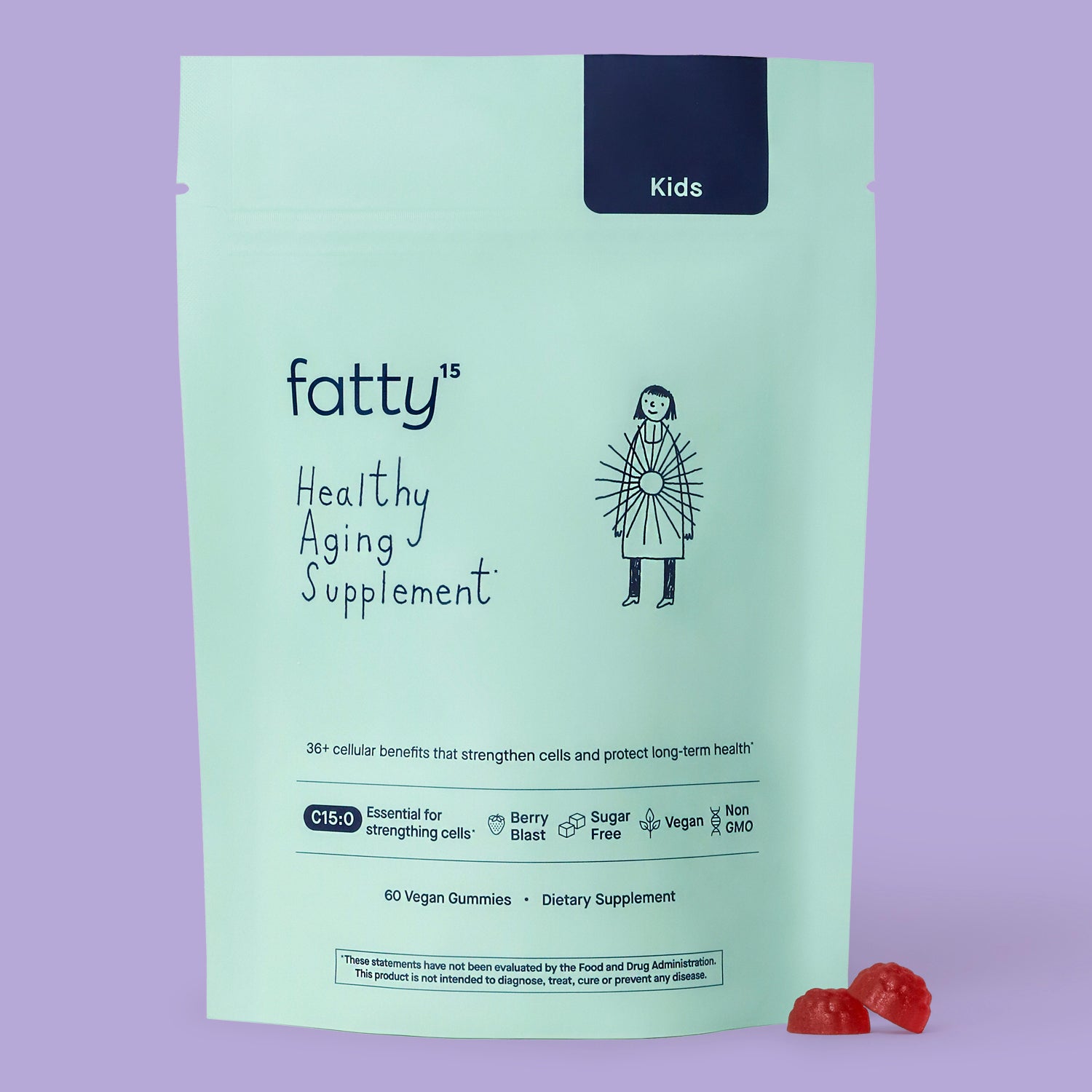
Fatty15’s C15:0 supplement was developed to provide pure, bioavailable C15:0 in a simple daily gummy that kids love.* Each gummy contains FA15™, a proprietary form of pure C15:0 designed to support healthy cellular levels of this essential fatty acid.*
Unlike dairy-based sources, fatty15 is:
- Vegan-friendly
- Bioavailable
- Pure C15:0
- Just one calorie per serving
Because it delivers C15:0 directly, fatty15’s C15:0 supplement offers a convenient way to support cellular health without relying on large amounts of dairy foods.*
The Future of Children’s Nutrition
Nutrition science continues to evolve. While protein, vitamins, minerals, and omega-3s remain important, researchers are increasingly recognizing that healthy cells are at the center of healthy growth.
The discovery of C15:0 has expanded our understanding of the nutrients children need to support strong cellular foundations throughout life.* As evidence continues to grow, C15:0 may become one of the most important nutrients parents consider when building a long-term wellness strategy for their families.*
Support Healthy Growth From the Cellular Level
Healthy growth is about more than getting enough calories. It's about providing the nutrients that help cells stay strong, resilient, and able to support every stage of development.* While most children can obtain many essential nutrients through their diet, emerging research suggests that C15:0 may be one of the most overlooked essential fatty acids in modern nutrition.*
By providing pure, bioavailable C15:0, fatty15 offers a simple way to help support cellular health, mitochondrial function, energy production, and long-term wellness from childhood through adulthood.*
|
*These statements have not been evaluated by the Food and Drug Administration. This product is not intended to diagnose, treat, cure, or prevent any disease. |
FAQs
What are the most important nutrients for healthy growth in children?
Children need a combination of protein, healthy fats, vitamins, and minerals to support growth and development. Key nutrients include protein, calcium, vitamin D, iron, zinc, omega-3 fatty acids, and C15:0, an essential fatty acid that supports cellular health.*
What is C15:0, and why is it important?
C15:0, also known as pentadecanoic acid, is the first essential fatty acid discovered in more than 90 years. Research shows it helps support healthy cell membranes, mitochondrial function, cellular energy production, and overall cellular resilience.*
Can kids get enough C15:0 from food?
C15:0 is naturally found in whole-fat dairy products, such as milk, butter, and cheese. However, modern dietary patterns often include less whole-fat dairy than previous generations, which may contribute to lower C15:0 intake.*
Why choose fatty15 for C15:0 support?
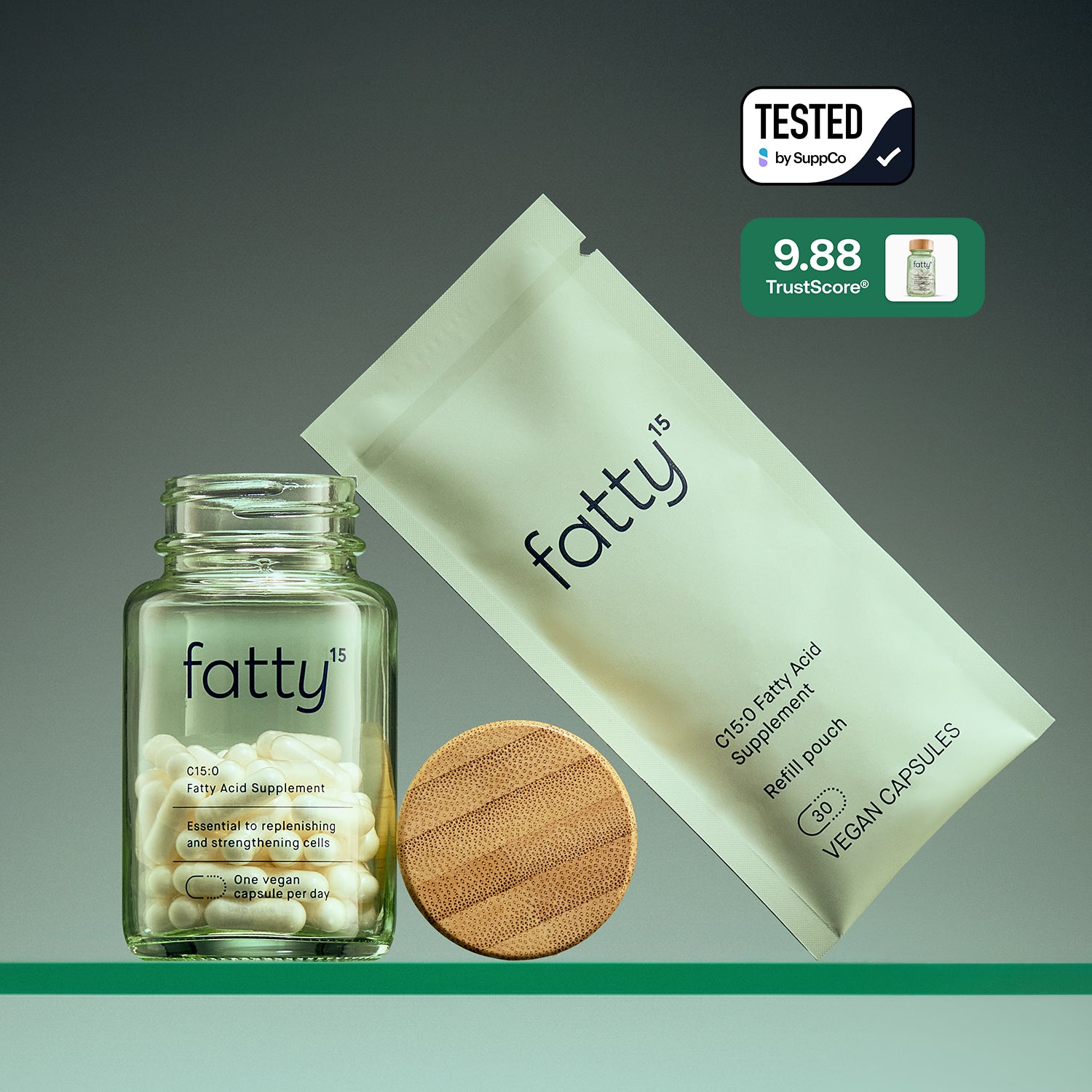
Fatty15 contains pure, bioavailable, vegan-friendly C15:0 in a convenient daily capsule. Unlike dairy foods, fatty15 provides C15:0 without additional sugars, excess calories, or higher levels of other saturated fats.*
Sources:
Ferroptosis: An Iron-Dependent Form of Nonapoptotic Cell Death


