


Natural Ways To Slow Aging: What the Evidence Actually Supports

Seraphina Therapeutics's Highlights
Regular physical activity, adequate sleep, and a Mediterranean-style diet have the strongest, most consistent evidence behind slowing age-related decline, backed by studies spanning millions of participants. Chronic stress has been shown to accelerate biological aging markers like telomere shortening, making stress management a well-established, not just anecdotal, part of healthy aging. C15:0 has a genuinely promising evidence base, with published human studies showing measurable changes in cell membrane strength, mitochondrial function, and metabolic markers over 12-week study periods.*
The anti-aging interventions with the strongest evidence are regular physical activity, adequate sleep, a Mediterranean-style diet, avoiding smoking and excessive alcohol, and managing chronic stress, all backed by decades of research from large population studies.
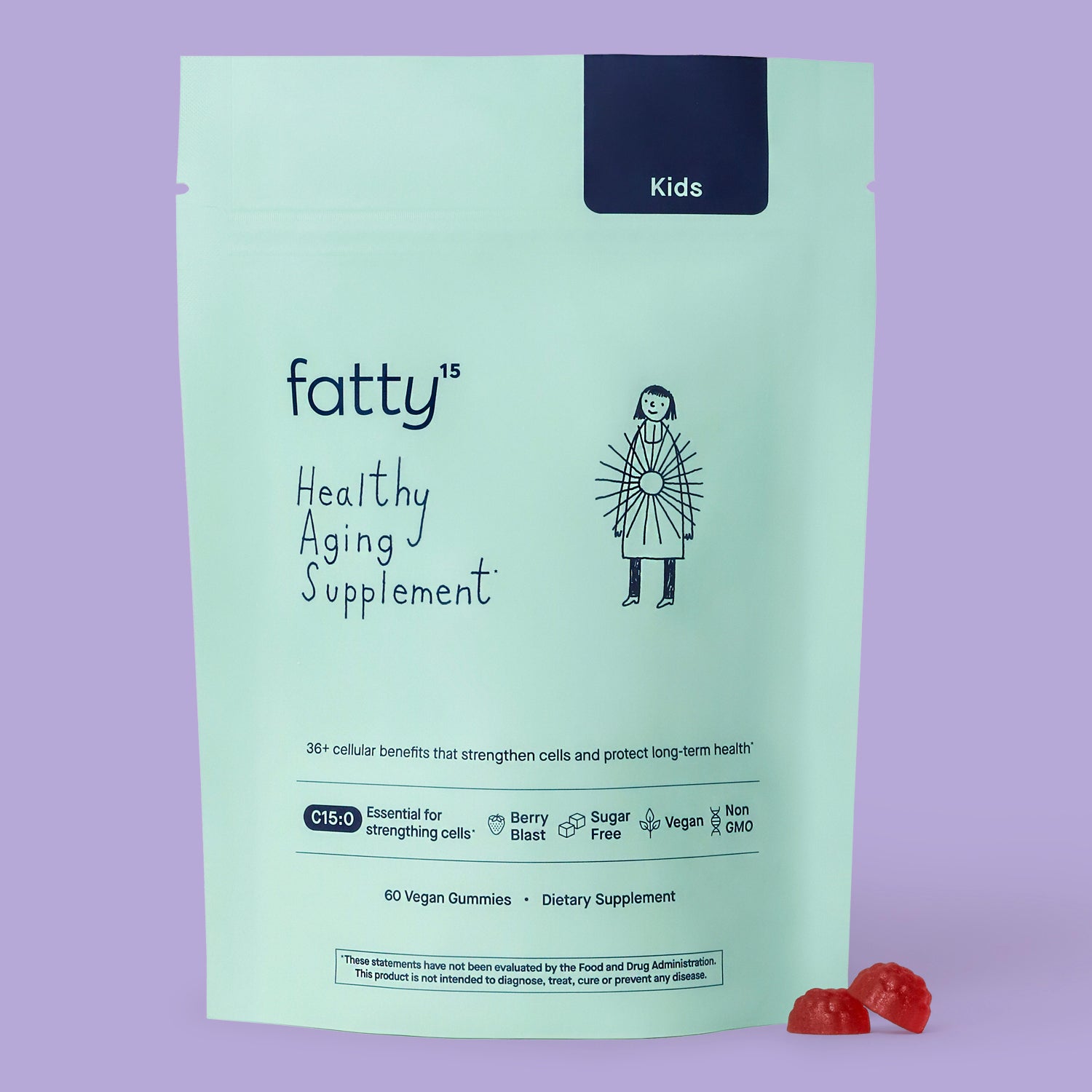
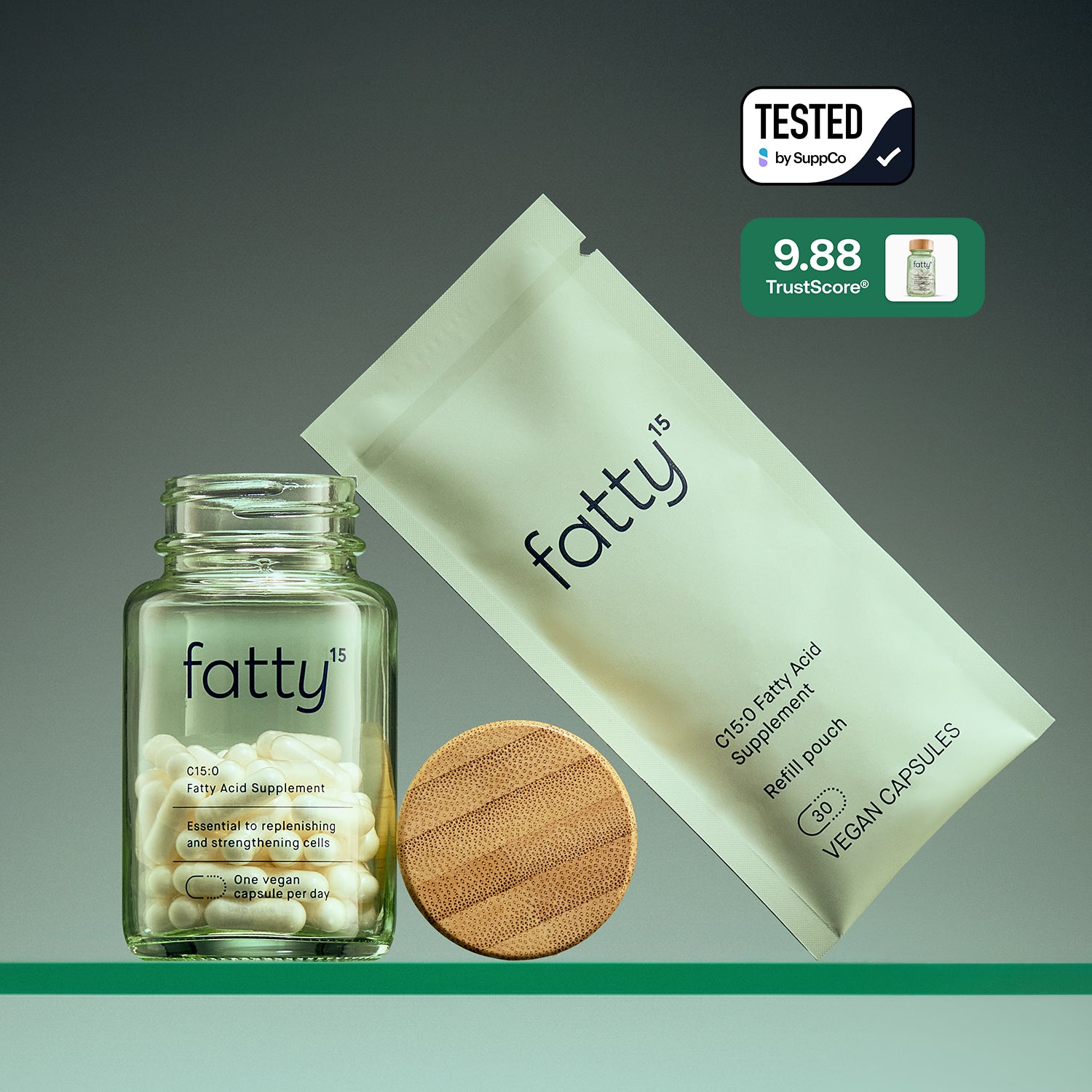
Fatty15 contains C15:0, an odd-chain fatty acid with a mounting body of evidence supporting its health benefits, including published human trials showing measurable changes in cell membrane strength, mitochondrial function, and metabolic markers over roughly 12-week periods.*
Well-Established Healthy Aging Interventions
These five categories have decades of consistent research behind them, across large population studies and, in most cases, randomized trials.
Promising Earlier-Stage Evidence
The interventions in this section have real, published research behind them, but that research base is meaningfully younger, smaller, or less consistent than the categories above. They're worth paying attention to, without assuming their evidence is at the same level of maturity.
Caloric Restriction and Time-Restricted Eating
Caloric restriction has one of the longest research histories in aging science, with decades of animal studies showing extended lifespan in various species. Human research is more limited but growing.
Several controlled trials have found improvements in metabolic markers with moderate caloric restriction, and time-restricted eating has shown promising early results for metabolic markers. However, long-term human data on whether either approach meaningfully extends lifespan, rather than merely improving intermediate biomarkers, remain limited.
Specific Micronutrient Research
Various vitamins and minerals have research suggesting a role in healthy aging when someone is deficient. However, the evidence for supplementation beyond adequate levels is considerably weaker and more mixed than that for the well-established categories above.
This is an area where much of the marketing outpaces the actual research base, and it's worth treating individual micronutrient claims with more caution than, say, exercise or sleep research.
C15:0
C15:0, an odd-chain saturated fatty acid, with a growing body of evidence supporting its benefits to long-term health.
Published in the journal Metabolites, research proposed that a deficiency in C15:0, an essential fatty acid, can leave cell membranes structurally weaker and more prone to a specific kind of cell death called ferroptosis.
Ferroptosis is not the ordinary, planned cell turnover that keeps tissue healthy. It is a more chaotic, oxidative-stress-driven breakdown that is linked to accelerated aging and to metabolic, liver, and heart-related health challenges.
The researchers gave this newly identified nutritional gap a name: Cellular Fragility Syndrome. It is described as the first nutritional deficiency syndrome identified in roughly 75 years, a notable claim in a field that doesn’t hand out new nutrient deficiency syndromes lightly.
Since a 2020 study published in Scientific Reports first proposed C15:0 as a potential essential fatty acid, more than 150 peer-reviewed publications have examined its effects, including the TANGO trial mentioned above and a separate 12-week randomized, placebo-controlled trial published in The Journal of Nutrition.
Published research has examined cell membrane strength, mitochondrial function, and metabolic markers such as cholesterol and liver enzymes, with measurable changes observed in human trials over roughly 12-week periods.
Fatty15’s C15:0 supplement has been shown to strengthen cell membranes against age-related breakdown, support mitochondrial function so cells generate energy more efficiently, and activate PPAR receptors involved in regulating metabolism, immune response, and cholesterol homeostasis.*
These are genuinely interesting, biologically plausible mechanisms with real, published data to back them up.
Preliminary or Theoretical
Several compounds and approaches in the longevity space are still largely in preclinical research or very early human trials.
This includes several molecules originally studied for other purposes that have generated interest for their potential effects on cellular aging pathways; various senescence-related compounds still being tested primarily in animal models; and a handful of hormone- and peptide-based approaches with limited, small-scale human data so far.
None of these should be dismissed outright; early research is how every well-established intervention started, but claims made about them today are running well ahead of what the current evidence can actually support.
If you see a compound described with dramatic, specific promises based on a single small study or animal research alone, that's a signal to treat the claim with real caution, regardless of how compelling the underlying science sounds.
What Doesn’t Have Strong Evidence Behind It
Some common anti-aging claims simply don't hold up well under scrutiny. Topical products claiming to reverse aging typically address surface-level skin appearance rather than any measurable biological aging process, which is meaningfully different.
Broad "detox" framing, the idea that a product or regimen flushes out toxins that are driving aging, generally isn't grounded in how the body's own detoxification systems (primarily the liver and kidneys) actually function.
And extreme, restrictive protocols promising dramatic results in days or weeks are worth approaching skeptically. Biological aging is a slow, cumulative process, and interventions that meaningfully affect it tend to require sustained effort over months, not days.
Moving Toward Longevity
Much of the factual data we have about longevity science is straightforward and has been taught for decades. Eat a balanced diet, get enough sleep, manage stress, and keep physical activity a priority.
As longevity science continues to evolve, we’re learning we can take it further by supporting longevity within our very cells. One way to do this? Increase your C15:0 levels by taking fatty15 once each day.
Fatty15 provides a pure, patented, bioavailable, vegan-friendly, and award-winning C15:0 supplement designed to support your long-term health from your cells, up.
FAQs
What is the most scientifically supported way to slow aging?
Regular physical activity has one of the most consistent, well-established evidence bases of any anti-aging intervention, supported by large meta-analyses spanning more than a million participants. Adequate sleep and a Mediterranean-style diet pattern have similarly strong, decades-long research support.
Do anti-aging supplements actually work?
It depends heavily on the specific supplement and how mature its evidence base is. Some, like fatty15, have real, published human research showing measurable biomarker changes. Others have little to no credible evidence behind their claims.
Can diet alone slow biological aging?
Diet is one of the well-established factors with strong evidence, particularly whole-food, Mediterranean-style eating patterns, which are linked to reduced mortality and disease risk in large cohort studies. It's a significant piece of the picture, though it works best alongside physical activity, sleep, and stress management rather than in isolation.
What is the difference between well-established and preliminary anti-aging research?
Well-established interventions have decades of consistent evidence from large population studies and, often, randomized trials, like exercise and sleep research. Preliminary research is newer, smaller in scale, or based mainly on animal or cell studies, meaning the findings are promising but not yet as thoroughly confirmed.
|
*These statements have not been evaluated by the Food and Drug Administration. This product is not intended to diagnose, treat, cure, or prevent any disease. |
Sources:
Accelerated telomere shortening in response to life stress | PubMed


