


NAD + Supplements: Do They Actually Support Healthy Aging?

Seraphina Therapeutics's Highlights
Biological age, not chronological age, is the better predictor of how someone actually feels and functions, and healthy aging is really about narrowing the gap between the two. Human clinical evidence for NAD+ precursor supplements (NMN, NR) is mixed. They reliably raise NAD+ levels, but that doesn't consistently translate into measurable improvements in how people feel or function. Unlike NAD+ precursors, which require a multi-step conversion process in the body, C15:0 appears to act more directly on the PPAR receptor and the membrane pathways associated with biological aging.
Walk down the supplement aisle, or scroll through enough wellness content online, and NAD+ boosters are hard to miss. They're marketed as one of the more compelling tools in the healthy aging conversation, and the science behind NAD+ itself is genuinely interesting.
But interesting biology and an effective supplement aren't automatically the same thing, and the honest answer to whether NAD+ supplements support healthy aging is more nuanced than most marketing copy lets on.
Before getting into NAD+ specifically, it helps to define what healthy aging actually means, since that framing shapes how to evaluate any supplement claiming to support it.
What Is Healthy Aging?
Healthy aging isn't the same thing as simply getting older. It's a distinction researchers describe as biological age versus chronological age, and the gap between the two can be significant.
-
Chronological age counts the years since your birth and progresses at the same rate for everyone.
-
Biological age reflects how well your cells, tissues, and organ systems function, and it can run faster or slower than your calendar age, depending on genetics, lifestyle, and cumulative exposure to factors like oxidative stress and inflammation.
Two people can share the same chronological age and have vastly different biological ages, and biological age tends to be the better predictor of how someone actually feels and functions. Healthy aging is about narrowing that gap, or at least slowing the rate at which biological age outpaces chronological age.
That involves several interconnected systems:
-
How efficiently cells produce energy
-
How well the body manages inflammation
-
How resilient cell membranes remain under stress
-
How effectively damaged cells and proteins get cleared out and repaired.
Supporting healthy aging means supporting these processes at the cellular level, not just addressing surface-level symptoms as they appear. This is also why healthy aging has become such a central focus in longevity research over the past decade.
Researchers have identified a set of biological hallmarks, shared cellular and molecular changes that consistently accompany aging across species, and many of the supplements and interventions marketed under the healthy aging umbrella are really attempts to influence one or more of these hallmarks directly.
Understanding which hallmark a given intervention actually targets, and how strong the evidence for that connection is, makes it much easier to separate genuinely promising approaches from those riding on the general appeal of the term.
What Supports Biological Aging
A handful of well-established factors influence how quickly biological aging progresses.
Inflammation
Chronic inflammation, sometimes referred to as inflammaging, is one of the most significant. Low-grade, persistent inflammation accelerates cellular damage over time and has been linked to a wide range of age-related conditions.
Mitochondrial Health
Mitochondrial function is another central piece. Mitochondria, the structures responsible for converting food into usable cellular energy, naturally become less efficient with age, and that decline touches nearly every tissue in the body, particularly energy-demanding ones like the brain, heart, and muscle.
Cellular Health
Cellular senescence also plays a role. As cells age, some stop dividing but don't die off the way they normally would. Instead, they linger, releasing inflammatory signals that can affect nearby healthy cells.
And cell membrane integrity matters more than people typically realize. Membranes protect the internal environment of the cell, mitochondria included, and as those membranes become more fragile with age and oxidative exposure, cellular function across the board becomes harder to maintain.
Lifestyle Factors
Lifestyle factors, diet, exercise, sleep, and stress management, influence all of these processes to varying degrees, which is part of why healthy aging strategies tend to work best in combination rather than relying on a single intervention.
What Are NAD + Supplements?
NAD+, or nicotinamide adenine dinucleotide, is a coenzyme found in every cell in the body, and it plays an essential role in energy metabolism, DNA repair, and cellular signaling. NAD+ levels decline naturally with age, and that decline has been associated with reduced mitochondrial efficiency and other markers of cellular aging, which is exactly why NAD+ has attracted so much attention in the healthy aging space.
Since NAD+ itself doesn't absorb well when taken orally, most supplements on the market don't contain NAD+ directly. Instead, they supply precursor molecules, most commonly nicotinamide mononucleotide (NMN) or nicotinamide riboside (NR), which the body can convert into NAD+ through a multi-step metabolic pathway.
Do NAD + Supplements Actually Support Healthy Aging?
Here's where the evidence gets more complicated than the marketing suggests. Preclinical research, largely in animal models, has shown promising effects from boosting NAD+ levels, including improvements in mitochondrial function and markers of metabolic health. That research is part of what fueled the surge of consumer interest in NMN and NR supplements.
Human research tells a less settled story. Clinical trials on NAD+ precursors have generally shown that these supplements can raise circulating NAD+ levels. However, the evidence for consistent improvements in human healthy aging outcomes, things people can actually feel or measure over time, remains limited and mixed.
Some studies show modest benefits in specific markers. Others show no significant difference compared to placebo. Absorption, individual metabolic variability, and dosing all appear to contribute to inconsistent results across studies.
None of this means NAD+ biology isn't real or important. It clearly is. But the honest, evidence-based answer to whether NAD+ supplements support healthy aging is that the science is still developing, and the human data available so far doesn't yet match the confidence of the marketing built around it.
There's also a practical wrinkle worth naming: raising a biomarker isn't the same thing as improving how someone actually ages. Several NAD+ precursor trials have successfully raised circulating NAD+ levels while showing little to no change in the functional outcomes people actually care about, things like energy, physical performance, or metabolic markers.
That gap between moving a number and changing an outcome is exactly the kind of distinction worth paying attention to before investing in any healthy aging supplement, NAD+ included.
A Different Angle on Healthy Aging: C15:0
Given the mixed evidence regarding NAD+ precursors, it's worth looking at what else the science supports when it comes to healthy aging at the cellular level. A little-known fatty acid is making headlines in the longevity conversation, and it’s something you’ll definitely want to take notice of.
C15:0: The Longevity Nutrient
C15:0, or pentadecanoic acid, is an odd-chain saturated fatty acid, and unlike NAD+ precursors, it isn't a byproduct being metabolized down a chain toward a target molecule. Science supports the idea that C15:0 itself plays a direct, essential role in the body, activating PPAR receptors.*
This family of receptors is involved in regulating energy metabolism, healthy inflammatory response, and cellular membrane health, the same categories that show up repeatedly on the list of what actually drives biological aging.*
The Discovery of C15:0
The discovery of C15:0's importance traces back to research helping to improve the long-term health of Navy dolphins. Researchers noticed that dolphins with higher blood levels of C15:0 showed stronger markers of metabolic and cellular health, prompting a deeper investigation into the fatty acid's role in humans.
That research identified C15:0 as a previously overlooked essential fatty acid, one that supports the structural integrity of cell membranes, including those surrounding mitochondria, while also activating PPAR receptor pathways linked to inflammation and metabolic function.*
Most dietary fats people consume are even-chain fatty acids. C15:0's odd-chain structure appears to be part of what makes it functionally distinct and part of why decades of dietary trends that pushed people toward low-fat and skim dairy products have left many people with lower-than-recommended C15:0 levels.
C15:0 is present in trace amounts in full-fat dairy products, such as whole milk. However, global C15:0 levels have been decreasing over the past 40 years as dietary and agricultural practices have changed.
How C15:0 Differs From NAD + Precursors
NMN and NR require a multi-step conversion process in the body to become functionally active, with absorption and individual metabolic variability both affecting how much is actually converted. C15:0 doesn't require that same conversion chain.
It appears to act more directly on the receptor pathways and membrane structures it supports, which may help explain why research linking it to measurable markers of cellular health has been more consistent.*
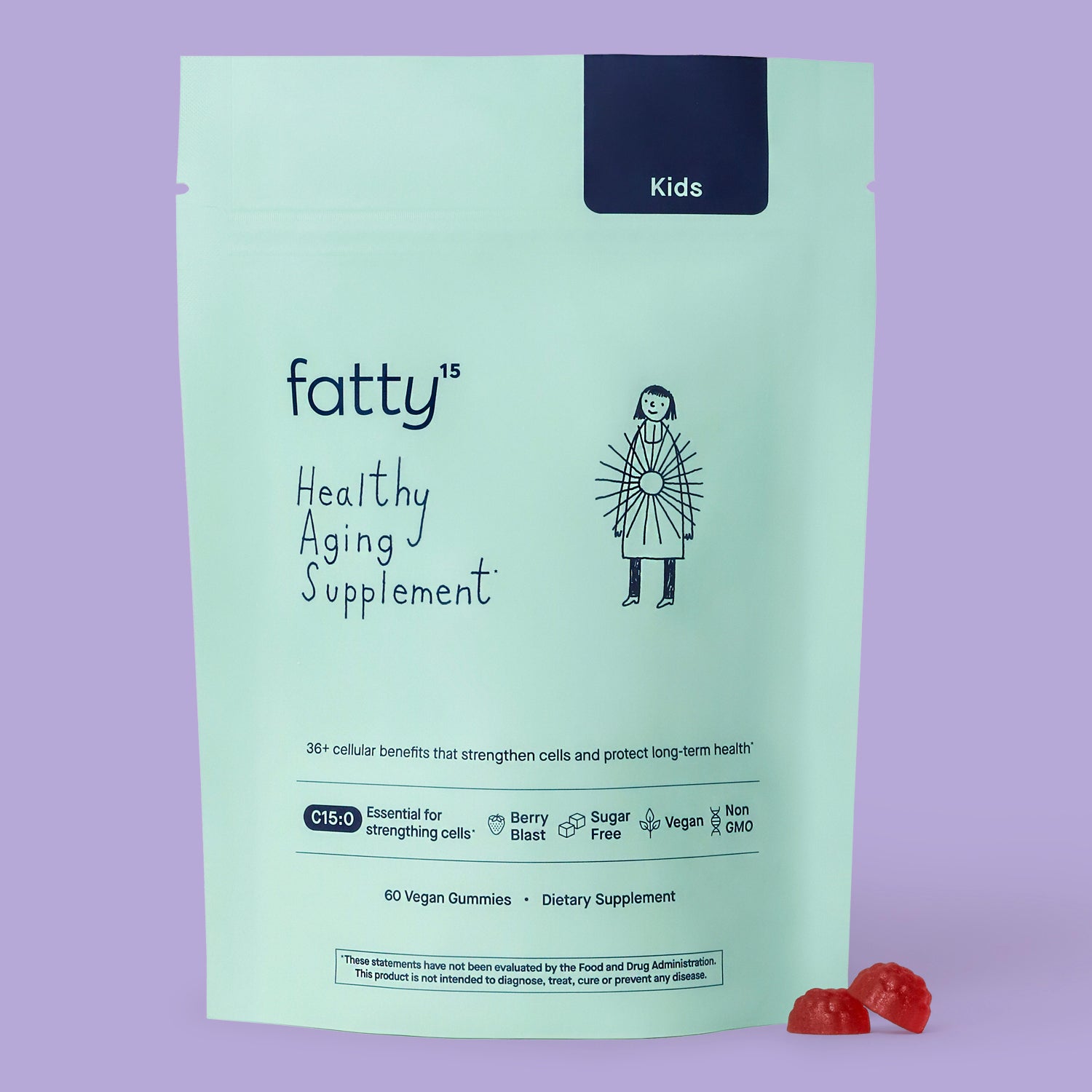
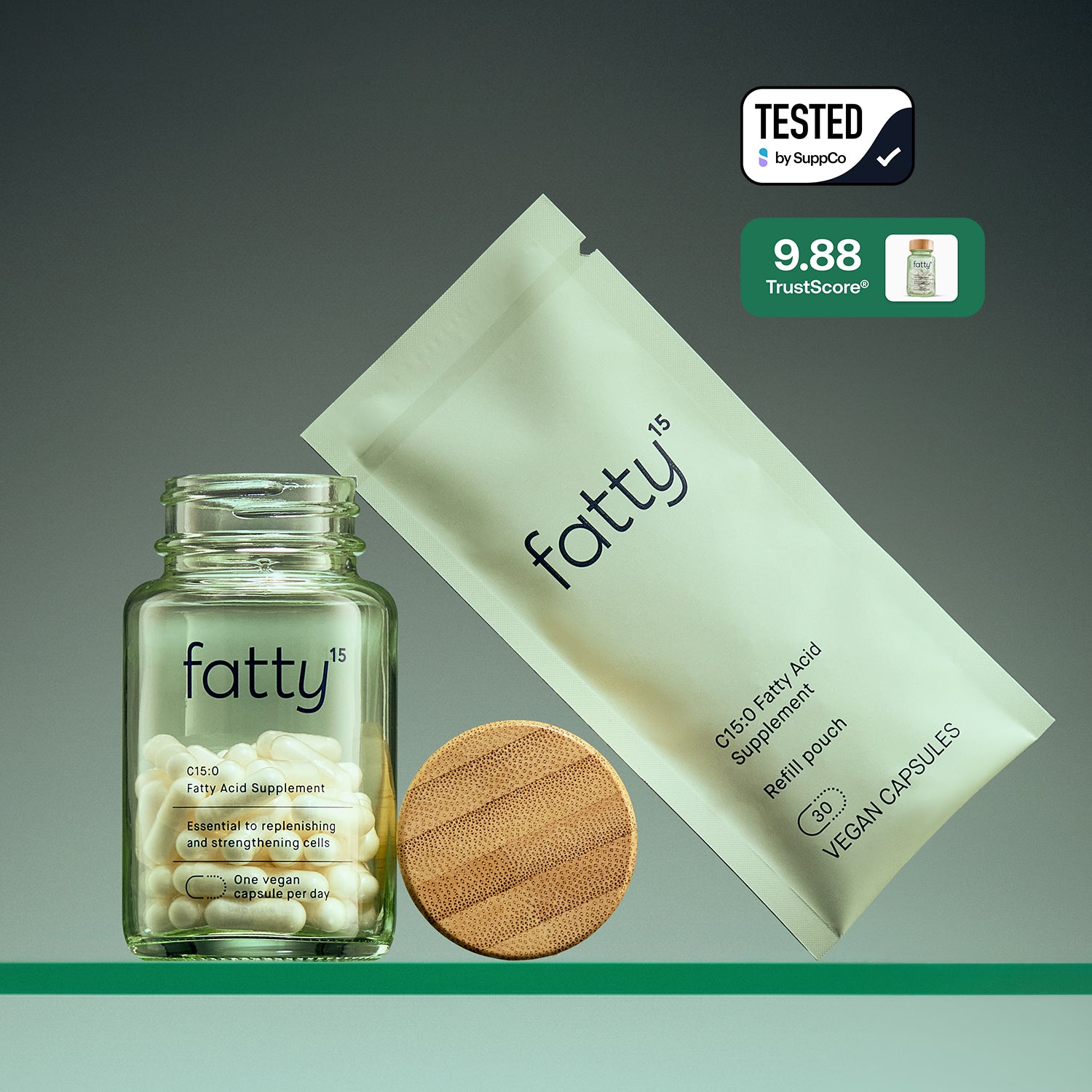
Getting C15:0 into your body can be tricky, since it is found only in trace amounts in our food. A solution? Fatty15’s C15:0 supplement delivers a patented, purified, award-winning, vegan form of C15:0 in a once-daily capsule.
The goal is straightforward: replenish a fatty acid that modern diets have quietly depleted, and support the cellular processes, membrane integrity, PPAR receptor activation, and mitochondrial function that sit at the center of biological aging.*
Where Healthy Aging Support Actually Stands
NAD+ biology is real, but the current human evidence for NAD+ supplements doesn't yet back up the confidence behind much of the marketing. C15:0, by contrast, is supported by a growing, more direct body of research linking it to the cellular processes, membrane integrity, PPAR receptor activation, and metabolic regulation that define biological aging.
Fatty15 was created to deliver the long-term health benefits of C15:0 in a pure, patented, vegan-friendly, and easy-to-take once-a-day supplement.
|
*These statements have not been evaluated by the Food and Drug Administration. This product is not intended to diagnose, treat, cure, or prevent any disease. |
FAQs
What is the difference between biological age and chronological age?
Chronological age is simply the number of years since birth. Biological age reflects how well cells, tissues, and organ systems function, and it can be faster or slower than chronological age depending on genetics, lifestyle, and cumulative cellular stress. Biological age is generally considered a better predictor of how someone feels and functions than chronological age alone.
Do NAD+ supplements actually work for healthy aging?
The evidence is mixed. Preclinical research in animal models has shown promising effects from raising NAD+ levels, but human clinical trials have shown more inconsistent results. NAD+ precursor supplements can raise circulating NAD+ levels, but meaningful, consistent improvements in human healthy aging outcomes remain limited and still under investigation.
What is C15:0, and how does it support healthy aging?
C15:0, or pentadecanoic acid, is an odd-chain essential fatty acid that activates PPAR receptors, which regulate energy metabolism, inflammation, and cell membrane health. These are among the core processes tied to biological aging. C15:0 was first linked to cellular health through research helping Navy dolphins live healthier for longer, before being studied extensively in humans.
How do I know if I'm running low on C15:0?
Most people don't get tested for C15:0 levels directly, but decades of low-fat and skim-dairy trends have reduced the typical dietary intake of this fatty acid among much of the population. Fatty15 is a pure, patented, award-winning, vegan-friendly C15:0 supplement, delivered in a once-daily capsule.
Sources:
Hallmarks of aging: An expanding universe | PubMed
The therapeutic perspective of NAD+ precursors in age-related diseases | ScienceDirect


