


Longevity Supplements 101: What Actually Has Evidence Behind It

Seraphina Therapeutics's Highlights
Longevity supplements range from decades-deep research (creatine, vitamin D) to genuinely promising but still-early science (NAD+ precursors, quercetin), and knowing which is which matters more than any ingredient list. Bioavailability, not just benefit, is often the real story. Some compounds with strong lab results struggle to actually get where they need to go once they're in the body. C15:0 is the newest entrant in the longevity supplement conversation, and unlike much of the field, it has a founding story involving Navy dolphins rather than a lab full of mice.
The longevity supplement world moves fast. New compounds show up with bold claims, older ones get quietly reevaluated once the human trials finally catch up to the hype, and somewhere in the middle is a reader just trying to figure out what's actually worth their money.
It doesn't help that "studied in mice" and "studied in humans" are often discussed almost interchangeably in a lot of marketing, when they're actually two very different statements.
This is a rundown of some of the most talked-about longevity supplements right now, what they're studied for, and where the evidence is still catching up to the hype.
1. NAD + Precursors (NMN and NR)
NAD+, or nicotinamide adenine dinucleotide, is a coenzyme every cell needs for energy production, DNA repair, and activating a class of proteins called sirtuins, which are involved in cellular aging processes.
NAD+ levels decline with age, which is the premise behind supplementing with precursor compounds like NMN (nicotinamide mononucleotide) and NR (nicotinamide riboside). The idea is that raising the raw material might restore some of what's been lost.
Here's where studies are thus far. Animal studies on NAD+ precursors have been genuinely impressive, with mice showing improvements across metabolic, mitochondrial, and inflammatory markers. These are the kind of results that launched an entire supplement category almost overnight.
Human studies present a more complex picture. NMN and NR reliably raise circulating NAD+ levels in humans and are generally well tolerated. However, a 2025 meta-analysis of randomized trials found no consistent benefit for muscle mass, strength, or physical function in older adults, and results across other outcomes have been mixed at best.
Some subgroups, like postmenopausal women or people with prediabetes, have shown more promising signals for specific metabolic outcomes.
2. Resveratrol
Resveratrol earned its reputation from the "French Paradox," which posits that a diet relatively high in saturated fat doesn’t seem to translate into the cardiovascular outcomes you'd expect, with red wine getting much of the credit.
Resveratrol, a compound found in red wine, grapes, and a handful of other plants, is believed to activate sirtuins, the same longevity-linked proteins that NAD+ feeds, and to offer antioxidant properties.
The catch is bioavailability. Resveratrol is notoriously poorly absorbed in its natural form, metabolizing quickly by the body before much of it can actually circulate and do anything. This is part of why "just drink more red wine" was never a serious longevity strategy.
Human trials have shown encouraging results for cardiovascular markers and inflammation, particularly at higher, more bioavailable doses than you'd get from a glass of wine. However, the research base remains smaller and more mixed than resveratrol's popularity would suggest.
3. Quercetin
Quercetin is a plant flavonoid found in foods like onions, apples, and berries. It's become a longevity darling largely thanks to its role in senolytic research, the study of clearing out "senescent" cells. These aged, dysfunctional cells accumulate with age and contribute to inflammation and tissue decline.
Most of quercetin's more striking research results, though, come from combining it with dasatinib, a prescription cancer medication, in a pairing researchers call D+Q. This combination has shown real senolytic effects in early human trials, reducing senescent cell markers and improving some inflammatory and physical function outcomes in small pilot studies.
Standalone quercetin, without the dasatinib half of the pair, has a thinner evidence base for these specific longevity effects, and most of the impressive results simply weren't tested that way.
It's a good example of a compound that's genuinely promising in context, but the context matters more than the ingredient alone. Taking quercetin on its own isn't the same intervention as the D+Q protocol that shows up in research headlines, a distinction that tends to get lost when a supplement bottle lists only one of the two names.
4. Vitamin D
Vitamin D might be the most boring name on this list, and it’s also one of the best supported. Beyond its established roles in bone and immune health, lower vitamin D status has been associated with higher rates of chronic disease and mortality in population-level research. This has fueled interest in it as a longevity-relevant nutrient in its own right, not just a bone health afterthought.
Unlike many newer longevity compounds, vitamin D benefits from decades of research, cheap, widely available testing, and a well-understood dosing range rather than one still being debated.
5. Creatine
Creatine has quietly become one of the best-evidenced supplements in the longevity conversation, which is surprising for something long associated with gym bags and pre-workout shakers.
Beyond its established role in muscle strength and performance, creatine research has expanded into cognitive function and healthy aging, specifically, with studies suggesting it may help preserve muscle mass in older adults. This is a factor closely tied to longevity outcomes, given that muscle mass loss strongly correlates with frailty and mortality risk later in life.
Creatine also benefits from something many trendier compounds don't yet have: decades of safety data and a well-established, inexpensive dosing protocol. If evidence quality were the only factor that mattered, creatine would probably be sitting at the top of most longevity supplement lists.
6. CoQ10
Coenzyme Q10 plays a central role in mitochondrial energy production, and its levels decline with age and with statin use. That connection has made it one of the more commonly studied longevity-adjacent supplements, particularly for cardiovascular health and energy metabolism.
Research on CoQ10 has shown some promise in specific populations, particularly people with heart failure or those on statin therapy experiencing muscle-related side effects. However, the evidence for meaningfully extending healthspan in otherwise healthy adults is more modest. It's a supplement with a clear, well-understood mechanism and a reasonable safety profile, even if it's not the headline-grabbing compound some of its neighbors on this list have become.
7. C15:0
Here's where the story shifts from a lab bench to a Navy research program studying bottlenose dolphins. Researchers noticed that dolphins with higher levels of the specific fatty acid pentadecanoic acid (C15:0) tended to have better long-term health markers.
That observation sparked a wave of research that eventually identified C15:0 as an essential fatty acid in humans as well. It was the first new one recognized in nearly 90 years, joining omega-3 and omega-6 on a very short list.
What C15:0 Does
C15:0 plays a structural role, supporting cell membrane strength and activating PPAR receptors tied to metabolic and mitochondrial function.*
Cells low in C15:0 become more fragile and more prone to a form of cell death called ferroptosis, a process linked to accelerated cellular aging. That deficiency, now called Cellular Fragility Syndrome, is estimated to affect roughly 1 in 3 people globally.
This is largely because C15:0's main dietary source, whole-fat dairy, has fallen out of favor over decades of low-fat trends.
How To Get It
A supplement makes more sense here than trying to eat your way to sufficient C15:0. Whole-fat dairy delivers C15:0 alongside even-chain saturated fat, which means getting a consistent, adequate dose through food alone often means eating more saturated fat than most people are trying to take in.
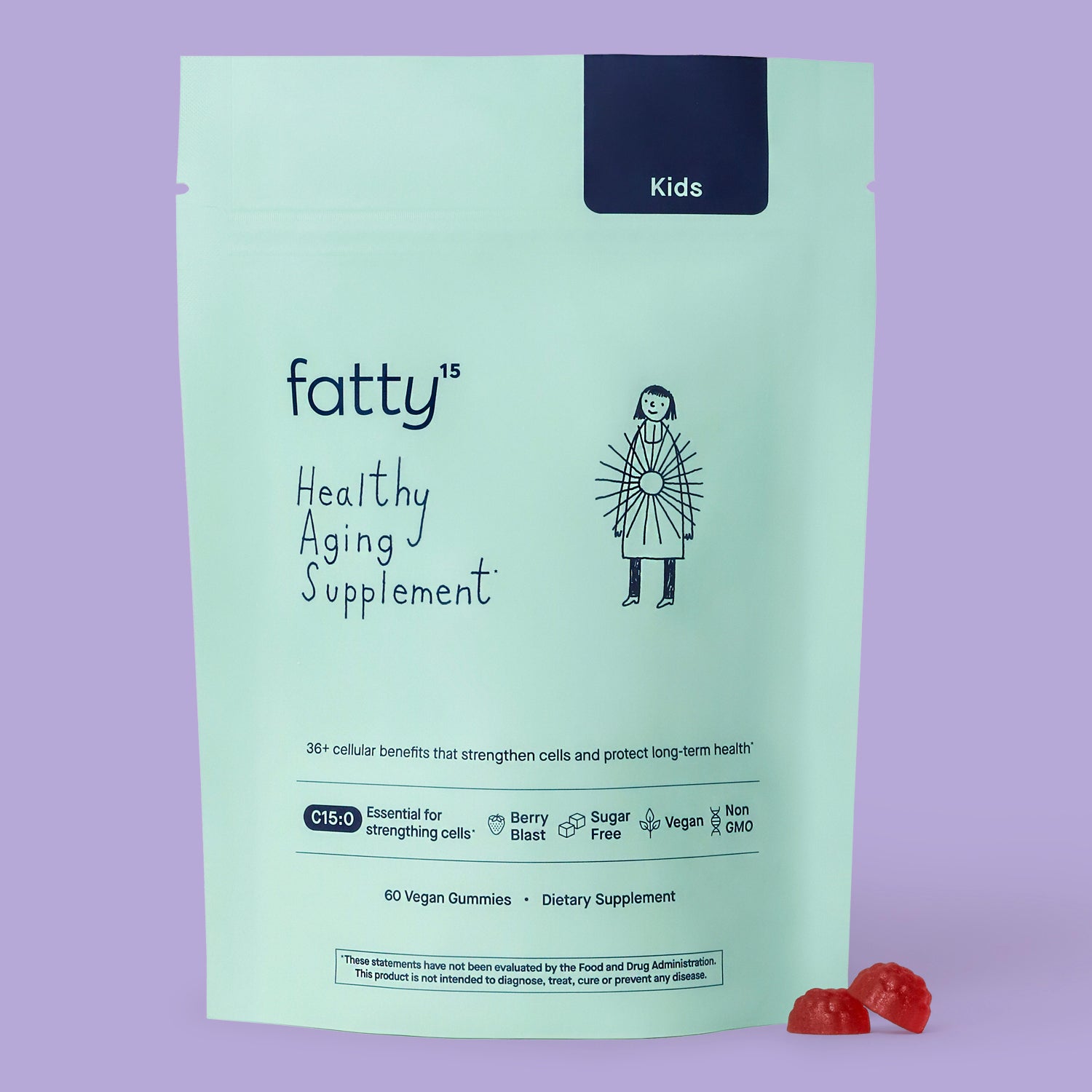
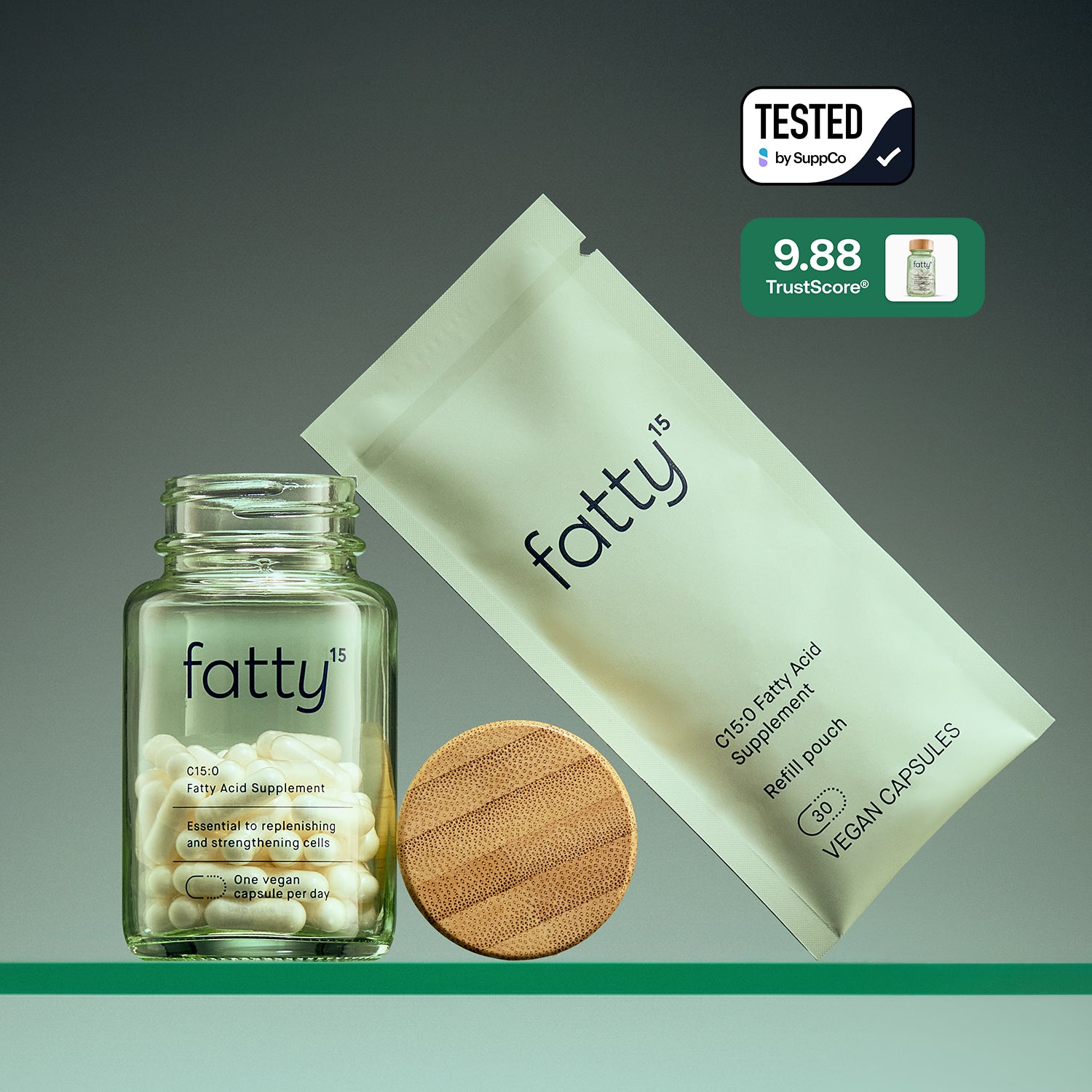
A supplement sidesteps that trade-off entirely, delivering a measured, consistent dose of C15:0 without the dietary baggage attached to its natural sources. Fatty15’s C15:0 supplement delivers a clinically studied, pure, patented, vegan-friendly form of C15:0, in a single daily capsule.
Evidence Beats Hype, Every Time
Always look for real human data, be skeptical of anything leaning too hard on mouse studies alone, and pay attention to bioavailability, since a compound doing great things in a test tube isn't worth much if your body can't actually use it.
C15:0 is the newest name on the list, backed by a growing body of peer-reviewed research and a structural role in cellular health that most of the field simply isn't addressing. In addition, it’s worth noting that fatty15’s C15:0 supplement passed the highest bar in supplement testing, TESTED by Suppco, earning a TRUST score of 9.88, which puts it in the top 1% of over 160,000 supplements tested.
If your current stack is built around the usual suspects, this is a good moment to ask what's missing, and whether your cells are getting the one essential fatty acid most modern diets have quietly stopped supplying.
FAQs
What is the most well-researched longevity supplement?
Creatine and vitamin D currently have some of the strongest, longest-standing human evidence among popular longevity supplements, backed by decades of research and well-established dosing.
Does NAD+ supplementation actually work?
NMN and NR reliably raise NAD+ levels in the body and are well tolerated, but human trials for broader benefits such as muscle strength and physical function have shown mixed results so far. The evidence is promising but still developing.
Is C15:0 a proven longevity supplement?
C15:0 is a newly identified essential fatty acid studied for its role in cell membrane strength and mitochondrial function.* Research is newer than some longevity supplements on this list, but growing evidence and over 150 peer reviewed studies are supporting its health claims. Further C15:0’s essentiality is supported by the discovery of a deficiency syndrome affecting a large share of the population.
Why choose a C15:0 supplement instead of eating more whole-fat dairy?
Whole-fat dairy is the primary source of C15:0, but it also provides a significant amount of saturated fat. A supplement like fatty15 provides a consistent, measured dose of C15:0 without that trade-off.
|
*These statements have not been evaluated by the Food and Drug Administration. This product is not intended to diagnose, treat, cure, or prevent any disease. |
Sources:
Resveratrol: How Much Wine Do You Have to Drink to Stay Healthy? | PMC


