


Is Butter a Dairy Product? Yes, Here’s Why

Seraphina Therapeutics's Highlights
Decades of steering people away from butter and saturated fat coincided with rising, not falling, rates of obesity and metabolic disease, a pattern that's fueled real reassessment of the low-fat era's guidance. Butter is one of the more concentrated natural sources of C15:0, but getting a meaningful amount also means taking on its pro-inflammatory fats and increased calorie load, a trade-off a purified supplement avoids entirely. Because C15:0's richest natural food sources are dairy-derived, vegans have had few practical dietary sources of it, making a vegan supplement a meaningful gap-filler rather than just a convenience.
Butter has had one of the stranger reputations in modern nutrition history. It went from a kitchen staple to a public health villain to, more recently, something that nutrition guidelines have quietly welcomed back with a lot less fanfare than when it was pushed out.
Before getting into that back-and-forth, it's worth starting with the basic question in the title: yes, butter is a dairy product, and understanding why sets up the rest of the story.
What Is Butter, and Why Is It Dairy?
Butter is made by churning cream, the high-fat layer that separates from milk, until the fat solids separate from the liquid buttermilk. That process concentrates milk fat into a solid, spreadable form that's roughly 80 percent fat, with the remainder made up mostly of water and small amounts of milk proteins and lactose.
Because butter is derived directly from milk, it falls squarely under the dairy category, alongside cheese, yogurt, and cream. It's classified as a dairy fat specifically, distinct from dairy proteins like casein and whey, but the source is unmistakably milk.
This matters for anyone tracking dairy intake for allergy, intolerance, or dietary preference reasons, since butter, despite containing very little lactose or protein compared to milk itself, still counts as an animal-derived dairy product rather than a plant-based fat.
How the View of Butter Has Softened
For most of culinary history, butter was simply a fat people cooked with, without much ideological weight attached to it. That changed in the mid-20th century, when researchers began linking dietary saturated fat to elevated cholesterol and increased cardiovascular disease risk. Butter, being high in saturated fat, became one of the most visible casualties of that shift.
By the 1980s and 1990s, low-fat and fat-free eating had become the dominant nutritional framework in the United States, backed by official dietary guidelines that specifically recommended limiting saturated fat intake and replacing butter with margarine and vegetable oil spreads. Butter sales declined for decades as a result, and an entire category of butter substitutes rose to fill the gap.
Grocery store shelves filled with fat-free and reduced-fat versions of everything from dairy products to snack foods, often with sugar or refined carbohydrates added back in to compensate for the flavor and texture lost when fat was removed, a tradeoff that received far less scrutiny at the time than it probably deserved.
Did Avoiding Butter Actually Improve Public Health?
No. Despite decades of public health messaging steering people away from saturated fat sources such as butter, rates of obesity, type 2 diabetes, and metabolic disease in the United States rose substantially over that same period, not fell.
Correlation isn't causation, and plenty of factors contributed to that trend beyond any single food. However, the pattern has led a growing number of researchers to question whether the low-fat era's blanket demonization of saturated fat, and butter specifically, was as well-founded as it was presented at the time.
Part of the issue is what replaced butter. Many of the margarines and vegetable oil spreads that took their place in the low-fat era contained trans fats, industrially produced fats now understood to be considerably more harmful to cardiovascular health than the saturated fat they were replacing.
In some cases, the substitution made things worse rather than better. There's also a broader question researchers have raised about whether focusing so heavily on a single macronutrient oversimplifies a much more complex picture involving refined carbohydrates, added sugar, and overall dietary pattern.
Public health guidance has since caught up with at least part of this reassessment. Trans fats have been largely phased out of the food supply through regulatory action, and the conversation around saturated fat has grown more nuanced, with researchers now emphasizing overall dietary quality and patterns rather than eliminating any single nutrient in isolation.
That shift doesn't retroactively make the original low-fat guidance correct. However, it does help explain why butter and other sources of saturated fat have found their way back into current recommendations.
Why Butter Is Back on the Dinner Table
More recent nutritional research and updated dietary guidance have taken a more nuanced view of saturated fat generally, and dairy fat specifically.
Some research has found that whole-fat dairy consumption doesn't carry the same cardiovascular risk that was long assumed, and a few studies have even associated dairy fat biomarkers with neutral or favorable metabolic outcomes, a finding sometimes referred to as the dairy fat paradox.
This doesn't mean butter has been declared a health food. It hasn't, and most current guidance still recommends moderating saturated fat intake as part of an overall balanced diet.
But the conversation has shifted from treating butter as something to be eliminated to viewing it as one dietary fat among several, appropriate in moderation rather than automatically worse than the alternatives that replaced it.
The Less Healthy Parts of Butter
Even with a more balanced view, butter isn't without downsides worth understanding clearly.
Butter is high in even-chain saturated fat, primarily palmitic acid, and consistently high intake of saturated fat has been associated with elevated LDL cholesterol in many individuals, a risk factor for cardiovascular disease. Individual response varies considerably based on genetics and overall diet, but it remains a reasonable point of caution for people managing cholesterol or cardiovascular risk.
Butter is also calorie-dense, at roughly 100 calories per tablespoon, with essentially none of that coming from fiber, protein, or micronutrients that support satiety or metabolic health. That makes it easy to consume more than fits within an overall calorie target, particularly in the context of restaurant cooking and baking, where it's used liberally.
And because butter is a dairy product, it's simply off the table for anyone following a vegan diet or managing a dairy allergy or intolerance, regardless of how the broader saturated fat conversation evolves.
Portion size tends to be the practical challenge in real-world eating more than any single property of butter itself. A pat of butter on toast looks very different, calorically and metabolically, than the amount of butter that goes into a restaurant sauce, a stick of pastry dough, or a pan of roasted vegetables.
C15:0 in Butter, and Why a Supplement Might Fit Better
Eliminating butter (and other full-fat dairy products) for the last few decades has cost us in another important way. C15:0, a newly discovered essential fatty acid, is found primarily in these products.
When we stopped consuming full-fat dairy, our C15:0 levels plummeted. It’s estimated that 1 in 3 people globally now have C15:0 levels that are too low. That’s important because science supports that our bodies need C15:0 to thrive.
C15:0 or pentadecanoic acid is an odd-chain essential fatty acid that supports cell membrane integrity. It also activates PPAR receptors, a family of receptors that regulate energy and fat metabolism and support a healthy inflammatory response, linking it to core processes of metabolic and cellular health. *
Should You Eat More Butter?
Not exactly. Butter contains C15:0, but there’s a catch. The amount of C15:0 present in a typical serving of butter is relatively small, and getting a meaningful dose through diet alone means consuming butter in quantities that also bring along the even-chain saturated fat, the calorie density, and the other tradeoffs discussed above.
For anyone trying to avoid those downsides, whether for cardiovascular reasons, weight management, or simply personal preference, that's a real limitation. It's also simply not an option for anyone following a vegan diet or avoiding dairy for allergy or intolerance reasons.
Since C15:0's most concentrated natural food sources are dairy-derived, vegans have historically had limited practical ways to get meaningful amounts of this fatty acid through food alone.
Is a Supplement a Solution?
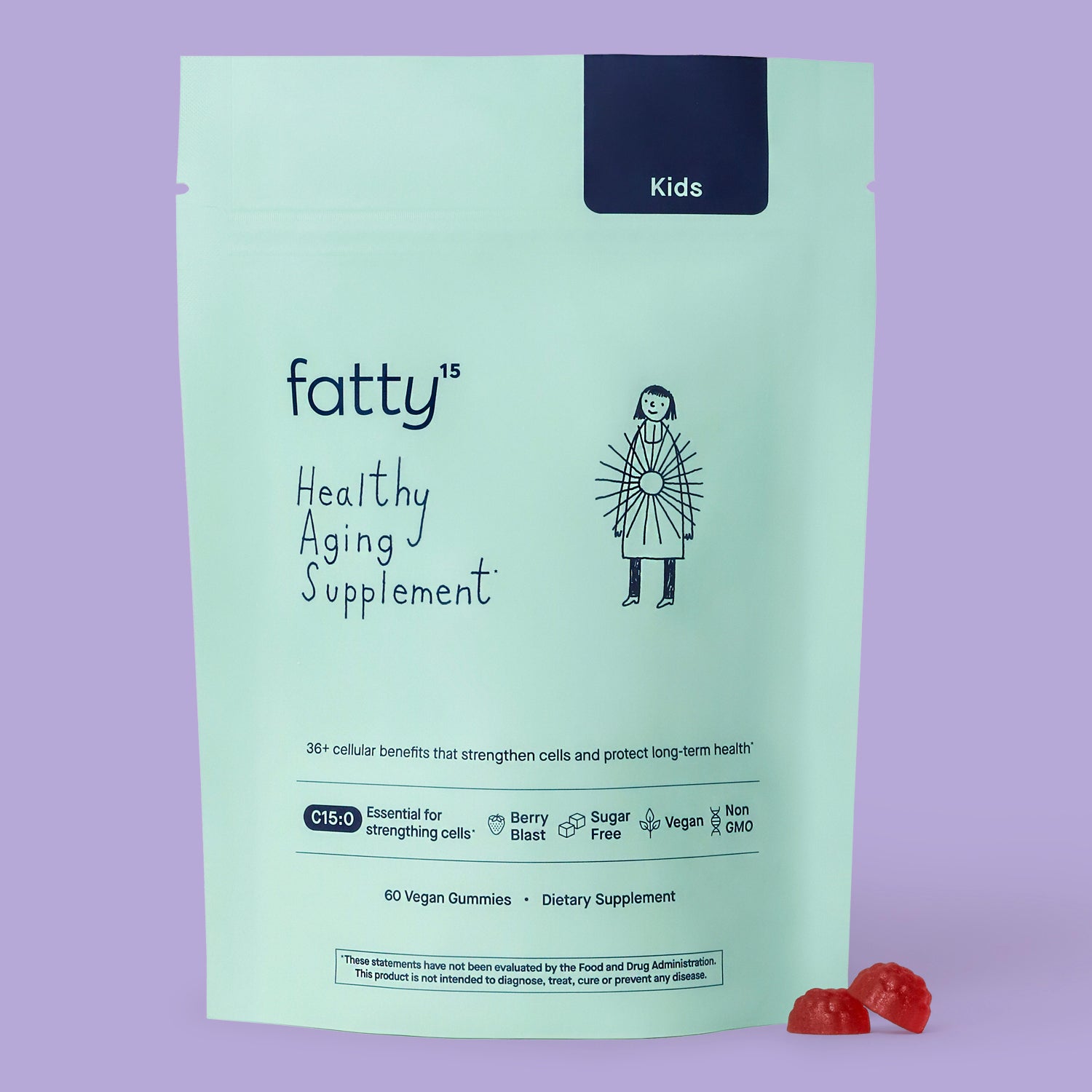
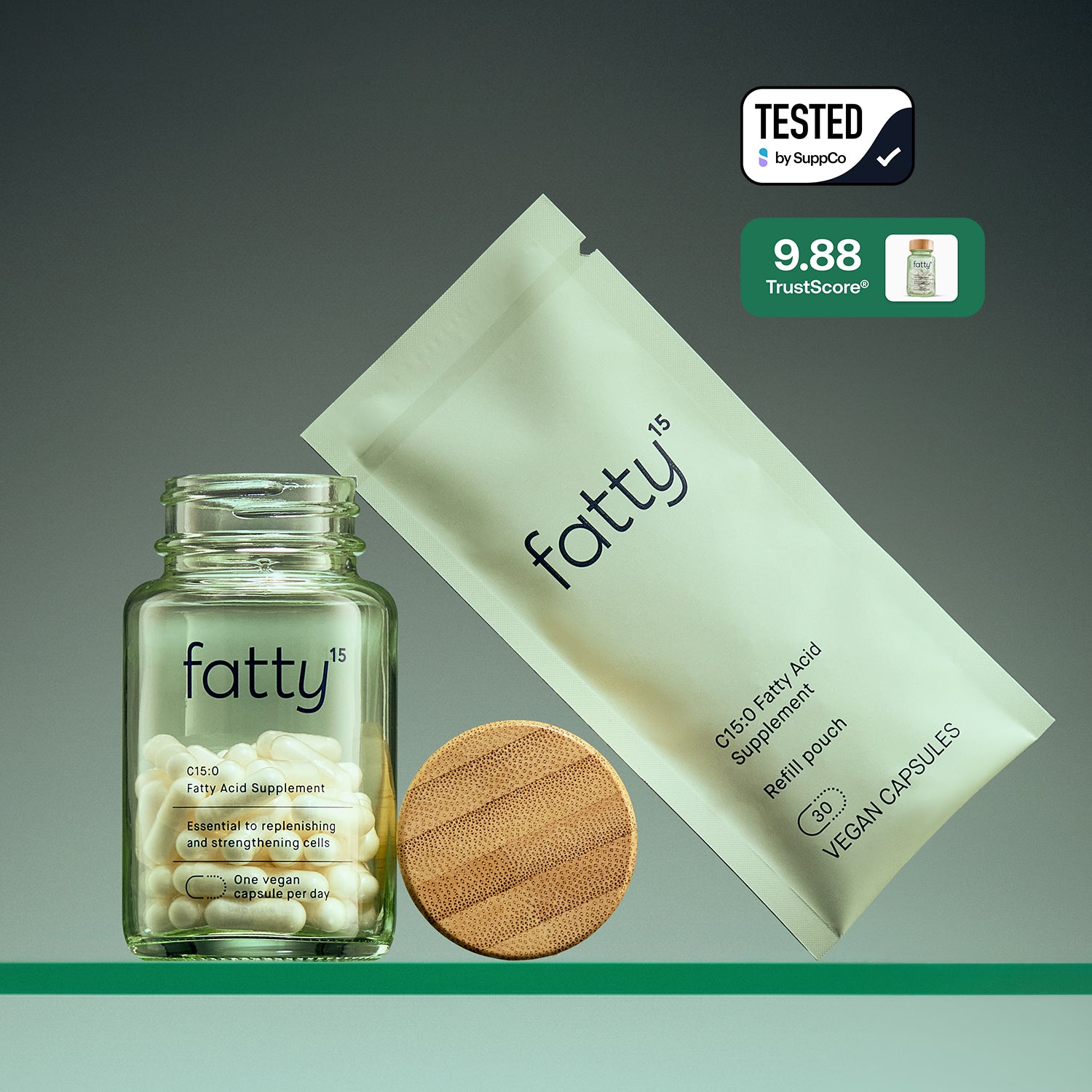
Yes. We developed fatty15’s C15:0 supplement to bridge the gap between the need for C15:0 and the difficulty of obtaining it from food sources in a healthy, reliable way. Fatty15 contains a patented, purified, award-winning, vegan-friendly form of C15:0 in a once-daily capsule, without the even-chain saturated fat, calories, or dairy content that come attached to it in butter.
With or Without Butter
The choice is really up to you. Butter earns its place back in a reasonable, moderate diet more than the low-fat era gave it credit for, and understanding why it fell out of favor, and why the evidence didn't entirely justify that fall, is a useful lesson in how nutrition science evolves as new research comes in.
At the same time, butter still comes with real tradeoffs worth being thoughtful about, and it's simply not accessible to everyone. For people looking to capture the benefits associated with C15:0 specifically, without the saturated fat, calories, or dairy content, a supplement like fatty15’s C15:0 supplement offers a more targeted way to close that gap.
|
*These statements have not been evaluated by the Food and Drug Administration. This product is not intended to diagnose, treat, cure, or prevent any disease. |
FAQs
Is butter considered a dairy product?
Yes. Butter is made by churning cream, the fat that separates from milk, until it forms a solid, spreadable fat. Because it's derived directly from milk, butter is classified as a dairy product, specifically a dairy fat, distinct from dairy proteins like casein and whey, but still an animal-derived product from milk.
Why was butter avoided for so long?
Starting in the mid-20th century, researchers linked saturated fat intake to elevated cholesterol and cardiovascular disease risk, and butter, being high in saturated fat, became a primary target of dietary guidance recommending its reduction. By the 1980s and 1990s, low-fat eating had become the dominant nutritional framework, and butter consumption declined significantly as margarine and vegetable oil spreads took its place.
Is butter healthy or unhealthy?
Butter is neither purely healthy nor purely unhealthy. It's calorie-dense and high in even-chain saturated fat, which has been associated with elevated LDL cholesterol in many individuals. However, more recent research has taken a more moderate view of dairy fat than the strict avoidance recommended during the low-fat era. Most current guidance treats it as acceptable in moderation as part of an overall balanced diet, rather than something to eliminate.
Does butter contain C15:0, and is it a good source of it?
Yes, butter and other dairy fats are among the more concentrated natural dietary sources of C15:0, an odd-chain essential fatty acid. However, getting a meaningful amount through butter alone typically means consuming enough to take on its saturated fat and calorie load, and it isn't an option for anyone avoiding dairy. Fatty15 delivers a pure, patented, vegan-friendly supplement designed to restore C15:0 levels and improve our long-term health and wellness.
Sources:
A short history of saturated fat: the making and unmaking of a scientific consensus | PMC
The Demise of Artificial Trans Fat: A History of a Public Health Achievement | PMC


