


How To Know if You Have a C15:0 Deficiency: Signs and What To Do

Seraphina Therapeutics's Highlights
- Low C15:0 levels may contribute to cellular fragility, mitochondrial dysfunction, fatigue, and accelerated aging-related decline.*
- Modern low-fat and plant-based eating patterns may increase the risk of C15:0 deficiency in up to 1 in 3 people.*
- Testing your C15:0 levels and supplementing with pure C15:0 may help support healthier aging and long-term cellular resilience.*
- For years, healthy aging conversations focused mostly on exercise, antioxidants, sleep, and healthy eating. Today, emerging science is pointing to another important factor in long-term wellness: C15:0, also known as pentadecanoic acid.
- Researchers believe this odd-chain saturated fatty acid plays an important role in maintaining cellular strength, metabolic resilience, and mitochondrial health. At the same time, modern dietary habits may be driving chronically low levels of C15:0 in a large portion of the population.
- What makes this so important is that low C15:0 levels can now be measured through blood testing, enabling identification and treatment of a previously overlooked nutritional deficiency linked to healthy aging.
- Let’s dive into what C15:0 is, why you need it, and how to find out if your levels are too low. We’ll also cover how a powerful new supplement can restore your declining C15:0 levels.
Understanding C15:0 and Why It Matters
C15:0 is an odd-chain saturated fatty acid that researchers now recognize as essential for maintaining healthy cellular function. Essential means our bodies need it to thrive, but cannot readily make it on their own. We have to get essential nutrients from diet or supplements.
The buzz around C15:0 began with research involving aging Navy dolphins . Scientists observed that dolphins with higher circulating C15:0 levels consistently showed healthier metabolic aging markers over time. That discovery led researchers to explore whether humans may also depend on adequate levels of C15:0 for healthy aging and cellular resilience.*
Since then, research has connected C15:0 to several biological functions associated with long-term health. Studies suggest that C15:0 helps strengthen cell membranes , support mitochondrial function , improve cellular signaling, and protect cells against age-related breakdown. Researchers are also studying its relationship to AMPK activation and other pathways involved in cellular homeostasis and longevity.*
This growing body of research is one reason C15:0 is now often described as the first newly identified essential fatty acid since the discovery of omega-3s more than 90 years ago.
At the same time, modern diets may be contributing to widespread low intake. Decades of low-fat dietary trends, reduced consumption of whole-fat dairy, and the growing popularity of plant-based milk alternatives have significantly reduced population-wide exposure to natural sources of C15:0.
What Happens During Cellular Aging?
Cellular aging refers to the gradual decline in the function, resilience, and repair capacity of cells over time. While aging is natural, certain nutrient deficiencies may accelerate this process. As cells age, they often become more vulnerable to oxidative stress, mitochondrial dysfunction, inflammation, and membrane instability.
Over time, these changes can affect energy production, recovery, metabolic balance, and overall resilience. Researchers refer to the changes in cells over time as the 12 hallmarks of aging .
One area receiving increasing scientific attention is cellular fragility. Researchers have proposed that low C15:0 levels may contribute to weakened cell membranes and ferroptosis, an iron-driven form of cell death associated with accelerated aging and metabolic dysfunction.
Studies have linked low C15:0 levels with increased risk factors associated with:
-
Metabolic dysfunction
-
Fatty liver disease
-
Cardiovascular disease
-
Type 2 diabetes
-
Anemia-related changes
Researchers now believe maintaining healthy C15:0 levels may help support stronger, more resilient cells as we age.
When Do Signs of Aging Begin?
Most people associate aging with visible changes that appear later in life, but cellular aging processes often begin much earlier. Researchers suggest that many biological aging pathways begin accelerating during the 30s and 40s, even if outward signs remain subtle.
During this period, mitochondrial efficiency may decline, recovery may slow, sleep quality may worsen, and metabolic flexibility may become less stable. At the same time, studies suggest that circulating C15:0 levels naturally decline with age.
Many people do not initially connect symptoms like fatigue or brain fog with nutrient deficiencies because these issues develop gradually. Instead, they are often dismissed as stress, burnout, or simply “getting older.”
Early warning signs potentially associated with low C15:0 levels may include persistent fatigue, poor sleep quality, reduced recovery capacity, low energy, or difficulty maintaining metabolic balance.
Cellular Fragility Syndrome: A C15:0 Deficiency
Researchers are increasingly connecting low C15:0 levels to a newly identified nutritional deficiency condition called Cellular Fragility Syndrome. According to research published in the scientific journal Metabolites, this syndrome develops when circulating levels of C15:0 become too low to adequately support healthy cell membrane stability and cellular resilience.
Cell membranes are critical because they protect the structural integrity of cells and help regulate communication, energy production, and nutrient transport. C15:0 appears to play an important role in maintaining that stability.
When levels decline, cells may become more vulnerable to lipid peroxidation, oxidative stress, and ferroptosis , an iron-driven form of cell death increasingly associated with accelerated aging and chronic metabolic dysfunction.
Researchers believe this process may help explain why low C15:0 levels are associated with poor metabolic, liver, heart, and red blood cell health markers. Studies also suggest that restoring healthy C15:0 levels may help strengthen cell membranes, repair mitochondrial function, lower damaging reactive oxygen species, and support healthier cellular signaling pathways.*
What makes Cellular Fragility Syndrome especially significant is that researchers now believe it may affect up to 1 in 3 people worldwide. This emerging science is one reason C15:0 is increasingly viewed not simply as another fatty acid but as a foundational nutrient tied to long-term cellular health and healthy aging.
How To Find Out Your C15:0 Levels
Most people today have C15:0 levels around 0.2% of their total fatty acid count. While studies support that people need to maintain circulating C15:0 levels between 0.2% and 0.4% to protect against Cellular Fragility Syndrome, there is evidence that higher C15:0 levels can further support longevity and long-term heart health.
Not sure where your levels lie? You can start by having your doctor run a blood panel test to check your fatty acid levels. Or, you can click here and get an easy-to-use home testing kit from our partner lab. A finger-prick test is all it takes to find out where your levels are and take the first step in correcting them.
Correcting a C15:0 Deficiency
For people with low circulating levels, increasing C15:0 intake can help support healthier cellular aging and metabolic resilience.* Natural dietary sources of C15:0 include whole-fat dairy products, such as butter, cheese, yogurt, and whole milk, as well as grass-fed ruminant meats and certain fatty fish, in trace amounts. As such, relying on food sources can be problematic.
Whole-fat dairy products also contain excess calories, lactose, and higher levels of even-chain saturated fats. Meanwhile, plant-based milk alternatives contain virtually no C15:0 at all.
This is one reason interest in pure C15:0 supplementation has grown rapidly.
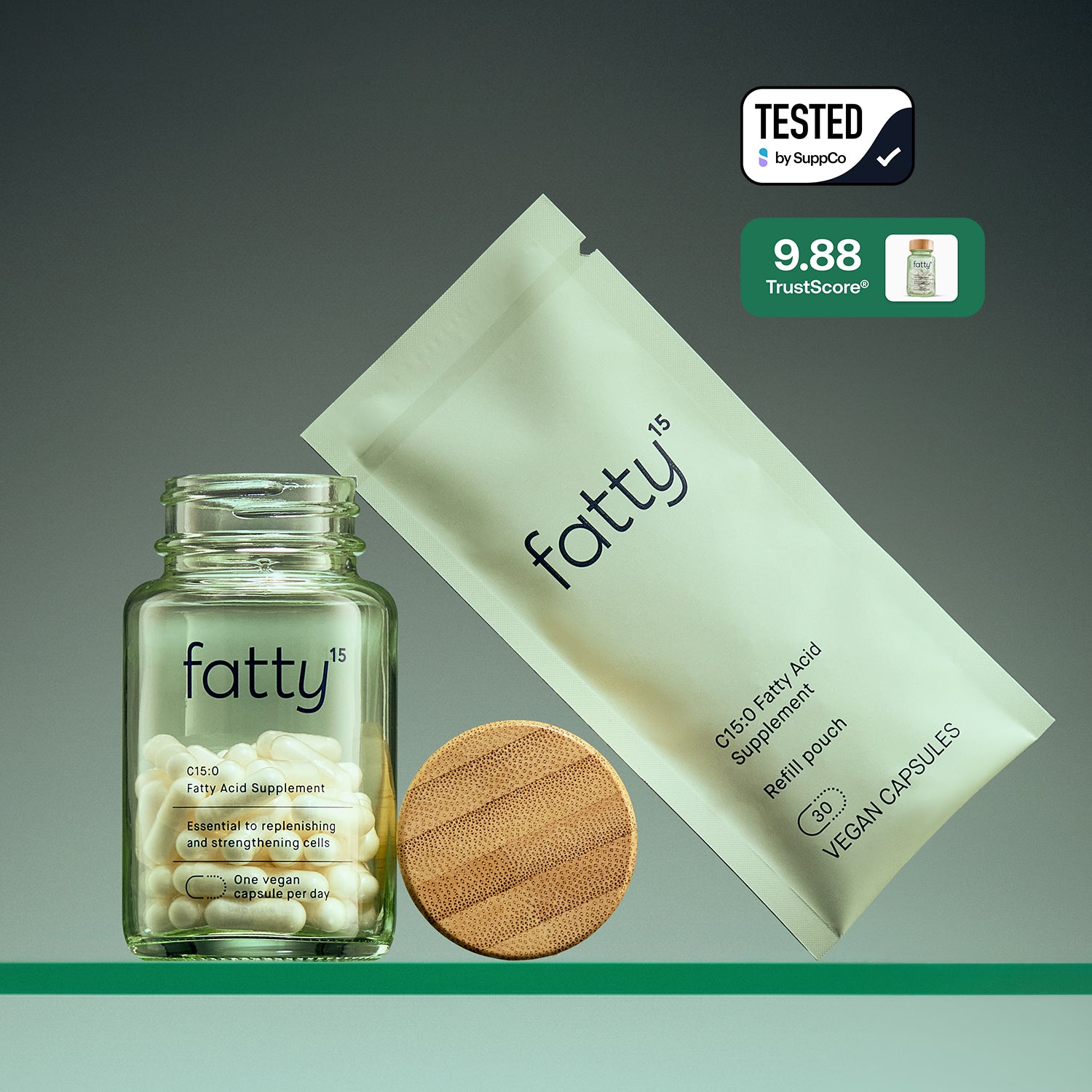
Fatty15’s C15:0 supplement contains pure FA15™ C15:0 in a ready-to-absorb free fatty acid form designed to help increase circulating C15:0 levels efficiently. Unlike food-based sources, fatty15 delivers vegan-friendly pure C15:0 with just one calorie per serving, without the additional components found in dairy products.
It’s everything you need and nothing you don’t.
C15:0: The Longevity Nutrient
The discovery of C15:0 as an essential fatty acid is reshaping how researchers think about aging and cellular health. Rather than waiting until visible signs of aging or metabolic decline appear, scientists increasingly believe proactive monitoring of nutrients tied to cellular resilience may become an important part of preventive wellness.
Correcting a low C15:0 level and deficiency can be accomplished by taking fatty15’s C15:0 supplement once per day. It’s one of the best investments you can make for supporting your long-term health.
|
*These statements have not been evaluated by the Food and Drug Administration. This product is not intended to diagnose, treat, cure, or prevent any disease. |
Frequently Asked Questions About C15:0 Deficiency
What causes a C15:0 deficiency?
Low intake of whole-fat dairy, grass-fed animal foods, and certain fish may contribute to low C15:0 levels. Aging and modern low-fat dietary patterns may also play a role.
How long does it take to improve C15:0 levels?
Research suggests many people may improve circulating levels within approximately 4 to 12 weeks through dietary changes or supplementation.
Is supplementing with C15:0 safe long-term?
Current evidence suggests pure C15:0 supplementation is generally well tolerated and safe within studied ranges.
How does C15:0 differ from omega-3 fatty acids?
C15:0 primarily supports cell membrane stability, mitochondrial function, and cellular resilience, while omega-3s are more closely associated with inflammatory regulation and cardiovascular support.
Where can I get tested and find supplements?
At-home testing kits and pure C15:0 supplements are available through fatty15 and specialized clinical testing providers.
Sources:
Pentadecanoic acid promotes basal and insulin-stimulated glucose uptake in C2C12 myotubes | NCBI
Hallmarks of aging: An expanding universe | PubMed
Ferroptosis: An Iron-Dependent Form of Nonapoptotic Cell Death


