


September Is Healthy Aging Month! Here’s Everything You Need To Know

Seraphina Therapeutics's Highlights
Healthy Aging Month takes place every September and raises awareness of the physical, mental, and social aspects of aging well. Supporting healthy aging involves several interconnected areas, including movement, nutrition, sleep, social connection, and cellular health. C15:0, an essential fatty acid found in fatty15’s supplement, has been shown to support cell membrane strength and mitochondrial function, both of which play a role in how our bodies age over time.
Every September, Healthy Aging Month brings attention to a topic that affects all of us, whether we are actively thinking about it or not: how we age. Rather than focusing on any single habit or intervention, Healthy Aging Month takes a broad view, encouraging people to consider the physical, mental, social, and financial aspects of aging well.
Below, we walk through what this observance is about, why it matters, and several science-supported areas worth focusing on if you are looking to support healthy aging at any stage of life.
What Is Healthy Aging Month?
Healthy Aging Month was established to raise awareness around the many factors that contribute to aging well and to encourage people to take a proactive approach to their long-term health.
Unlike observances that focus on a single condition or issue, Healthy Aging Month covers a wide range of topics, including physical fitness and nutrition, mental health, social engagement, and financial planning for later life.
Each September, organizations, healthcare providers, and community groups use the month to host events, share educational resources, and encourage people to take stock of their current habits. Some communities organize local health fairs or walking groups, while others focus on individual actions, such as scheduling a checkup or reviewing long-term financial plans.
The observance's flexibility is part of its strength. Rather than prescribing a single approach, Healthy Aging Month invites people to consider whichever areas of their life could benefit most from attention.
Why Healthy Aging Deserves Ongoing Attention
It can be easy to think of aging as something that simply happens to us, largely outside of our control. While genetics does play a role, a substantial body of research supports that many aspects of how we age are influenced by daily habits and choices.
Movement, nutrition, sleep quality, social connection, and even how we manage stress have all been linked to meaningfully different health outcomes as we get older. This is part of why Healthy Aging Month exists.
It is a reminder that healthy aging is not a single decision made at one point in life but an ongoing practice built through consistent, smaller choices over time. The earlier you establish these habits, the more they tend to compound in a positive direction.
Movement as a Foundation for Healthy Aging
Physical activity remains one of the most well-supported habits for aging well. Regular movement helps preserve muscle mass and bone density, both of which naturally decline with age if not actively maintained through activity. Strength training, in particular, plays an important role in preserving the muscles needed for balance, mobility, and everyday tasks.
Cardiovascular activity, such as walking, swimming, or cycling, supports heart health and helps maintain healthy blood pressure and circulation over time. Flexibility and balance work, including stretching or practices like tai chi, help maintain mobility and reduce the risk of falls, which become a more significant concern with age.
As with most healthy aging habits, consistency tends to matter more than intensity. Regular, moderate activity sustained over years tends to offer more benefit than occasional, high-intensity effort.
For those just starting to build a more active routine, small, manageable steps, such as a short daily walk, are more sustainable than an ambitious plan that is difficult to maintain.
Working with a physical therapist or trainer experienced with the needs of midlife and older adults can also help identify a safe, effective starting point, particularly for those managing existing joint concerns or recovering from an injury.
Nutrition Throughout the Aging Process
Nutritional needs shift as we age. Metabolism gradually slows, and the body may become less efficient at absorbing certain nutrients, even as overall caloric needs decrease. This makes the quality of what we eat increasingly important with age.
Protein intake deserves attention, since adequate protein supports muscle mass that becomes harder to preserve over time. Fiber, found in vegetables, fruits, and whole grains, supports digestive health and helps manage cholesterol and blood sugar levels.
Certain nutrients warrant specific attention as we get older, including calcium and vitamin D for bone health, and B12, which can become harder for the body to absorb over time. A conversation with a healthcare provider or a routine lab panel can help identify specific nutritional gaps to address at different stages of life.
Meal planning can also become more challenging with age, particularly for those living alone or managing a busier schedule. Simple strategies, such as preparing larger batches of food to freeze in portions, or building a rotating set of a few balanced, go-to meals, can help make consistent, nutritious eating more manageable without requiring significant daily effort.
The Role of Sleep in Aging Well
Sleep patterns often shift with age, with many people reporting lighter sleep, more frequent waking, or difficulty falling asleep as they get older. While some of this change is a normal part of aging, poor sleep quality has been linked to a range of health concerns, including weakened immune function and slower cognitive processing.
A consistent sleep schedule, going to bed and waking at similar times each day, can help regulate the body's internal clock. Limiting caffeine later in the day and reducing screen exposure in the evening are also commonly recommended strategies.
For some, addressing underlying issues such as chronic pain or sleep apnea, both of which become more common with age, can meaningfully improve sleep quality over time.
Social Connection and Mental Health
Social engagement is sometimes overlooked in conversations about healthy aging, yet its impact is well-documented. Isolation and loneliness have been associated with poorer health outcomes as people age, including increased risk for cognitive decline and depression.
Staying connected doesn’t require a large social circle. Regular contact with family, participation in community groups, volunteering, or simply maintaining a few close relationships can provide meaningful support. For those managing mobility limitations or living farther from loved ones, technology such as video calls can help maintain regular connection across distance.
Mental health also deserves ongoing attention as we age. Activities that challenge the brain, such as reading, puzzles, or learning a new skill, may help support cognitive function over time, alongside the physical activity and quality sleep discussed above.
Managing chronic stress through mindfulness practices, therapy, or simply setting aside time for hobbies and relaxation also plays a supporting role, since prolonged stress has been linked to a range of negative health outcomes that can accelerate over time.
Planning for the Years To Come
Healthy Aging Month also encourages people to think beyond physical health to the broader planning that supports a secure, comfortable later life. This includes reviewing retirement savings, long-term care options, and estate planning documents, all of which are easier to address proactively than under pressure later on.
Regular health screenings also fall under this umbrella. Many conditions that affect long-term health, from high blood pressure to certain cancers, are more manageable when caught early.
Scheduling routine checkups, staying current with recommended screenings, and maintaining open communication with healthcare providers about new symptoms or concerns are practical steps that support healthy aging over the long term.
Taken together, these planning-oriented habits complement the physical and cellular health strategies discussed throughout this piece, rounding out a more complete picture of what it means to age well.
Understanding Cellular Health and Aging
Underlying many of the visible signs of aging is a less visible process happening at the cellular level. As we age, our cells naturally become more fragile and begin to lose function.
This includes weakening of cell membranes, which can leave cells more vulnerable to damage, as well as a decline in mitochondrial function, which affects how efficiently our cells produce energy.
This pattern of cellular fragility has recently been described in peer-reviewed research as Cellular Fragility Syndrome, a newly identified nutritional deficiency linked to low circulating levels of C15:0, an essential fatty acid.
Researchers estimate this deficiency may affect as many as 1 in 3 people worldwide. At its core, low C15:0 levels leave cell membranes more vulnerable to breakdown and contribute to a specific form of cell death called ferroptosis, which has been connected to accelerated aging as well as metabolic, liver, and heart-related health concerns.*
Science supports C15:0, also known as pentadecanoic acid, as an essential fatty acid, meaning our bodies need it but cannot produce enough on their own. C15:0 has been shown to help strengthen cell membranes, supporting their resilience against age-related breakdown, and to support mitochondrial function, helping cells generate energy more efficiently.*
C15:0 also naturally activates PPAR receptors found throughout the body, which help regulate metabolism, including cholesterol and glucose homeostasis, along with immune response, mood, sleep, and liver function.
C15:0 is naturally present in trace amounts in whole-fat dairy products. Still, most people don’t consume enough of these foods to reach beneficial levels, particularly as dietary guidelines shifted away from full-fat dairy starting in the 1970s.
This has made it more difficult for many people to obtain adequate C15:0 through diet alone, contributing to growing interest in supplementation as a more consistent path toward healthy levels.
A Simple Solution: Fatty15
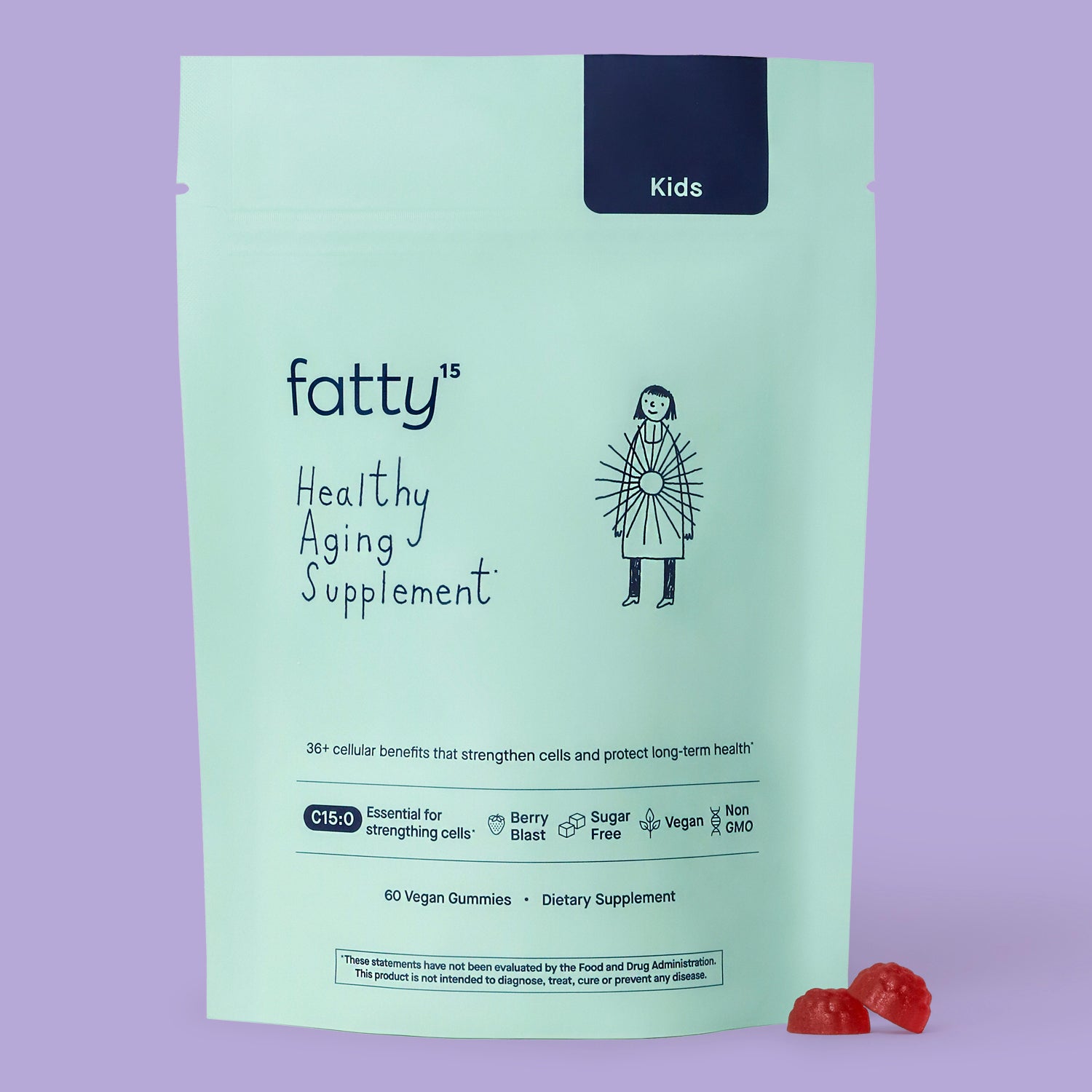
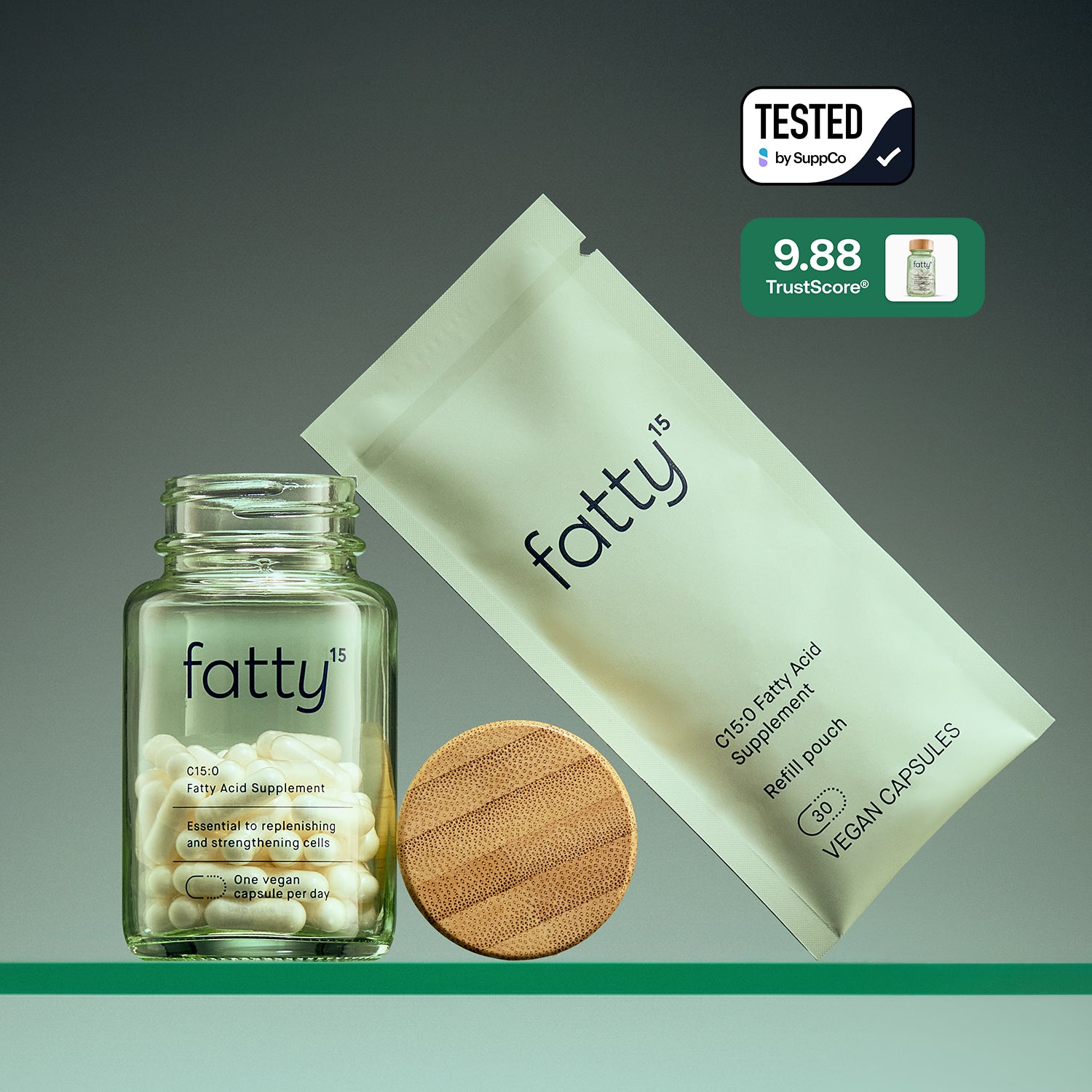
For those looking to support cellular health as part of a broader approach to healthy aging, fatty15 offers a simple, once-daily way to help support C15:0 levels. Fatty15’s C15:0 supplement contains a pure, patented, vegan-friendly form of C15:0, delivered in a small daily capsule without the added calories or sugars of whole-fat dairy.
Fatty15 was designed specifically to address this gap. Unlike the C15:0 found naturally in whole-fat dairy, which is bound to triglycerides and requires digestive enzymes to be broken down before it can be absorbed, the C15:0 in fatty15’s C15:0 supplement is already in its free fatty acid form, meaning less work for the digestive system.
It is also completely vegan, allowing people to support their C15:0 levels without relying on dairy. In addition, it’s worth noting that fatty15’s C15:0 supplement passed the highest bar in supplement testing, TESTED by Suppco, earning a TRUST score of 9.88, which puts it in the top 1% of 160,000+ supplements tested.
Focusing on Healthy Aging, September and Beyond
Healthy Aging Month is a reminder that aging well is not the result of one single change but the sum of many smaller habits sustained over time. Staying active, eating well, sleeping soundly, staying socially connected, planning ahead, and supporting the body at the cellular level all work together to shape how we age.
Adding cellular support to this routine is easy. Fatty15 offers a straightforward way to help support healthy C15:0 levels as part of a broader, sustainable approach to healthy aging.*
|
*These statements have not been evaluated by the Food and Drug Administration. This product is not intended to diagnose, treat, cure, or prevent any disease. |
FAQs
What is Healthy Aging Month?
Healthy Aging Month is an annual observance held every September that raises awareness of the physical, mental, social, and financial aspects of aging well.
What are some simple habits that support healthy aging?
Regular movement, balanced nutrition, consistent sleep, social connection, and routine health screenings are all habits supported by research as contributing to healthy aging.
Why does cellular health matter as we age?
As we age, our cells naturally become more fragile, with weaker membranes and reduced mitochondrial function. This cellular fragility has been linked to broader metabolic, liver, and heart health outcomes, underscoring the importance of cellular support in healthy aging.
What is C15:0, and how does it relate to aging?
C15:0, also known as pentadecanoic acid, is an essential fatty acid that science supports as playing a role in cell membrane strength and mitochondrial function. Most people do not get enough C15:0 through diet alone, leading to growing interest in supplementation.
Sources:


