


GRAS Status Explained: Why It Matters for Supplement Safety

Seraphina Therapeutics's Highlights
- GRAS status helps determine whether supplement ingredients are considered safe based on safety studies, scientific evidence, and expert review.
- Understanding GRAS, third-party testing, and transparency can help consumers identify safer, science-backed longevity supplements.
- Fatty15 combines published GRAS status, peer-reviewed C15:0 research, and third-party testing to support confidence in its healthy aging approach.*
- One term that often appears in discussions about supplement safety is GRAS, which stands for “Generally Recognized as Safe.” While the phrase sounds reassuring, many people don’t fully understand what it means, how it works, or why it matters when evaluating supplements.
- Let’s take a look at what GRAS means, why it can be misleading, and why third-party testing and scientific evidence are important when choosing supplements.
What Is GRAS Status?
GRAS stands for “ Generally Recognized as Safe ,” a regulatory category established by the U.S. Food and Drug Administration (FDA) for substances considered safe for use in foods and dietary supplements based on scientific evidence or long-standing use.
Unlike pharmaceutical drugs, ingredients classified as GRAS don’t require full FDA premarket approval before entering the market. Instead, safety can be established through expert consensus supported by publicly available scientific data, historical food use, or formal safety reviews.
Why Was the GRAS System Created?
The GRAS framework was originally established in 1958 as part of the Food Additives Amendment to the Federal Food, Drug, and Cosmetic Act. At the time, regulators recognized that many commonly used food ingredients already had extensive histories of safe use.
Requiring full food additive approval for every familiar ingredient would have created enormous regulatory bottlenecks. GRAS was designed to solve that problem. The goal was to allow low-risk, well-understood substances to enter or remain in the food supply more efficiently while still relying on scientific consensus and expert review.
This helped balance innovation and food safety by distinguishing between completely new food additives requiring formal approval and ingredients already considered safe based on existing evidence.
Over time, the GRAS process expanded alongside the growing supplement industry, particularly as interest in functional foods, nutraceuticals, and longevity-supportive ingredients accelerated.
How GRAS Status Affects Supplement Safety
For dietary supplements, GRAS status can significantly influence how quickly ingredients reach consumers. If an ingredient already has established food uses or qualifies through GRAS pathways, companies may be able to avoid more extensive new dietary ingredient (NDI) notification processes.
This can accelerate innovation and make promising ingredients available more quickly. However, it also creates debate around how much oversight is truly necessary before products enter the market.
Supporters of the GRAS system argue that it allows beneficial ingredients to reach consumers more efficiently while still relying on scientific review and expert consensus. Critics argue that self-affirmed GRAS pathways may sometimes result in less public transparency and inconsistent levels of scrutiny.
The disagreement has led some experts to describe the situation as the “GRAS loophole,” where companies may market ingredients using self-affirmed safety determinations without publicly disclosing all supporting evidence.
Importantly, GRAS status doesn’t mean an ingredient is proven effective for every claimed benefit. It specifically relates to safety under intended conditions of use. It’s important not to confuse regulatory safety classifications with clinical proof of efficacy.
The Benefits of GRAS for Consumers and Innovation
Despite ongoing debate, the GRAS framework offers meaningful advantages when used responsibly. One of the biggest benefits is that it allows promising nutritional ingredients to become available without forcing every compound through pharmaceutical-style approval pathways that could take years or decades.
This flexibility has helped support innovation across:
-
Healthy aging supplements
-
Metabolic wellness products
-
Cognitive support ingredients
-
Functional nutrition
-
Cellular health compounds
For consumers, GRAS review processes can also provide an additional layer of reassurance when companies use independent safety experts, transparent scientific evaluations, and peer-reviewed evidence.
In many cases, GRAS evaluations involve:
-
Toxicology reviews
-
Dosage assessments
-
Safety margin analysis
-
Manufacturing evaluations
-
Historical consumption data
-
Expert panel review
Why Transparency Matters
One of the biggest concerns surrounding supplement safety isn’t necessarily the existence of GRAS pathways themselves, but the degree of transparency behind them. Health-conscious consumers increasingly want access to published scientific data supporting their products and clinical research that proves they work.
Transparency matters because it allows researchers, clinicians, and consumers to independently evaluate whether a product’s claims and safety profile appear credible. In the supplement industry, this is important because dietary supplements are regulated differently from pharmaceutical drugs.
The FDA doesn’t approve supplements for safety or effectiveness before they are sold. Instead, companies are largely responsible for ensuring product safety and truthful labeling themselves.
As a result, reputable brands often go beyond minimum regulatory requirements by investing in third-party testing and peer-reviewed research. They may also take additional steps to ensure transparency in their ingredient sourcing.
Independent verification is increasingly viewed as one of the strongest indicators of trustworthiness in the healthy aging category.
Ongoing Debate With GRAS Reform
The GRAS framework continues evolving as regulators, consumer advocates, and industry groups debate how to balance innovation with stronger oversight.
Some recent policy proposals have focused on:
-
Requiring mandatory FDA notification for all GRAS determinations
-
Improving public transparency databases
-
Increasing disclosure requirements
-
Strengthening independent review processes
-
Creating more robust risk-benefit evaluation systems
Supporters of reform argue that greater transparency would improve public trust and help prevent unsafe or poorly studied ingredients from bypassing meaningful review. At the same time, many experts caution that eliminating efficient GRAS could unintentionally slow scientific innovation and restrict access to potentially beneficial nutrients.
How Consumers Can Evaluate Supplement Safety
Because supplement regulation can be confusing, consumers often wonder what practical steps they should take when evaluating products. One of the most effective approaches is to look for companies that openly communicate their scientific and safety standards rather than rely on vague marketing language.
Consumers should ideally seek brands that actively pursue transparency with their ingredients and safety standards. Peer-reviewed research and third-party testing are two great places to start. In addition, you’ll find that reputable companies do not exaggerate their product claims and have clinical research to back their statements.
Further, the top companies use third party experts to establish CARSE (Competent and Reliable Scientific Evidence) claims that can be used in advertising and are supported by the peer-reviewed literature.
Checking whether a GRAS notice appears within the FDA’s public database may also provide additional reassurance for certain ingredients. Products supported by independent expert review panels and backed by accessible scientific information tend to inspire greater confidence than products that offer little transparency into how safety was evaluated.
Fatty15’s Commitment to Evidence-Based Safety
At fatty15 , transparency and scientific rigor are at the core of everything we do. Our research into C15:0, an odd-chain saturated fatty acid, was discovered through healthy-aging research involving Navy dolphins.
Researchers observed that dolphins with higher circulating C15:0 levels demonstrated healthier metabolic aging markers, which ultimately sparked broader research into C15:0’s role in cellular resilience and healthy aging.
Today, C15:0 is increasingly recognized as the first newly identified essential fatty acid in more than 90 years. Research shows it supports cell membrane stability , mitochondrial function , healthy metabolic function , improved liver enzymes , and activation of cellular signaling pathways .
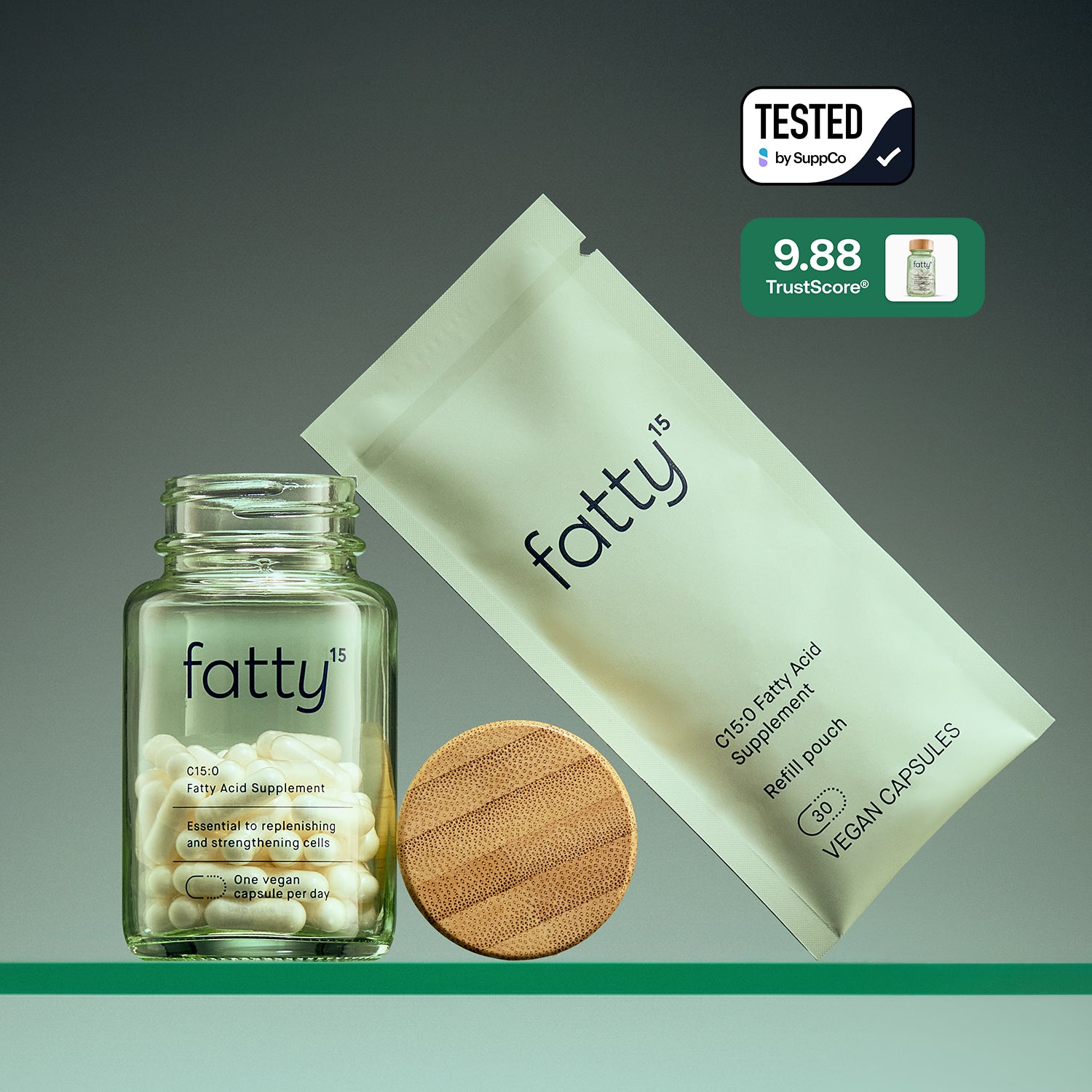
Our commitment to science and efficacy means you can trust that our supplement is what we say it is and does what we say it does. It’s also worth mentioning that fatty15 is part of the TESTED by SuppCo program.
SuppCo buys the bottles anonymously straight off the shelf, just like a regular shopper. They send them to independent labs to see if the pills actually match the label. Fatty15 passed the test by meeting or exceeding 95% of its tested label claims for its active ingredient, FA15.
In all, we’ve established:
-
Published GRAS status
-
Third-party testing
-
Peer-reviewed scientific support ( more than 150 studies )
-
CARSE Claims
-
Clinically relevant dosing
-
Transparent ingredient communication
-
SuppCo TESTED score of 9.88 (fatty15 is in the top 1% of all tested supplements)
In addition to scientific research, we strive to be environmentally friendly. Our eco-conscious packaging, medical and veterinary founder expertise, and commitment to global safety standards are all part of our broader healthy aging philosophy.
GRAS Status Still Matters
For many consumers, GRAS may seem like just another regulatory acronym. In reality, it plays an important role in how ingredients enter the supplement marketplace and how safety is evaluated behind the scenes.
Ultimately, the safest and most trustworthy healthy aging supplements are usually the ones willing to go beyond minimum regulatory requirements by supporting independent testing, transparent research practices, peer-reviewed science, and open communication about safety. At fatty15, we understand the need for this straightforward approach and include it in our company philosophy.
|
*These statements have not been evaluated by the Food and Drug Administration. This product is not intended to diagnose, treat, cure, or prevent any disease. |
Frequently Asked Questions
What does GRAS mean for choosing safe dietary supplements?
GRAS means an ingredient is generally recognized as safe based on scientific evidence or expert review. While it does not prove a supplement is effective, it can provide additional reassurance about safety under intended conditions of use. Fatty15 is an example of a supplement that is GRAS.
How is GRAS status different from FDA approval?
GRAS status allows ingredients to be marketed based on safety evidence and expert consensus, while FDA-approved drugs must undergo extensive clinical testing and formal regulatory review for both safety and effectiveness.
Why might some GRAS ingredients lack public safety data?
Some GRAS determinations are completed through self-affirmed expert review processes that do not always require companies to publicly disclose all supporting safety data or submit it directly to the FDA.
Sources:
Alliance for Natural Health defends self-GRAS in FDA reform debate
Human Foods Program 2026 Priority Deliverables | FDA
Pentadecanoic acid promotes basal and insulin-stimulated glucose uptake in C2C12 myotubes


