


Foods High in Pentadecanoic Acid (C15:0): A Complete List

Seraphina Therapeutics's Highlights
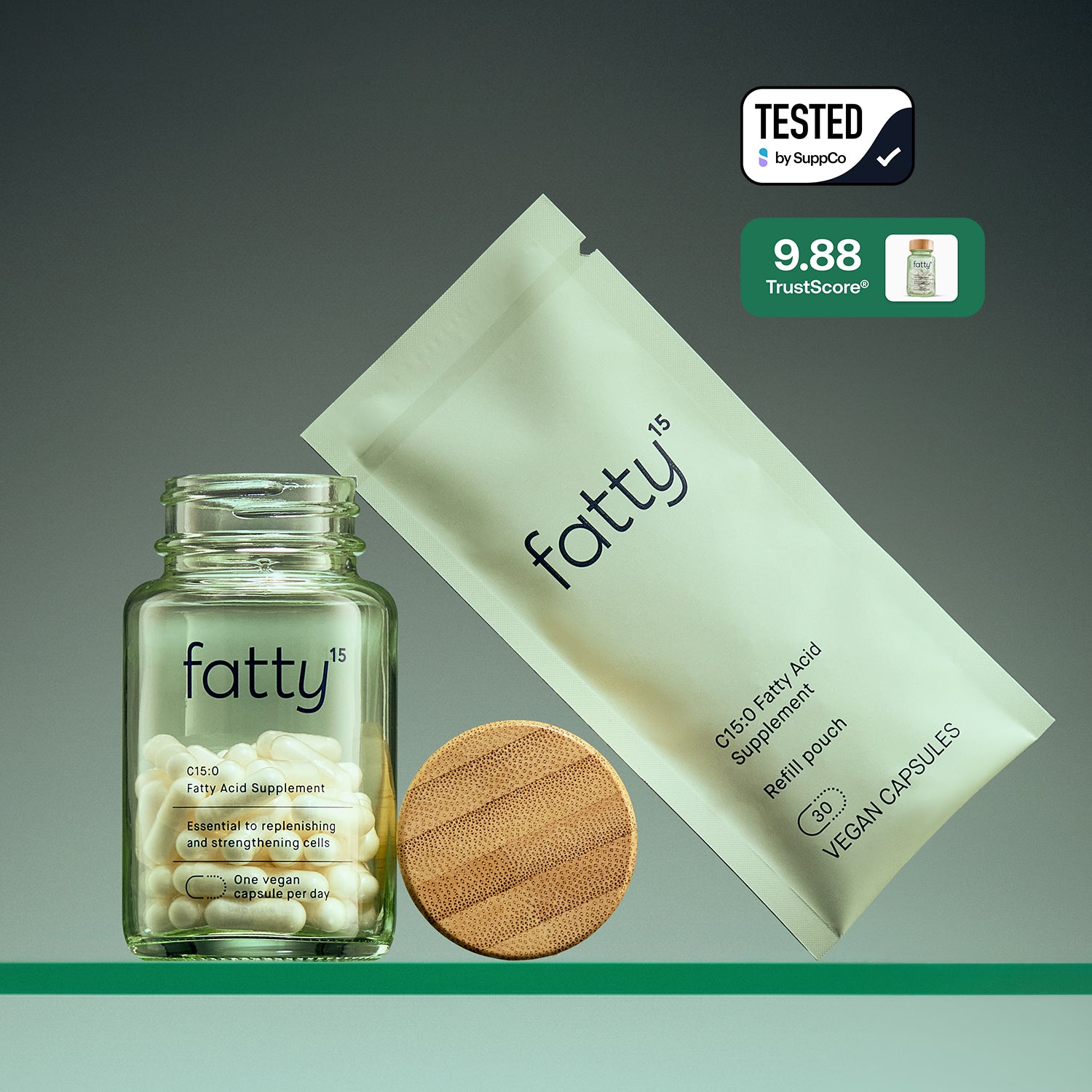
Whole-fat dairy, ruminant meats, and certain fish are the richest natural sources of pentadecanoic acid (C15:0), while low-fat and plant-based diets tend to contain very little. Even a diet built around C15:0-rich foods delivers the fatty acid bound in triglycerides, which are absorbed less efficiently than the free fatty acid form found in a supplement like fatty15. Fatty15 provides 100 milligrams of pure C15:0 (FA15™) per capsule, offering a consistent daily amount that does not depend on tracking down specific cuts of meat or types of cheese.
Pentadecanoic acid, or C15:0, is an essential odd-chain saturated fatty acid your body needs, but can't produce in meaningful amounts on its own, which is why diet, or supplementation, matters.
If you have started paying attention to C15:0 research, the natural next question is where to actually find it. Pentadecanoic acid does not appear on most nutrition labels, and it is not yet a fatty acid that most people think about the way they think about omega-3s.
The foods highest in C15:0 (pentadecanoic acid) are whole-fat dairy products and certain ruminant meats, including butter, cream, aged cheese, and beef, along with smaller amounts in certain fatty fish and a few plant sources.
Below is a complete, practical list of foods that contain the most C15:0, along with a few things to keep in mind before you try to eat your way to sufficient levels.
The Complete List of C15:0-Rich Foods
Why Food Alone Often Isn't Enough
Modern Diets Contain Less C15:0 Than They Used To
Low-fat and skim dairy products are low in C15:0, since the fatty acid lives in the fat portion of the milk. Decades of dietary guidance steering people toward low-fat dairy and plant-based milks (which have no C15:0) likely contributed to a broad, population-level decline in C15:0 intake.
This is part of what originally caught researchers' attention. Grass-fed ruminant meat and dairy have higher levels of C15:0 than grain-fed alternatives, since the fatty acid originates from how gut bacteria in the animal ferment fiber. If your diet leans low-fat, lean-meat, or plant-based, your C15:0 intake from food is likely quite low, even if the diet is otherwise considered healthy.
The Bioavailability Problem
The C15:0 found in whole foods is bound within triglycerides, larger fat molecules that the body must break down before it can access the fatty acid itself. That process is less efficient than absorbing a free fatty acid, the form used in a C15:0 supplement. Two people could eat the same amount of C15:0 on paper and end up with different circulating levels afterward.
The Calorie and Saturated Fat Trade-Off
Reaching a meaningful daily amount of C15:0 through food alone often means consuming more saturated fat and calories than many people want to take on, particularly for those managing weight or cardiovascular risk factors.
Research has proposed a daily intake range of roughly 100 to 300 milligrams of C15:0 to reach a level associated with benefits seen in clinical studies, and hitting the higher end of that range through cheese, butter, and beef fat adds up quickly in calories.
The Vegan and Plant-Based Gap
Not everyone can or wants to rely on dairy and red meat as primary food groups. Vegans, people with dairy allergies, and anyone avoiding milk or red meat for health or personal reasons will find very few reliable C15:0 sources in a plant-based diet.
C15:0 is an essential fatty acid, meaning that our bodies cannot make enough on their own to maintain our health. That said our bodies can endogenously synthesize low levels of C15:0 from propionic acid, a byproduct of gut bacteria fermenting dietary fiber, which may help explain why some studies have found similar blood C15:0 levels in vegans and omnivores.
That said, this endogenous pathway isn't considered a reliable substitute for anyone who tests low and wants to raise their levels intentionally.
How Much C15:0 Do You Actually Need?
Most people have C15:0 levels equal to roughly 0.2% of their total fatty acid profile. C15:0 levels below 0.2% put people at risk of fragile cells, a condition called Cellular Fragility Syndrome, which may be affecting as many as 1 in 3 people globally.
Higher levels of C15:0, including those found in Blue Zone populations (regions with unusually high numbers of people living past 100) have been found to have C15:0 levels of approximately 0.64%, notably higher than in most other populations studied.
Testing is the most direct way to find out where your own levels fall, either through a physician-ordered blood test or an at-home test kit. Without a test, it's difficult to know whether a given diet or supplement routine is actually closing the gap.
Closing the Gap: Diet vs. Supplementation
Whole foods rich in C15:0 are calorie-dense and higher in overall saturated fat, and the C15:0 inside them is less bioavailable than a purified form. For people who don't eat much whole-fat dairy or fatty fish, an isolated C15:0 supplement is an alternative worth considering. Fatty15’s C15:0 supplement, for example, provides 100 milligrams of pure C15:0 per capsule.
FAQs
What foods have the most pentadecanoic acid (C15:0)?
Full-fat dairy, especially butter, cream, and aged cheeses, along with ruminant meats like beef, lamb, and bison, contain the highest natural concentrations of C15:0. Certain fatty fish, including mackerel and sardines, contain smaller amounts.
Can vegans get enough C15:0 from food?
Plant-based sources of C15:0, such as certain algae, are limited and much lower in concentration than dairy or meat. Research suggests the body can produce some C15:0 from gut bacteria fermenting dietary fiber, but this pathway is not considered a reliable way to correct low levels.
Is it better to get C15:0 from food or from a supplement?
Both can contribute to overall intake. Whole foods provide C15:0 bound in triglycerides, which the body absorbs less efficiently, and reaching higher intake levels through food alone often means consuming significant added saturated fat and calories. A supplement like fatty15 provides a consistent, low-calorie dose of the most bioavailable free-fatty-acid form of C15:0.
Does cooking or processing affect C15:0 content in food?
Some research suggests that processing and the animal's diet, particularly grass-fed versus grain-fed, can influence C15:0 levels in meat and dairy. Standard cooking methods are not generally reported to significantly degrade the fatty acid itself.
|
*These statements have not been evaluated by the Food and Drug Administration. This product is not intended to diagnose, treat, cure, or prevent any disease. |
Sources:
Pentadecanoic acid (C15:0) and cardiovascular disease: A narrative review | PMC


