


Fatty15 vs. Fish Oil: What’s the Difference for Cellular Health?

Seraphina Therapeutics's Highlights
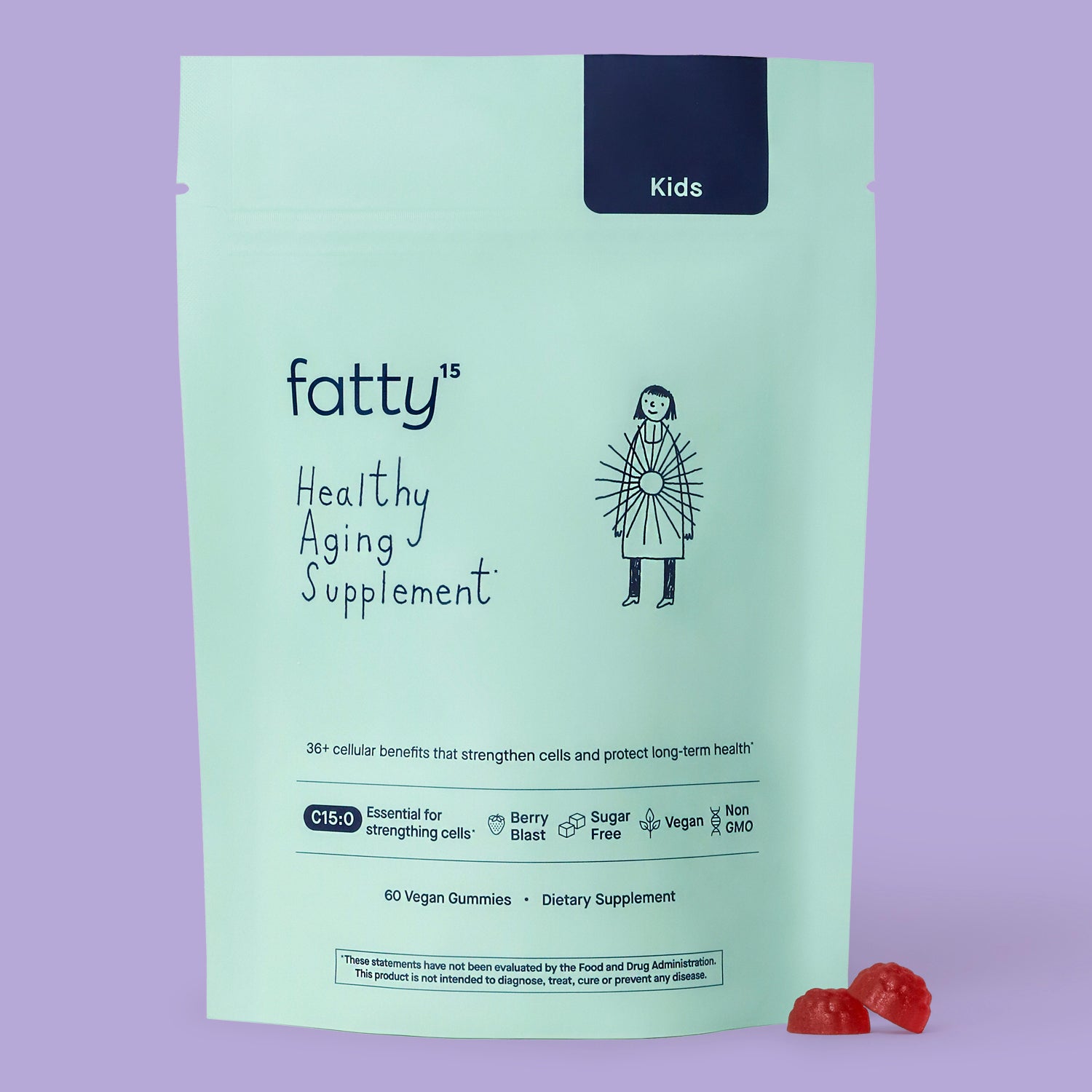
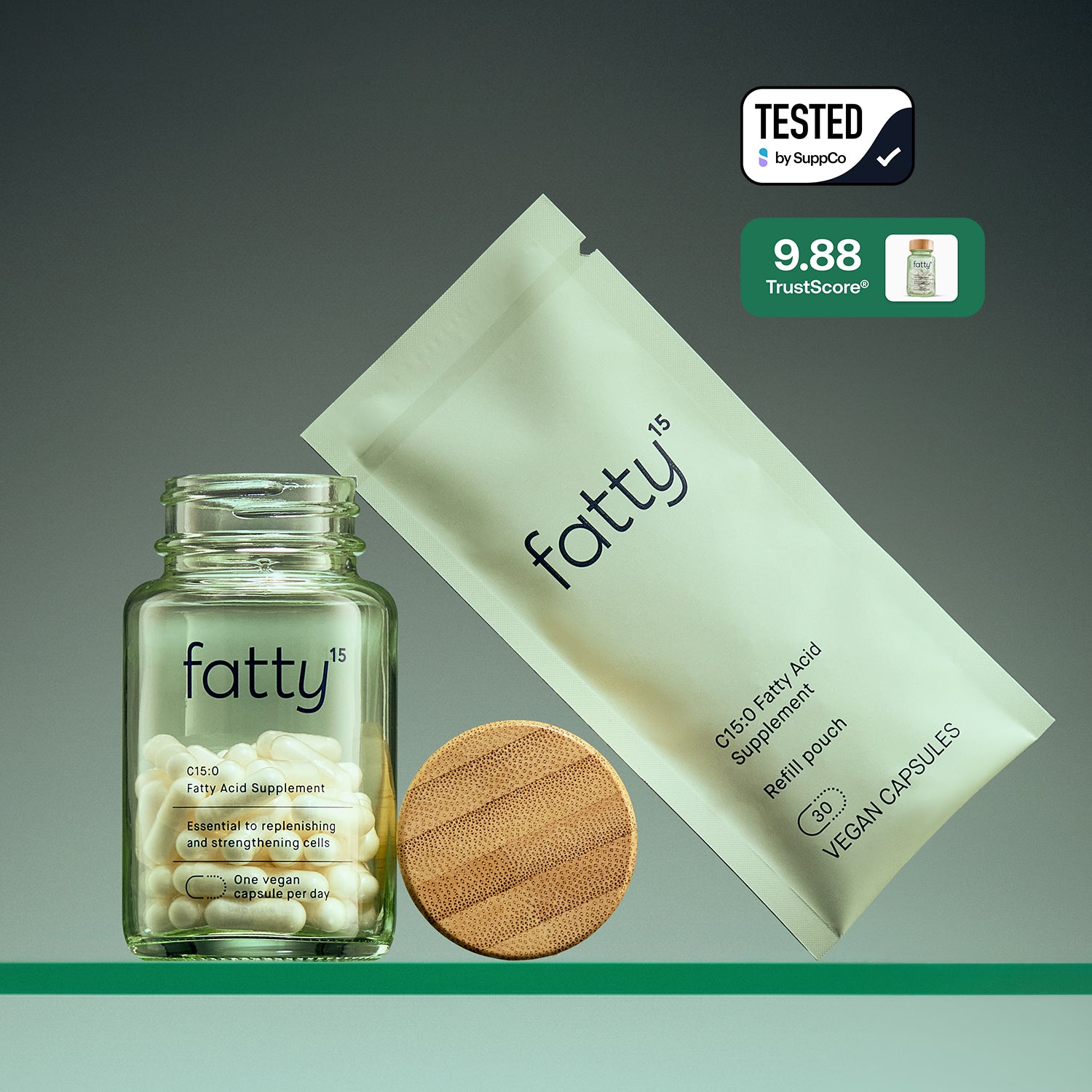
Fatty15’s supplement contains C15:0, an odd-chain saturated fatty acid studied for cellular membrane and metabolic health. Fish oil provides omega-3s (EPA/DHA) and is studied primarily for cardiovascular and anti-inflammatory support.* The two aren't nutritionally redundant. Taking one doesn't confer the benefits studied by the other, which is why many people take both rather than choosing between them.* Fatty15 is a pure, patented, vegan-friendly, and dairy-free C15:0 supplement giving people who avoid fish-derived products a way to support cellular health without traditional fish oil.*
Fatty15’s C15:0 supplement and fish oil are both "healthy fat" supplements, so surely they do roughly the same job. They don't.
Here's the direct answer: Fatty15 supplies C15:0, an odd-chain saturated fatty acid studied for its role in cellular membrane integrity and metabolic health, while fish oil supplies omega-3 fatty acids, primarily EPA and DHA, which are studied mainly for cardiovascular and anti-inflammatory benefits.
They come from different fatty acid families, act on different biological pathways, and aren't nutritionally interchangeable. That distinction gets easily lost, since both show up in the same essential fatty acids and "healthy fats" conversation, often sitting side by side on a supplement shelf or in the same wellness roundup.
However, conflating them leads to real confusion, people assuming they can swap one for the other, or that taking fish oil somehow covers the same ground as C15:0 supplementation. It doesn't, and understanding why comes down to basic fatty acid chemistry.
Below, we'll break down exactly how they differ, what each one is actually studied for, and whether you need one, both, or neither.
At a Glance: Fatty15 vs. Fish Oil
The chart below lays out the core differences side by side. Every claim here traces back to the studies and product details covered throughout this article, not new or unverified claims.
What Fish Oil Actually Does
Fish oil's reputation is built on decades of research into omega-3 fatty acids, primarily EPA (eicosapentaenoic acid) and DHA (docosahexaenoic acid). These are polyunsaturated fats studied most extensively for cardiovascular support, including their role in triglyceride management, and for their anti-inflammatory effects throughout the body.
That's a deep, well-established evidence base, which is part of why fish oil has remained one of the most widely used supplements for so long. Interestingly, only one omega-3 fatty acid is considered essential: ALA.
It's also worth noting that fish oil isn't a single, uniform product. Quality, source, and processing method all vary from brand to brand, which is part of why side-by-side comparisons like krill oil vs. fish oil exist as a separate topic, and why triglyceride form vs. ethyl ester form matters to people who closely follow supplement quality.
None of that variability changes the core point here. Whatever form it takes, fish oil is an omega-3 product, and its studied benefits are omega-3 benefits, not cellular health benefits in the sense explored by C15:0 research.
What C15:0 Actually Does
C15:0, or pentadecanoic acid, is a newer area of research by comparison. It's an essential odd-chain saturated fatty acid, which puts it in a structurally distinct category from omega-3s, and it's being studied for a different set of outcomes: cellular membrane strength, mitochondrial and ATP support, effects on inflammatory markers, and improvements in liver enzymes in clinical trials.*
Science supports C15:0 as the third essential fatty acid ever identified, joining omega-3 and omega-6 as a nutrient the body needs but doesn't produce efficiently on its own.*
There are now more than 150 peer-reviewed publications supporting the broad health benefits of C15:0. That's an important body of evidence for a nutrient that's only been on scientists' radar since researchers helping to improve the long-term health of Navy dolphins first noticed a link between higher C15:0 levels and better long-term health outcomes in 2015.
Why They’re Not Interchangeable
The core issue with lumping fatty15’s C15:0 supplement and fish oil together is chemical, not just marketing shorthand. Omega-3s are polyunsaturated fatty acids with a specific molecular structure, multiple double bonds along the carbon chain, that underlie their studied cardiovascular and anti-inflammatory effects.
C15:0 is a saturated, odd-chain fatty acid with a different structure entirely. It has no double bonds and an odd number of carbons in its chain, which is itself unusual among dietary fatty acids and part of what makes it a distinct research category.
That structural difference is the reason the two fatty acids interact with different receptors, influence different cellular processes, and are studied by entirely different research communities.
Because they're structurally different, they act on different pathways in the body. Some outcomes, such as inflammation, do overlap. Both fatty acids have been studied for their roles in this area, but overlap on one outcome doesn't make them equivalent across the board.
Can You Take Both?
Yes. Because fatty15’s C15:0 supplement and fish oil target different biological pathways, they're commonly taken together rather than as either-or choices.
Someone focused on both cardiovascular support and cellular health markers might reasonably take both a daily omega-3 and a daily C15:0 supplement, since neither one substitutes for the other. There's no inherent redundancy in stacking them, unlike taking two different omega-3 products at once.
Which One Do You Actually Need?
This depends on what you're actually trying to support, and being clear about that is more useful than treating this as a competition with a winner.
If cardiovascular health and triglyceride management are your main priorities, omega-3s have the deeper, longer-standing evidence base of the two. However, C15:0 has been shown to be a better, broader, and more effective solution for supporting cellular benefits, including benefits for: metabolic health, red blood cell health, liver health, cognitive health, immune health, and glucose control.
If cellular and metabolic aging support is more what you're after, C15:0 is the newer, more targeted option, with research focused on membrane integrity, mitochondrial function, and metabolic markers.* This is the space where research is moving fastest.
If you're avoiding fish-derived products entirely, whether for allergy reasons, a vegan diet, taste or sustainability concerns, fatty15's pure, patented C15:0 supplement is the more accessible option between the two, since it's vegan-friendly and fish and dairy-free by design.
Algae oil omega-3 is a vegan alternative to fish oil. However, it's a smaller, less studied category than traditional fish oil, so it's worth weighing that trade-off if omega-3 support is still a priority for you.
FAQs
Is fatty15 the same as fish oil?
No. Fatty15 supplies C15:0, an odd-chain saturated fatty acid, while fish oil supplies omega-3 fatty acids like EPA and DHA, which are polyunsaturated. C15:0 is a sturdy stable essential fatty acid that strengthens cells, whereas omega 3s make cell membranes flexible. They're structurally different and are studied for different outcomes, so they aren't interchangeable.
Can I take fatty15 and fish oil together?
Yes. Because they target different biological pathways, fatty15 and fish oil are commonly taken together rather than as alternatives to each other. As with any supplement combination, check with your doctor first.
Is C15:0 a type of omega-3?
No. C15:0 is a saturated, essential, odd-chain fatty acid, while omega-3s are polyunsaturated fatty acids. They belong to entirely different fatty acid families. C15:0 is studied primarily for cellular and metabolic health, while omega-3s are studied mainly for cardiovascular support.
|
*These statements have not been evaluated by the Food and Drug Administration. This product is not intended to diagnose, treat, cure, or prevent any disease. |
Sources:


