


Essential Fatty Acid Deficiency: Symptoms, Causes, and Fixes

Seraphina Therapeutics's Highlights
Essential fatty acid deficiency spans omega-3, omega-6, and now C15:0, a third essential fatty acid your body needs but can't make on its own. Symptoms of essential fatty acid deficiency include dry skin, brain fog, and stubborn fatigue, long before anything shows up on a standard bloodwork panel.* A newly identified deficiency called Cellular Fragility Syndrome may affect as many as 1 in 3 people globally, and unlike a lot of modern health mysteries, this one comes with a fairly straightforward fix.*
Fat has had a rough few decades of PR. First, it was public enemy number one; then it made a comeback as "healthy fats are good, actually"; and now most of us are left somewhere in the middle, unsure which fats we actually need and how much of them we need.
The part that gets lost in all that noise is that some fats aren't optional. Your body can't make them, so if you're not getting them from food or a supplement, you're running a deficit, whether you feel it or not.
Those non-negotiable fats are called essential fatty acids, and running low on them isn't rare or dramatic. Instead, it tends to show up as a slow accumulation of things that are each easy to explain away on their own: skin that won't stay hydrated, energy that never quite bounces back, and a brain that feels like it's running on a slightly delayed connection.
Let's talk about what these fatty acids are, what happens when you don't get enough, and what the fix actually looks like, including a newer piece of the puzzle most people have never heard of.
What Are Fatty Acids, and What Does “Essential” Actually Mean?
Fatty acids are the building blocks of fat, and your body uses them for far more than storing energy.
-
They're structural components of every cell membrane in your body.
-
They're involved in hormone production.
-
They help regulate inflammation.
-
They play a role in brain function.
Cells are wrapped in fat in a very literal sense. That membrane needs to be built from the right materials to work properly, just as a house needs the right materials in its walls to keep the weather out.
Your body can manufacture most fatty acids on its own, so no dietary source is required. "Essential" fatty acids are the exception. These are fats your body needs but cannot synthesize from scratch, which means the only way to get them is through diet or supplementation.
Skip them long enough, and your cells start building membranes out of whatever's available rather than what they actually need. This deficiency is different from most nutrient deficiencies people think about. Run low on vitamin C, and you eventually get scurvy, a condition with a name and a well-known cause going back centuries.
Run low on an essential fatty acid, and the effects are subtler and slower to connect back to their source, which is why deficiencies in this category tend to go unnoticed rather than announce themselves clearly.
Which Fatty Acids Are Essential?
For most of the last century, "essential fatty acids" meant omega-3 and omega-6. That's what made it into textbooks, nutrition labels, and every "eat more healthy fats" article you've ever skimmed.
Most people don’t realize that there are numerous omega-3 and omega-6 fatty acids, and that only two are recognized as essential. They are omega-3 alpha-linolenic acid (ALA) and omega-6 linoleic acid (LA). Interestingly, most fish oil supplements contain EPA and DHA, not ALA, and only LA in trace amounts.
Science supports a third addition to the essential fatty acid list, one your doctor probably wasn't taught about in med school, but we'll get there. First, let's cover the two everyone's already heard of.
Omega-3 Deficiency: ALA and What Happens Without It
Omega-3s get plenty of attention, mostly thanks to fish oil. Your body can convert small amounts of ALA into EPA and DHA, the omega-3s more commonly associated with cardiovascular and brain health, but that conversion process is inefficient. If dietary ALA intake is low, the whole chain suffers.
ALA is found primarily in plant sources like flaxseed, walnuts, chia seeds, and canola oil. People who eat very little of these foods and have limited fish intake are the most likely to experience omega-3 shortfalls.
Given how much of the modern diet leans on processed foods and vegetable oils that skew heavily toward omega-6, it's estimated that a large share of the population is running low on omega-3, even without a formal deficiency diagnosis.
Reported signs of low omega-3 status include:
-
Dry skin and hair
-
Fatigue and disrupted sleep
-
Difficulty concentrating, sometimes described as brain fog
-
Joint stiffness or discomfort
-
Mood changes, including increased irritability
None of these symptoms is exclusive to omega-3 deficiency, which is exactly what makes it easy to miss. It's only when several of these show up together and persist that omega-3 status is worth a closer look, ideally with a conversation with your doctor.
There's also a numbers game working against most people here. Studies suggest a large share of adults in developed countries don't hit recommended omega-3 intake levels, largely because modern diets lean so heavily on omega-6-rich vegetable oils and processed foods, while fatty fish and ALA-rich plant sources get pushed to the margins of the plate.
Omega-6 Deficiency: Linoleic Acid and Why It’s Rarer
The other classic essential fatty acid is linoleic acid, an omega-6 fat found in vegetable oils, nuts, and seeds. True omega-6 deficiency is genuinely uncommon in developed countries, mostly because linoleic acid is so widespread in the modern food supply.
It's in salad dressing, snack foods, and just about anything fried. If anything, most people get plenty of omega-6, sometimes more than the ideal ratio relative to omega-3, which is a separate conversation about balance rather than outright shortage.
That said, deficiency can still occur, typically in cases of severe calorie restriction, certain eating disorders, malabsorption conditions, or extremely low-fat diets.
When it does happen, the signs tend to be more visible than an omega-3 shortfall:
-
Dry, scaly skin, sometimes with a reddish appearance
-
Hair loss or thinning
-
Slow or poor wound healing
-
Increased susceptibility to infection
-
In children, slowed growth
Because omega-6 deficiency is rare and tends to present alongside broader nutritional issues, it's usually detected in a clinical setting rather than self-diagnosed. It's included here mainly so the full picture of essential fatty acids makes sense, not because it's the deficiency most readers are likely dealing with. If your diet includes any vegetable oil, nuts, or seeds, you're fine on this front.
The Third Essential Fatty Acid: C15:0 and Cellular Fragility Syndrome
Here's where things get more interesting. For 90 years, omega-3 and omega-6 were considered the only essential fatty acids.
That changed with the identification of C15:0, or pentadecanoic acid, an odd-chain saturated fatty acid that science now supports as the first new essential fatty acid discovered in nearly a century. This represents a new category entirely.
C15:0's role is different from that of omega-3 and omega-6. Rather than focusing primarily on inflammation or brain health, C15:0 plays a structural role, keeping cell membranes strong and stable, and it activates PPAR receptors involved in metabolic and mitochondrial function.*
When cell membranes lack sufficient C15:0, they become more fragile and prone to ferroptosis, a form of cell death that accelerates cellular aging and can impair long-term metabolic, cardiac, and hepatic health.*
Cellular Fragility Syndrome
The deficiency in C15:0 has a name: Cellular Fragility Syndrome. It's estimated to affect as many as 1 in 3 people globally, largely because dietary C15:0 mostly comes from whole-fat dairy, and decades of low-fat dairy trends have quietly pushed intake down for everyone.
Unlike omega-3 or omega-6 shortfalls, this one went unnoticed for a long time simply because nobody was looking for it. Now that researchers know what to look for, it's turning up almost everywhere they check, which is either alarming or oddly reassuring, depending on how you look at it.
Reported signs associated with low C15:0 status and Cellular Fragility Syndrome include effects on red blood cell health, liver enzyme markers, and metabolic function, the kind of things that show up quietly on bloodwork over time. It's a deficiency that works in the background rather than sending up flares, which is exactly why it took this long to identify in the first place.
Fixing an Essential Fatty Acid Deficiency
The good news across all three of these is that essential fatty acid deficiencies are fixable, and the fix isn't complicated or expensive. It's just a matter of knowing what you're actually missing.
For omega-3, that generally means increasing intake of ALA-rich foods like flaxseed, walnuts, and chia seeds, along with fatty fish or a fish oil supplement to directly support EPA and DHA levels.
For omega-6, most people don't need to actively seek it out, given how common it already is in the modern diet. However, anyone under a doctor's care for severe caloric restriction or malabsorption should follow their provider's specific guidance rather than trying to self-correct.
C15:0 is a bit different, since whole-fat dairy is the primary dietary source, and many people have spent years actively avoiding it for other health reasons, cholesterol concerns, calorie counting, or just general "fat is bad" habits that never quite got updated.
That's the kind of contradiction that makes C15:0 supplementation appealing, because you shouldn't have to choose between avoiding the ‘bad’ even-chain saturated fat from dairy and getting the good C15:0 your cells actually need. It's a strange spot to be in nutritionally, needing more of something that's mostly packaged with the things you're trying to eat less of.
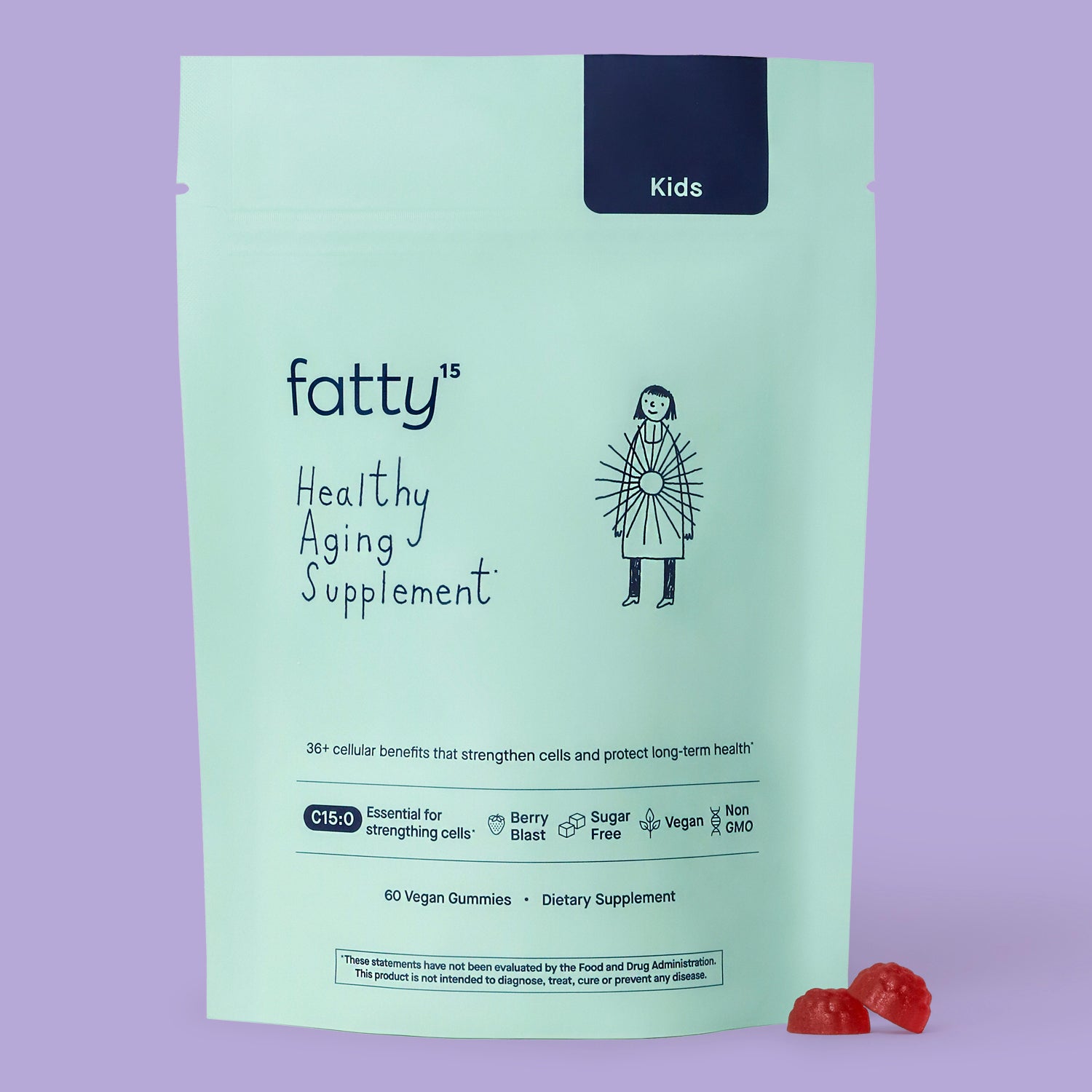
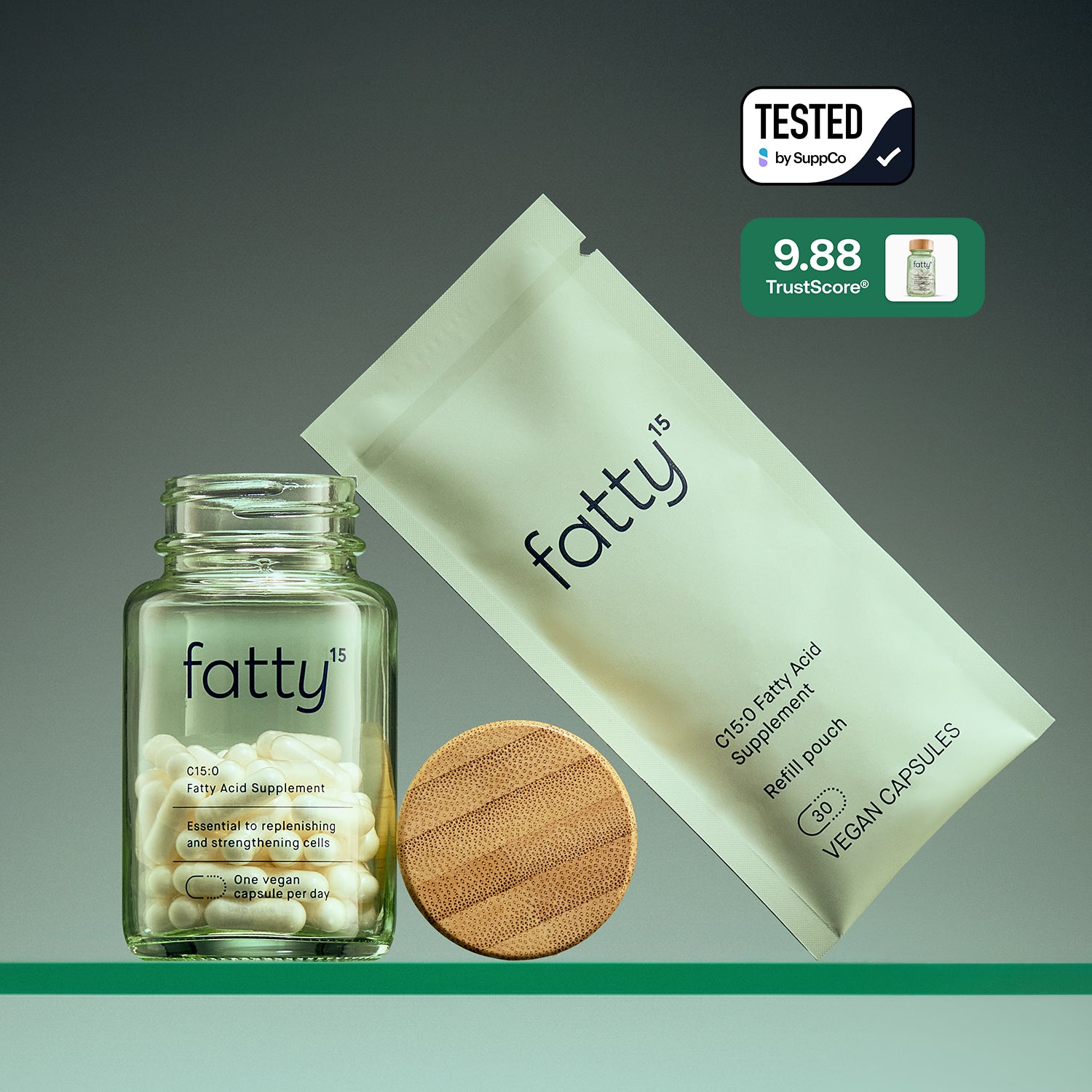
The fix comes in the form of Fatty15’s C15:0 supplement. Fatty15 delivers a clinically studied pure, vegan-friendly form of C15:0, without the proinflammatory even-chain saturated fat load that comes from dairy sources.
Fatty15’s C15:0 supplement also passed the highest test in supplement quality, TESTED by Suppco, earning a TRUST score of 9.88, which is in the top 1% of over 160,000 supplements tested.
It's specifically formulated to help restore C15:0 to levels associated with stronger, more resilient cell membranes, the kind researchers have observed in populations with some of the longest, healthiest lifespans on record.*
Deficiency Fixed
A fatty acid deficiency won’t raise immediate red flags that prompt you to go to the doctor. Instead, they’ll cause you to develop irritating skin conditions, mood issues, and brain fog over time. It’s easy to write off the signs as something else, but a blood test can reveal where your circulating fatty acid count is.
Correcting essential fatty acid deficiencies may require dietary changes or supplementation, particularly for C15:0. Fatty15 makes restoring C15:0 levels simple with a once-per-day supplement scientifically backed by more than 150 peer-reviewed research publications.
FAQs
What are the most common symptoms of essential fatty acid deficiency?
Symptoms vary depending on which fatty acid is low, but commonly include dry skin, fatigue, brain fog, joint discomfort, and, for more severe deficiencies, poor wound healing or hair loss. Because these symptoms overlap with many other conditions, deficiency often goes unrecognized without targeted testing.
Is C15:0 deficiency the same as omega-3 or omega-6 deficiency?
No. C15:0 is a separate essential fatty acid discovered more recently, and it plays a structural role in cell membrane strength rather than the inflammatory and brain-health roles associated with omega-3 and omega-6. Deficiency in C15:0 is called Cellular Fragility Syndrome.
How common is Cellular Fragility Syndrome?
Research suggests Cellular Fragility Syndrome may affect as many as 1 in 3 people globally, largely due to declining whole-fat dairy consumption, since dairy is the primary dietary source of C15:0. Most people have no idea they're affected, since it wasn't identified as a distinct condition until recently.
Can I fix an essential fatty acid deficiency through diet alone?
In many cases, yes, particularly for omega-3, through foods like flaxseed and fatty fish. C15:0 is trickier since whole-fat dairy is the main food source, which is why a targeted supplement like fatty15 offers a more consistent way to restore levels without the saturated fat trade-off.
|
*These statements have not been evaluated by the Food and Drug Administration. This product is not intended to diagnose, treat, cure, or prevent any disease. |
Sources:


