



Do You Really Get Shorter as You Age?

Dr. Eric Venn-Watson's Highlights
- Gradual height loss is a natural part of aging, driven by spinal disc compression, bone density decline, muscle atrophy, and postural changes.
- Maintaining muscle strength, bone health, and cellular resilience can slow height loss, support posture, and reduce the risk of mobility decline.
- Fatty15 represents a breakthrough in the field of longevity supplements, built around the discovery of C15:0 (pentadecanoic acid), a newly discovered essential fatty acid that supports cellular health, strengthens cell membranes, and restores mitochondrial function to help slow or reverse cellular aging.
It’s one of those small truths that almost everyone notices at some point: your clothes feel a little longer in the sleeves, your head seems further from the ceiling, and the numbers on a measuring tape tell you that you might actually be shorter than you were in your 20s.
But is this real? Why does it happen? And perhaps most importantly, what does it mean for your health and longevity?
The short answer is yes, most people lose some height as they age. But the story behind the shrinking is more complex than just a little compression of your spine. Understanding why we lose height as we get older can reveal deeper insights about aging, bone health, posture, muscle function, and even metabolic and cellular resilience.
How Much Height Do People Lose With Age?
On average, adults begin to lose height in their 40s or 50s. Men tend to lose about 1–3 inches (2.5–7.5 cm) over a lifetime, while women may lose 2–4 inches (5–10 cm). The rate of height loss increases after age 70, and in some cases, height loss can be a warning sign of underlying health issues.
Multiple longitudinal studies confirm this gradual decrease. One study of older adults measured participants’ heights over 10 years and found that height loss was strongly correlated with age, bone density, and physical activity levels. Importantly, not everyone loses the same amount; genetics, lifestyle, and health conditions all play significant roles.
Why Do We Get Shorter? The Anatomy Behind It
Height loss isn’t just about compression from gravity. Several biological mechanisms contribute:
- Spinal Disc Degeneration. The cartilage discs between vertebrae lose water content and elasticity with age. This compression reduces the height of the spine, which accounts for a significant portion of overall height loss.
- Posture Changes. Muscles weaken, and connective tissues stiffen over time, leading to rounded shoulders, forward head posture, and kyphosis (a curvature of the upper spine).
- Bone Density Loss. Osteoporosis and osteopenia reduce vertebral bone mass, causing vertebrae to compress or fracture. This not only decreases height but also increases the risk of back pain and injury.
- Muscle Atrophy. Age-related muscle loss, or sarcopenia, affects spinal support muscles, contributing indirectly to spinal collapse and height reduction.
- Joint Compression. Degenerative changes in joints, including the knees and hips, may slightly alter overall posture and apparent height.
Combined, these mechanisms can result in a shorter stature than you had just a decade earlier. Additionally, this change can be related to poorer health outcomes.
The Health Implications of Height Loss
While a slight decrease in height is normal, rapid or significant height loss can signal underlying health concerns.
Some potential issues include:
- Osteoporosis. Vertebral compression fractures are often the first sign. Early diagnosis and intervention are critical to prevent further bone loss.
- Spinal Deformities. Conditions like kyphosis can impair mobility, breathing, and balance.
- Muscle Weakness. Reduced height often coincides with decreased muscle mass, which increases fall risk and reduces independence.
- Metabolic Decline. Muscle and bone health are closely linked to metabolism. Declining strength and bone density can reflect broader metabolic changes.
Height loss is a window into overall aging health, encompassing musculoskeletal, metabolic, and cellular function.
Preventing or Slowing Height Loss
The good news is that while some height loss is inevitable, lifestyle and nutritional interventions can help maintain spine integrity, muscle mass, and posture well into older age.
1. Strength Training and Posture Work
Targeted exercises that strengthen the core and spinal muscles support posture and spinal alignment. Resistance training preserves muscle mass, reduces sarcopenia, and helps maintain vertebral stability.
2. Bone Health Optimization
Taking care of our bones can help us reduce the risk of age-related bone density issues. Taking calcium and vitamin D helps maintain bone density, while weight-bearing exercises (like walking, stair climbing, and resistance training) can stimulate bone remodeling.
As we get older, it’s important to get regular screenings. Bone density scans (DEXA) can catch early osteopenia or osteoporosis.
3. Joint and Spinal Mobility
Stretching, yoga, and mobility exercises can improve spinal flexibility, reduce stiffness, and slow postural changes that contribute to apparent height loss. The key is to remain in motion, as becoming sedentary can lead to injuries and height loss.
Cellular and Metabolic Considerations
Bone, muscle, and cartilage health are ultimately cellular processes. Healthy cells maintain tissue integrity through adequate energy, nutrient supply, and resistance to oxidative stress. Age-related declines in mitochondrial function, chronic inflammation, and metabolic inefficiency all affect musculoskeletal tissues.
This is where emerging research on essential nutrients and longevity compounds becomes relevant. Compounds that support cellular resilience, reduce inflammation, and stabilize cell membranes can indirectly help preserve height and musculoskeletal health over time.
Fatty15 and Aging
The significance of C15:0 in the realm of longevity was first uncovered while helping to continually improve the health of older Navy dolphins. Doctors observed that dolphins with higher levels of C15:0 had better long-term health, which was also observed in humans.
Since those early observations, scientists over the past decade have discovered that C15:0 is an emerging essential fatty acid that actively supports healthy aging and long-term health in all animals, including dolphins and humans.
Today, peer-reviewed studies have shown how C15:0 is a geroprotector, or a molecule that can slow aging rates and improve long-term health. It does this in part by targeting the human longevity-regulating pathway and multiple hallmarks of aging, including poor cellular signaling, inflammaging, and mitochondrial dysfunction.*
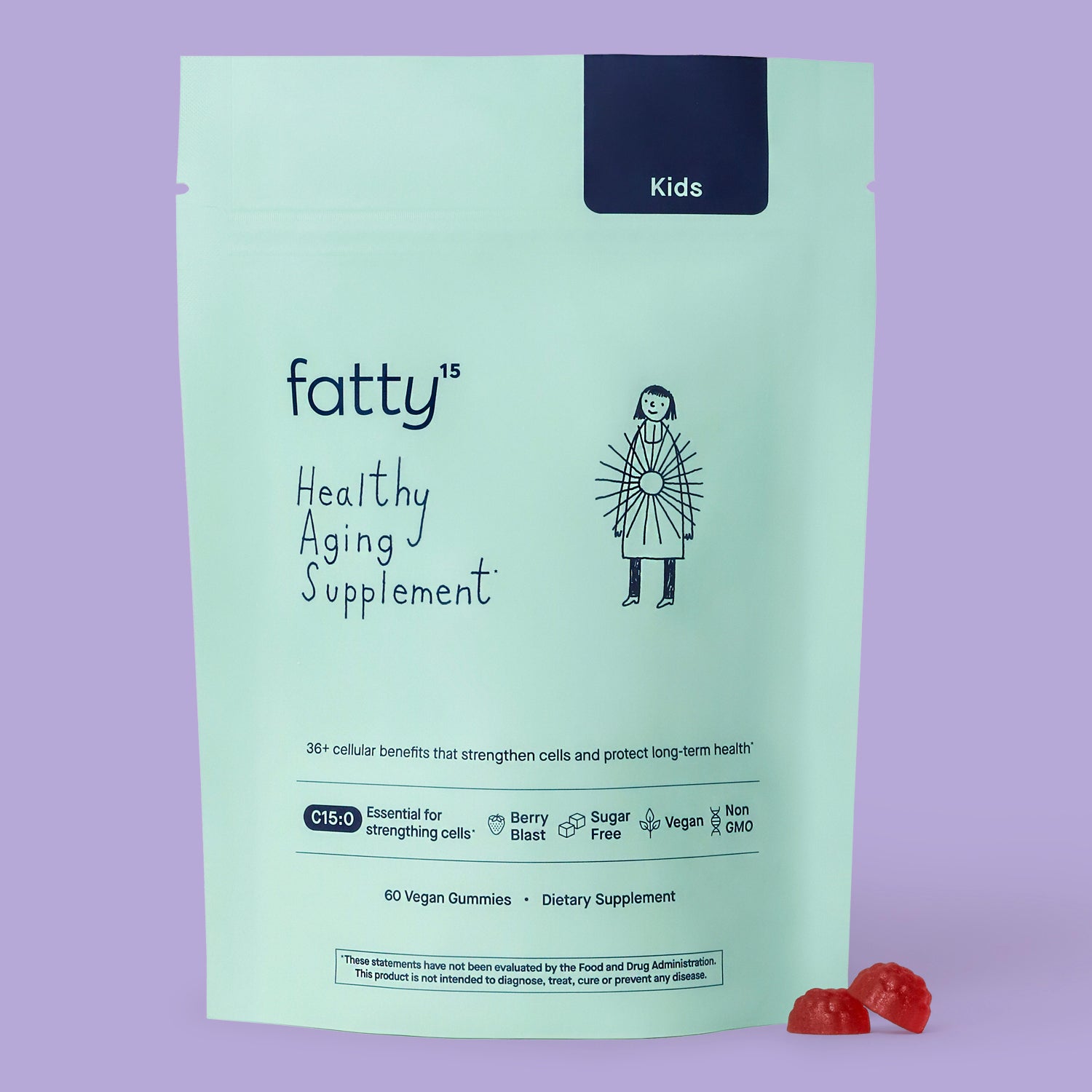
Fatty15 is a bioavailable, patented, and award-winning supplement that delivers pure C15:0. Research shows that C15:0 supports several pathways critical to musculoskeletal health:
- Healthy Inflammatory Response: Chronic inflammation accelerates cartilage degeneration, bone loss, and muscle atrophy. C15:0 helps modulate inflammatory signaling.*
- Mitochondrial Function: Efficient energy production in muscle and bone cells supports strength, tissue repair, and spinal stability.
- Cell Membrane Stability: Healthy membranes ensure optimal nutrient transport and cellular signaling, maintaining muscle and bone function over time.
- Metabolic Health: Healthy insulin sensitivity and lipid balance support anabolic processes essential for tissue maintenance.
By addressing these foundational aging pathways, fatty15 may help preserve musculoskeletal health and support spinal integrity, factors that collectively help slow age-related height loss.*
Grip Strength, Posture, and Height
Interestingly, height preservation is closely linked to muscle strength. Strong core, back, and hand muscles not only improve posture but also help maintain the spine’s vertical alignment. Measures like grip strength, which reflect systemic muscle health, are often predictive of musculoskeletal resilience, and therefore indirectly reflect the body’s ability to maintain height.
Lifestyle Factors That Influence Height Loss
Everyday habits play a meaningful role in how quickly height declines with age. A sedentary lifestyle accelerates muscle loss and weakens the postural muscles that support the spine, making spinal compression and curvature more likely over time.
Nutrition also matters more than many people realize. Diets low in protein, calcium, vitamin D, and essential fatty acids deprive bones and muscles of the building blocks they need to maintain structure and strength.
Interestingly, a C15:0 deficiency (having less than 0.2% C15:0 of the total fatty acids measured in your blood) can lead to Cellular Fragility Syndrome, which causes cells to become fragile and accelerates the aging process.
Smoking further compounds the problem by reducing bone mass and impairing collagen quality, while excessive alcohol intake interferes with calcium absorption and increases bone breakdown.
Over time, these factors can quietly speed up height loss by undermining the integrity of bone, muscle, and connective tissue. In contrast, consistent movement, balanced nutrition, and metabolic support create an internal environment that helps preserve posture and skeletal health as the years pass.
When To Seek Medical Attention
A slow, gradual loss of height is common with aging and usually not cause for alarm. However, more rapid or noticeable changes deserve attention.
Losing more than an inch or two in a short period, developing sudden spinal curvature, or experiencing persistent back pain alongside height loss may indicate underlying issues such as vertebral compression fractures or advanced bone density loss.
In some cases, inflammatory or structural conditions affecting the spine can also contribute. Checking height periodically and discussing unexpected changes with a healthcare provider can help identify problems early, when interventions are most effective at preserving mobility, comfort, and long-term musculoskeletal health.
The Big Picture: Height Loss as a Marker of Aging
Height loss is not merely cosmetic. Rather, it is a visible marker of systemic aging. It reflects the interplay of muscle, bone, connective tissue, posture, metabolism, and cellular resilience. Paying attention to height changes offers insight into musculoskeletal and metabolic health long before more serious complications arise.
Preserving height is less about the number itself and more about maintaining underlying tissue health, functional strength, and metabolic balance.
Integrating fatty15 Into a Longevity Strategy
While no supplement can stop the natural aging process, fatty15 targets the core cellular pathways that underpin tissue health. By supporting metabolic health, strengthening cell membranes, and maintaining mitochondrial function, fatty15 helps maintain the foundation upon which muscle, bone, and cartilage thrive.*
While C15:0 is naturally occurring, it is only found in trace amounts in full-fat dairy products like whole milk and butter. Increasing your intake of these foods would mean piling on excess calories, sugar (from lactose), and “bad” even-chain fats that are consistently associated with poor health outcomes. Fatty15 offers a way to get pure C15:0 without the bad, proinflammatory fats.
Taking one fatty15 per day gives you:
- A100mg of pure, bioavailable C15:0
- A clear conscience about the environment, since there is no animal (cow) involvement.
- One calorie per dose.
- C15:0 in free fatty acid form, readily absorbable by the body without the need to break it down.
In combination with resistance training, posture work, and proper nutrition, fatty15 can be part of a holistic strategy to mitigate height loss, preserve mobility, and promote healthy aging.
FAQs
Is it true you get shorter as you get older?
A little age-related height loss is both normal and common. Nearly 80 percent of people will shrink an inch or two as they age.
Is it normal to lose 2 inches in height as you age?
Men can gradually lose an inch between the ages of 30 and 70, and women can lose about two inches. After the age of 80, both men and women can lose another inch.
Why have I lost 4 inches in height?
An adult's spine has over 20 bones (vertebrae) with rubbery discs between each one. These discs begin to lose strength and thin as you age. This process reduces your height. You can help prevent your vertebrae from breaking down through weight-bearing exercises, such as walking, aerobics, or resistance training.
At what age does your height reduce?
You start to experience slight height loss as early as your 30s, with more noticeable shrinking occurring after 40, as spinal discs lose fluid and compress, and bones thin.
The Long and Short of It
Yes, most people do get shorter as they age, but the amount and pace of height loss are not entirely predetermined. Factors such as muscle strength, bone density, posture, cellular health, and metabolic efficiency all influence how much height is lost over time. Monitoring your height can serve as a simple, meaningful window into overall aging health.
Supporting musculoskeletal resilience through exercise, nutrition, and targeted supplementation, particularly fatty15, can help slow the rate of height loss, maintain strength and posture, and support longevity. Ultimately, the goal is to stay strong, healthy, and resilient throughout the aging process.
|
*These statements have not been evaluated by the Food and Drug Administration. This product is not intended to diagnose, treat, cure, or prevent any disease. |
Sources:
How You Can Avoid Losing Height as You Get Older | Cleveland Clinic.org


