



Daily Habits That Have the Biggest Impact on Aging | Fatty15

Sharlyne Poggio's Highlights
- Aging starts now, not at 65. Aging is a daily, lifelong process, which reframes healthy aging as relevant to readers in their 30s and 40s, not just older adults.
There may be an essential fat missing from even "healthy" diets. C15:0 is the first essential fatty acid discovered in 90 years. It comes mainly from whole-fat dairy, and about 1 in 3 people are deficient.
The boring habits are the ones that work. A study of 25,000+ women found a Mediterranean-style diet linked to a 23% lower risk of death over 25 years.
The Daily Habits That Have the Biggest Impact on Aging

Introduction: Aging Happens Every Day
Aging doesn’t suddenly begin in older adulthood. It is a continuous biological process shaped by genetics, environment, and the behaviors people practice throughout their lives. That makes healthy aging less about finding a single breakthrough intervention and more about building habits that support health over decades.
Interest in longevity has increasingly moved beyond niche biohacking communities and into mainstream wellness. A 2025 McKinsey survey found that up to 60% of consumers across markets consider healthy aging a top or very important priority.
Consumers are looking for practical ways to preserve energy, mobility, cognitive function and overall well-being as they age, driving greater attention to nutrition, including the role of dietary fats. For people exploring that topic, Fatty15 offers information on dietary fats and nutrition. Yet the strongest evidence often points toward familiar behaviors rather than elaborate longevity "hacks."
Nutrition Remains One of the Strongest Predictors of Healthy Aging
A nutritious diet provides the building blocks the body needs to maintain muscle, bones, metabolic function, and immune health. Rather than focusing on a single "superfood," evidence generally favors balanced dietary patterns built around vegetables, fruits, whole grains, legumes, nuts, seeds, adequate protein, and predominantly unsaturated fats.
One of the strongest recent examples comes from a long-running cohort study of 25,315 women. Over 25 years of follow-up, participants with greater adherence to a Mediterranean-style diet had a 23% lower risk of death from any cause than those with lower adherence. Researchers found that several factors, including inflammation, insulin resistance and body mass index, helped explain the association.
Nutrient adequacy also becomes increasingly important with age. Protein, for example, helps maintain muscle tissue, while adequate intake of vitamins and minerals supports bone health, immune function and other physiological processes. Rather than viewing protein, fat or individual micronutrients in isolation, a more useful approach is to consider the overall quality and balance of the diet.
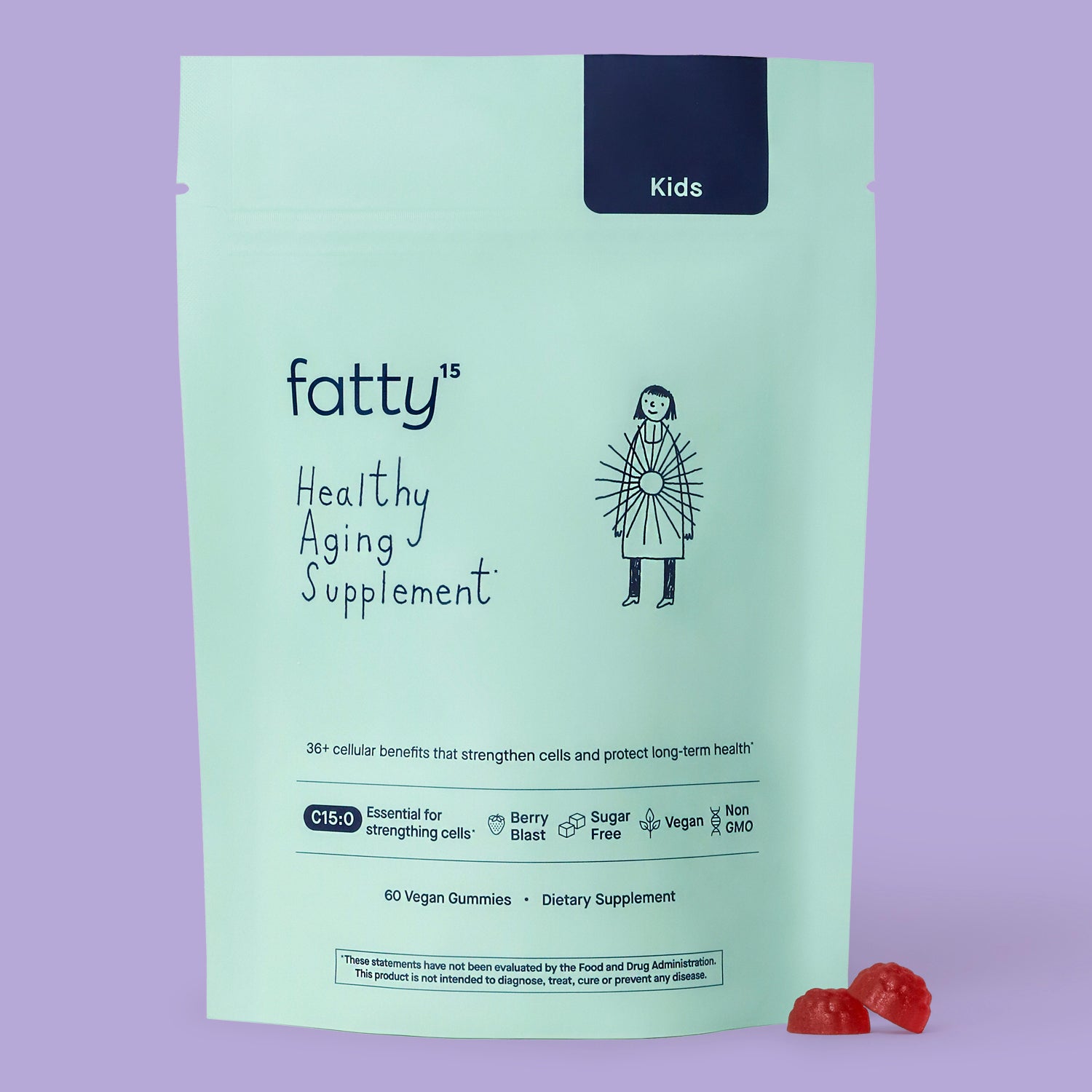
Healthy fats can be part of that equation, particularly at the cellular level. While, foods such as nuts, seeds, avocados, fish and plant oils provide unsaturated fats alongside other nutrients, global consensus is growing around the essentiality of a distinct healthy fat missing from these options: pentadecanoic acid (C15:0). As an odd-chain saturated fatty acid and the first essential fatty acid to be discovered in ninety years, C15:0 directly challenges decades of universal dietary advice to avoid all saturated fats. It’s worth noting that a nutrient is considered essential when the body cannot make sufficient quantities on its own to maintain normal physiological function, meaning it must be obtained through diet.
Humans historically obtained adequate C15:0 from whole-fat, grass-fed dairy. However, a decades-long decline in dairy intake has led to a parallel drop in population C15:0 levels, with 1 in 3 people being deficient in C15:0 globally.
Without adequate C15:0 levels, we risk developing Cellular Fragility Syndrome. This newly identified nutritional deficiency stems from low levels of C15:0 at the cellular level, leaving cell membranes fragile and highly susceptible to lipid peroxidation (oxygen-driven breakdown of membrane fats). This cellular instability triggers ferroptosis, an iron-dependent form of cell death, which accelerates biological aging and drives the early onset of chronic conditions such as type 2 diabetes, heart disease, and fatty liver disease.
The goal is not to eliminate dietary fat but to choose sources that fit within an overall nutrient-dense eating pattern.
Physical Activity Supports Healthy Aging at Every Age
Regular movement supports cardiovascular health, metabolic health, mobility, mental well-being, and cognitive function. It also helps people maintain the physical capacity needed for everyday life.
Current World Health Organization recommendations call for adults to accumulate 150–300 minutes of moderate-intensity activity each week, or an equivalent amount of vigorous activity, along with muscle-strengthening exercise on at least two days.

Strength Training
Strength training becomes especially valuable as people age because maintaining muscle supports independence and physical function. Everyday activities such as climbing stairs, carrying groceries and getting up from a chair all rely on strength.
Resistance exercise does not necessarily mean lifting heavy weights in a gym. Bodyweight exercises, resistance bands, machines and free weights can all be adapted to an individual's abilities and fitness level. For older adults, activities that incorporate balance and functional strength are particularly useful for maintaining mobility and reducing fall risk.
Daily Movement
Structured workouts are only part of an active lifestyle. Walking, cycling, gardening, household chores and taking the stairs all contribute to daily movement.
The most effective routine is often the one people can maintain. A daily walk may not look like a cutting-edge longevity intervention, but regular movement accumulated over years can have meaningful health implications.
Sleep Is One of the Most Underrated Longevity Habits
Sleep is easy to sacrifice when work, family, and other responsibilities compete for attention, but it plays an important role in recovery, cognition, mood, and metabolic regulation.
Adults generally need 7 to 9 hours of sleep a night, although individual needs can vary. The National Heart, Lung, and Blood Institute also notes that insufficient sleep is associated with higher risks of obesity, high blood pressure, diabetes, heart disease and stroke.
Maintaining a regular sleep and wake schedule can help support the body's circadian rhythm. Creating a predictable bedtime routine, limiting disruptive evening habits, and addressing persistent sleep problems can therefore be practical components of a long-term approach to healthy aging.
Stress Management and Social Connection Matter Too
Healthy aging is not exclusively a physical process. Chronic stress can influence sleep, mood and behaviors such as eating and physical activity, while emotional well-being can affect how consistently people maintain healthy routines.
Social connection is another important factor. The Centers for Disease Control and Prevention notes that strong social relationships are associated with longer, healthier lives and can support emotional well-being while helping people manage stress and maintain healthy behaviors.
Family relationships, friendships, community organizations, volunteer activities, and regular conversations can all provide opportunities for social engagement. For some people, maintaining those connections may be just as important to long-term well-being as maintaining a workout routine.

Healthy Aging Is About Consistency, Not Perfection
Longevity culture can make healthy aging seem complicated, particularly when new supplements, tracking devices and "hacks" promise dramatic results. But many of the most established recommendations are considerably simpler.
The CDC's healthy-aging guidance emphasizes nutrition, physical activity, adequate sleep, social connection, emotional well-being and routine health care, including checkups, vaccines and screenings. These habits can be incorporated into everyday life rather than requiring an entirely new lifestyle.
Consistency also leaves room for imperfection. Missing a workout, eating an indulgent meal or having a poor night's sleep does not erase years of healthy behavior. The more sustainable approach is to return to supportive routines and make incremental improvements over time.
Preventive care belongs in that routine. Recommended screenings, vaccinations, regular checkups and management of existing health conditions can help identify potential problems earlier and support health throughout the lifespan.
Conclusion
No single intervention determines how a person will age. Genetics, environment, socioeconomic circumstances, and access to health care all influence long-term health. Still, everyday behaviors represent an important and often actionable part of the equation.
The most evidence-based approach to healthy aging is therefore not necessarily the most complicated one. Eating a nutrient-dense diet, getting enough protein and healthy fats, moving regularly, maintaining strength, protecting sleep, managing stress, staying socially connected, and keeping up with preventive care are habits that can be practiced across the lifespan.
Their biggest advantage may be their simplicity. Healthy aging is less about discovering a secret that works overnight and more about consistently making choices that support health; day after day, year after year.


