


Child Development Stages By Age: The Ultimate Guide

Seraphina Therapeutics's Highlights
- From preschool through preteen years, each stage of your child’s development depends on strong cellular health.
- C15:0 helps support healthy body growth, cognitive development, liver health, and healthy blood pressure in children and youth.*
- During pregnancy and nursing, moms can transfer C15:0 to babies through the placenta and breast milk, and for kids ages 4–12, fatty15 gummies offer a tasty way to support cells during developmental years.*
- Watching kids grow is an amazing thing to experience. In just a few short years, they move from rapid physical growth to expanding language, emotional regulation, coordination, learning, and independence. While every child develops at their own pace, there are well-known developmental stages that help us understand what kids generally need at different ages.
- When we talk about child development, we are not just talking about height, weight, or school milestones. We are also talking about what is happening inside the body.
- In this guide, we’ll walk through the child development stages by age, from infancy through the preteen years, and look at how nutrition plays a role in supporting healthy development along the way.
Why Child Development Happens in Stages
Child development is often described in stages because growth doesn’t happen all at once. Different ages bring different priorities. In the earliest years, development is centered around feeding, bonding, sensory input, brain growth, and motor milestones. As children get older, language, behavior, learning, social skills, strength, and emotional regulation all take bigger roles.
Even though the milestones shift, development depends on a body that has the nutrients it needs to build, repair, energize, and regulate itself. This fact doesn’t change.
Strong development starts at the cellular level. Cells need healthy membranes, healthy signaling, and healthy mitochondrial function to do their jobs well.
When cells aren’t healthy, there’s a trickle-up effect that causes tissues, organs, and systems to fail. Supporting healthy cells at every age is possible, and we’ll explain how.
The Role of C15:0
Before we consider each age and stage, let’s talk about a foundational way to support cells at all ages of life. C15:0 is an odd-chained, saturated fatty acid that a growing body of research shows is not only beneficial to our bodies but essential. C15:0 is now recognized as the first essential fatty acid to be discovered in over 90 years, since omega-3.
Essential means our bodies need it to thrive, but cannot make it on its own. That means we have to get it by either consuming it in food or supplements.*
C15:0 supports our bodies in several key ways:
-
Strengthens cell membranes : C15:0 strengthens cells and protects against lipid peroxidation, supporting the integrity of rapidly developing cells in growing children.
-
Supports cognitive health: C15:0 targets key receptors associated with cognitive health, which is critical during the brain's formative development years.
-
Supports healthy immune response: Preclinical and cellular studies show C15:0 supports a healthy inflammatory and immune response, important as children's immune systems mature.
-
Supports metabolic health: C15:0 supports healthy metabolism and glucose response, helping establish a strong metabolic foundation during key growth stages.
For growing kids, this translates to support with healthy body growth, cognitive development, liver function, and healthy blood pressure.* In other words, C15:0 is a core nutrient that children need in their diet to support healthy growth and development.*
Let’s take a look at the role of C15:0 in each stage of childhood development, and how we can make sure our kids are getting enough.
Development Before Age 1: Babies and the Earliest Stage of Growth
The first year of life is a period of extraordinary change. Babies grow quickly, develop feeding patterns, begin forming strong bonds with caregivers, and make enormous gains in motor and sensory development. During this stage, nutrition is foundational because babies are building so much so quickly.
One especially important point here is that babies don’t enter the world nutritionally isolated. What moms consume during pregnancy and nursing can directly influence the nutrients babies receive.
A 2022 study published in Nutrients found that greater dairy fat consumption was associated with a particular fatty acid called C15:0 in all perinatal biofluids analyzed and supported the transfer of C15:0 from mom to baby via the placenta .*
The same study found the transfer was also possible in breastfed infants through breast milk. That is important because it means moms may be able to help support their babies’ C15:0 levels during pregnancy and nursing.*
Infancy is also where healthy growth matters most. The above study followed mother-infant pairs and showed that babies who received more C15:0 from their mothers during their first year had associated healthier body growth.*
Ages 1–3: Toddler Years and Early Independence
The toddler years are all about motion! Toddlers are learning through exploration and repetition, while developing walking, climbing, hand coordination, early language, basic problem-solving, and the first real foundations of independence.
This is also a stage where eating habits start to take shape. Some toddlers eat enthusiastically, while others become selective or inconsistent. That is normal. But nutritionally, this phase is still building the base for everything that comes next.
During ages 1 to 3, the body is still growing quickly, the brain is still developing rapidly, and the need for steady nutritional support remains high. Toddlers aren’t going to hit every meal perfectly, but we can think about their nutrition as cumulative.
Getting C15:0 into their bodies at this stage can happen through the consumption of whole milk from grass-fed cows or through supplementation, which may be the next transition for breastfeeding mothers.
Ages 4–5: Preschool Development
At this age, development starts becoming easier to see in everyday life. Preschool-aged kids usually make major strides in language, memory, coordination, imagination, and social interaction. They start following multi-step directions, asking deeper questions, developing friendships, and showing more control over their bodies and emotions.
Physically, this is still a high-growth period. Cognitively, it is a high-learning period. Emotionally, it is a high-adaptation period. In other words, a lot is happening at once.
Kids ages 4 to 5 are often transitioning into more structured routines, such as preschool, playgroups, early academics, sports, and social settings. That means they need support not just for growth, but also for energy, focus, regulation, and resilience.
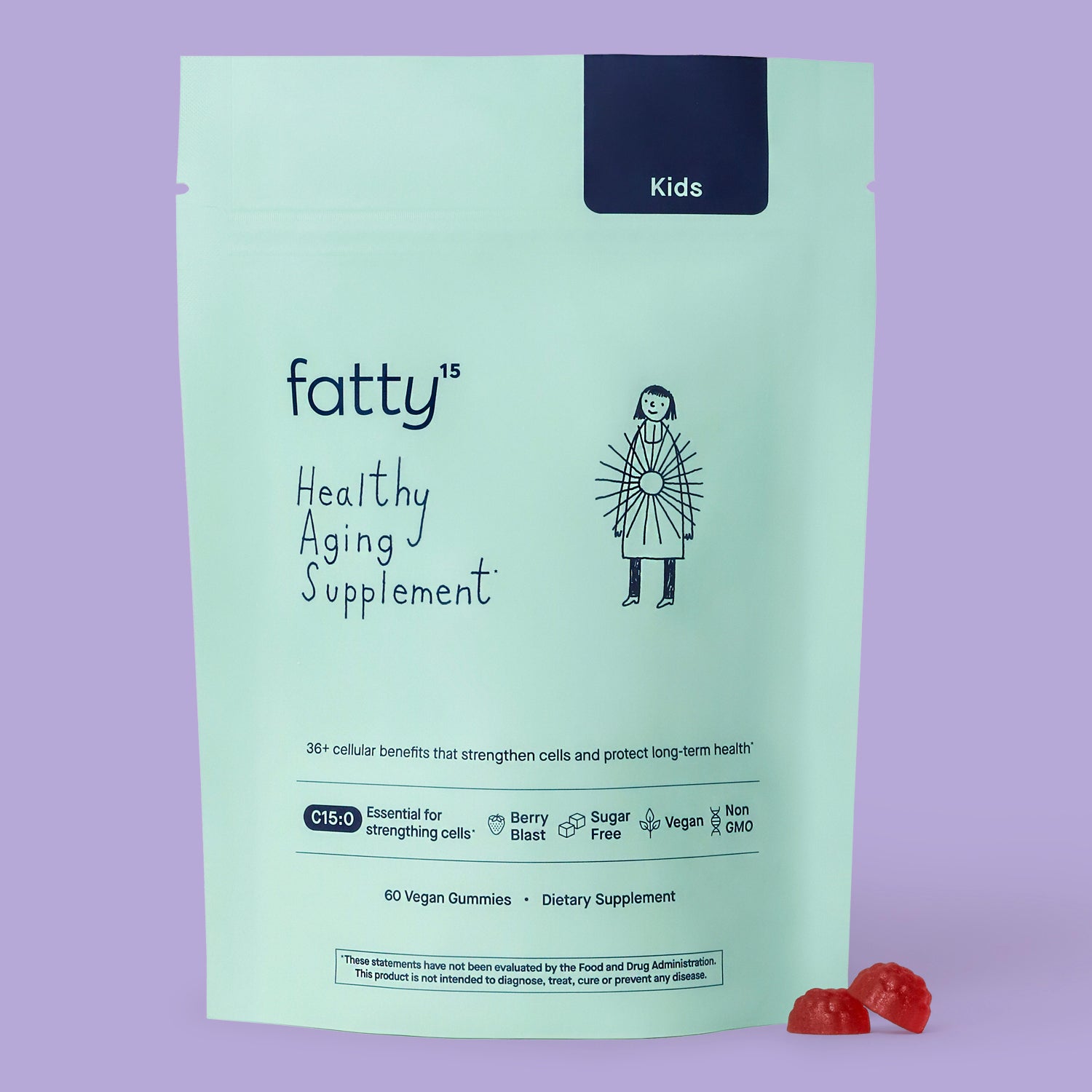
C15:0 is exciting here because science supports that it can help promote healthy body growth and healthy cognitive development .* For kids in this stage of development, fatty15 gummies offer an easy, child-friendly way to help support healthy C15:0 levels during a period when growth and learning are both accelerating.*
Ages 6–8: Early School Age Development
By ages 6 through 8, kids are typically deep into the school-age years. This stage often brings growing independence, stronger reading and language skills, better coordination, improved memory, and more developed peer relationships.
It is also a time when routines become more demanding. School, sports, after-school activities, and social development all place new demands on the body and brain.
One of the most important developmental themes here is consistency. Kids this age benefit from routines, sleep, protein, movement, and foundational nutrients that help support healthy energy production, mood, focus, and physical growth.*
This is also where some of the child-specific C15:0 data gets especially interesting.
One study found that in 452 children ages 6 through 9, higher C15:0 levels were associated with higher skeletal muscle mass .* Another study of 421 children found that higher levels of odd-chain saturated fatty acids, including C15:0, were associated with a greater likelihood of having healthy blood pressure .*
Ages 9–12: Preteen Development
The preteen years are often underestimated. These are years of major transition, even before the teen years fully begin. Kids ages 9 through 12 are growing into stronger identities, more advanced academic skills, more intricate social lives, and, for many, the earliest phases of puberty-related change.
This stage can bring growth spurts, changes in appetite, mood shifts, evolving sleep needs, and more pressure on physical and mental resilience. It is also a stage where long-term habits start getting more deeply set.
Nutritionally, this is a powerful window. Supporting healthy development here can help support the transition into adolescence with a stronger foundation.
C15:0 may play an important role in that foundation. In addition to the body growth and cognitive findings already discussed, a cross-sectional study of 237 children ages 8 to 17 showed that higher circulating C15:0 independently predicted lower fat in the liver. *
This is important to children’s health because, in addition to height charts and report cards, kids' health also depends on metabolic health, liver health, cardiovascular support, and how well the body is handling growth from the inside out.*
Why Fatty15 Gummies Matter
For families with kids ages 4 to 12, consistency can be one of the hardest parts of nutrition. Even when we aim for balanced meals, real life is busy. Kids go through picky phases, and crammed schedules can make the drive-through an easier option. These combinations mean not every child is eating the same amount of full-fat dairy every day.
A solution? Fatty15 gummies.
Fatty15 gummies are designed specifically for kids ages 4 to 12, which covers some of the most important years for learning, movement, social development, and early metabolic patterning.* They offer a simple, kid-friendly way to help support healthy C15:0 levels during the very stages when growth, cognition, and resilience are all in active development.*
Because fatty15 is centered around pure C15:0, it provides a more targeted option than trying to piece together intake through foods alone.*
FAQs
What are the 7 stages of child development?
Newborn (ages 0–2 months); infant (ages 3–11 months); toddler (ages 1–2 years); preschooler (ages 3–4 years); prime childhood (ages 5–8 years); preteens (ages 9-12 years); and teens (ages 13–19 years).
What are the 5 stages of child development?
Babies (birth to 12 months), toddlers (1 to 3 years), preschoolers (3 to 5 years), grade school (5 to 12 years), and teens (12 to 18 years).
What are developmental red flags?
Developmental red flags are warning signs of potential developmental delays or disorders in children, requiring immediate attention from a pediatrician. Key indicators include any loss of speech, babbling, or social skills, failure to respond to familiar voices or faces, restricted movement (asymmetric or low tone), and inability to perform age-appropriate tasks.
What are the five major milestones?
Milestones usually are grouped into five major areas: physical growth, cognitive development, emotional and social development, language and communication development, and movement and physical development.
Growing Strong
Child development stages by age can look different on the surface, but underneath all of those changes is the same basic truth. Healthy development depends on a strong nutritional foundation.
C15:0 helps support healthy body growth, cognitive development, liver health, skeletal muscle mass, and healthy blood pressure in children and youth.* It also helps support cellular membranes, mitochondrial function, and healthy signaling pathways that matter across all stages of development.*
For babies, moms can help pass along C15:0 during pregnancy and nursing.* For kids ages 4 to 12, fatty15 gummies offer a simple, age-appropriate way to help support healthy C15:0 levels during some of the most important developmental years.*
As we think about helping kids grow, learn, move, and thrive, that kind of foundational support matters.
|
*These statements have not been evaluated by the Food and Drug Administration. This product is not intended to diagnose, treat, cure, or prevent any disease. |
Sources:


