


Can You Take Prenatal Vitamins Without Being Pregnant?

Seraphina Therapeutics's Highlights
- You can take prenatal vitamins without being pregnant, but for most people, they’re unnecessary and can sometimes lead to unwanted side effects
- True vitamin deficiencies are relatively uncommon in the U.S. today, thanks to modern nutrition and food availability
- A newer concern, Cellular Fragility Syndrome, is shifting the conversation toward cellular health, where nutrients like C15:0 may play a meaningful role*
- Whether or not you can take prenatal vitamins when you aren’t pregnant is a question healthcare providers and people in the nutrition science space here more frequently than you’d expect. The short answer is yes, you can take them even if you aren’t pregnant.
- Prenatal vitamins aren’t restricted or harmful in the way a prescription medication might be. They’re widely available and designed to support increased nutritional demands during pregnancy.
- But just because we can take them doesn’t mean we should. And in many cases, taking a prenatal vitamin when you’re not pregnant may cause some unwanted side effects.
Why Prenatal Vitamins Exist
Prenatal vitamins are formulated with the very specific goal of supporting pregnancy. During this time, the body’s nutrient demands increase in targeted ways.
Folate (or folic acid), for example, is included at higher levels to support early neural development. Iron is elevated to help meet increased blood volume needs. Certain nutrients are intentionally dosed above standard daily recommendations because pregnancy places unique physiological demands on the body.
Outside of that context, those same elevated levels don’t always serve the same purpose. In fact, for someone who isn’t pregnant, they can sometimes create an imbalance rather than provide a benefit.
What Happens When You Take Prenatals Without Needing Them?
It’s easy to assume that more nutrients equal better health. But the body doesn’t work that way. When we consistently consume higher-than-needed levels of certain vitamins and minerals, we may start to notice subtle (or even not-so-subtle) changes.
Iron is a common example. Prenatal vitamins often contain significantly more iron than standard multivitamins. For someone who isn’t deficient, that excess iron can lead to digestive discomfort, including nausea or constipation. Over time, it can also contribute to oxidative stress when not properly regulated by the body.
Fat-soluble vitamins like A, D, E, and K are another consideration. These vitamins are stored in the body, which means they don’t simply pass through if we take more than we need. While this isn’t typically an issue in short-term use, long-term overconsumption can lead to imbalances.
Even something as simple as B vitamins, often included in higher doses in prenatals, can cause side effects like headaches or skin reactions in some individuals when taken unnecessarily.
None of this is meant to suggest that prenatal vitamins are unsafe. They’re incredibly valuable when used as intended. But outside of pregnancy, they can introduce more than the body actually needs.
Do We Even Need Vitamin Supplements If We Aren’t Deficient?
If taking excess vitamins can have unwanted side effects, do we really need to take them if we aren’t deficient? In many cases, the answer is no.
Modern nutrition has come a long way. In the United States, severe nutrient deficiencies that were once common, like scurvy (vitamin C deficiency) or rickets (vitamin D deficiency), are now rare. Access to a wide variety of foods, along with fortification practices, has made it much easier to meet basic nutritional needs through diet alone.
Of course, food insecurities still exist, even in the United States. However, widespread, clinically significant deficiencies are not as common as they once were. So when we take vitamins without a clear need, we’re often supplementing something that the body is already getting in adequate amounts. That increases the risk for imbalances.
A New Deficiency
How we think about vitamins and nutrients today is changing. For a long time, the goal was simply to avoid being deficient. Now, we want to make sure we are not deficient and that our cells are functioning the way they should.
It’s been a long time since a new vitamin or nutrient deficiency has been identified, but that’s just what has happened. Cellular Fragility Syndrome is a newly discovered deficiency syndrome that refers to a state in which cells become increasingly fragile and vulnerable over time.
This affects how cells respond to stress, produce energy, and communicate with one another. It has also been linked to a mysterious type of cellular death, known as ferroptosis. Ferroptosis accelerates aging and the onset and progression of type 2 diabetes, heart disease, cognitive decline, and fatty liver disease.
The bigger picture? It’s very common, and starts with mild or no symptoms. The missing essential nutrient? Pentadecanoic acid, or C15:0 for short.
Understanding C15:0
C15:0 is an odd-chain saturated fatty acid that plays a role in supporting cellular health . Rather than acting as a simple fuel source, C15:0 contributes to the structure and function of cell membranes and helps maintain balance within key signaling pathways. C15:0 supports healthy mitochondrial function , helping fuel cells for activity.*
It has also been shown to activate pathways like AMPK and PPAR, which are involved in regulating metabolism.*
When cells lack the components they need to stay stable, they become more susceptible to breakdown over time, including age-driven lipid peroxidation. C15:0 plays an important role in strengthening our cells and slowing the cellular aging process.*
How Much Do You Need?
Most people today have C15:0 levels around 0.2% of total fatty acids. It’s estimated that one in three people globally is deficient in C15:0, which is defined as C15:0 levels less than 0.2%. While studies support that people need to maintain circulating C15:0 levels between 0.2% and 0.4% to protect against Cellular Fragility Syndrome, there is evidence that higher C15:0 levels can further support longevity and long-term heart health.
One study that followed more than 4,000 people over 16 years showed that those with C15:0 levels between 0.40% to 0.55% had the lowest risk of developing heart disease .
In a separate study, people living in the High Longevity “Blue” Zone of Sardinia, Italy, had three times higher C15:0 levels (0.64%) compared to the general population and people living in a Low Longevity Zone (0.2%). The Sardinian diet primarily replaces meat with high C15:0-content cheeses made from local, mountainous grazing goats and sheep.
If you aren’t sure where your levels are, that’s no problem. You can have your healthcare provider run a blood panel to determine your fatty acid level, or you can click here to order an easy-to-use at-home test kit.
How To Get More C15:0
Unfortunately, getting more C15:0 with diet alone isn’t as easy as it should be. It’s only found in trace amounts in full-fat dairy products like whole milk and butter (and some fish).
This likely explains why our levels have plummeted in the U.S. Dietary guidelines issued in the 70s told millions of Americans to avoid fat, and we did. Unfortunately, we didn’t get healthier . An entire generation avoided fat and got sicker, and most of us don’t consume whole milk anymore.
But adding more whole milk into your diet isn’t a great solution. There are a few reasons why taking a supplement to obtain this essential fatty acid may be beneficial.
Absorption
First, C15:0 in supplement form is made ready to absorb. In milk (and other foods), C15:0 is attached to branches of lipids called triacylglycerides, aka triglycerides.
That means our gut has to use digestive enzymes to break down these triacylglycerides to release C15:0 as a free fatty acid. Once C15:0 is released, it is ready to be absorbed. These multiple steps can make our absorption of C15:0 from foods less efficient.
Other Fat
Even though U.S. Dietary guidelines have been updated and we recognize that fat isn’t the bad guy we thought it was, we still need to remember that not all fat is good fat. In whole dairy, C15:0 is mixed with even-chain saturated fats that are consistently associated with poor health outcomes.
Cows and Calories
Whole-fat dairy products provide excess amounts of calories, including sugars (aka lactose), that also require cows. If you are vegan or don’t consume animal products for other reasons, drinking milk is off the table. And for most of us, adding additional calories to our diets isn’t a positive experience.
A solution?
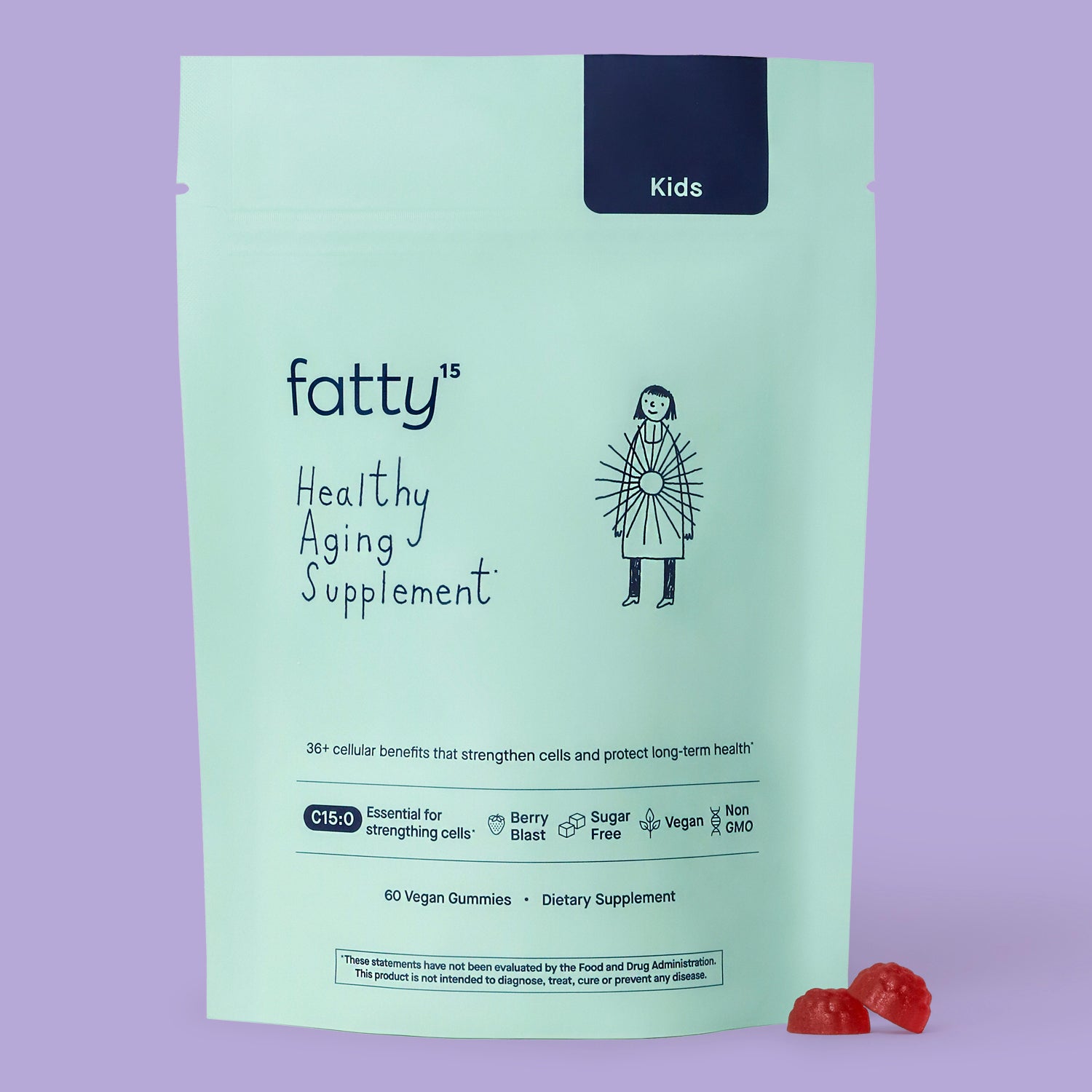
Fatty15 .
What Is Fatty15?
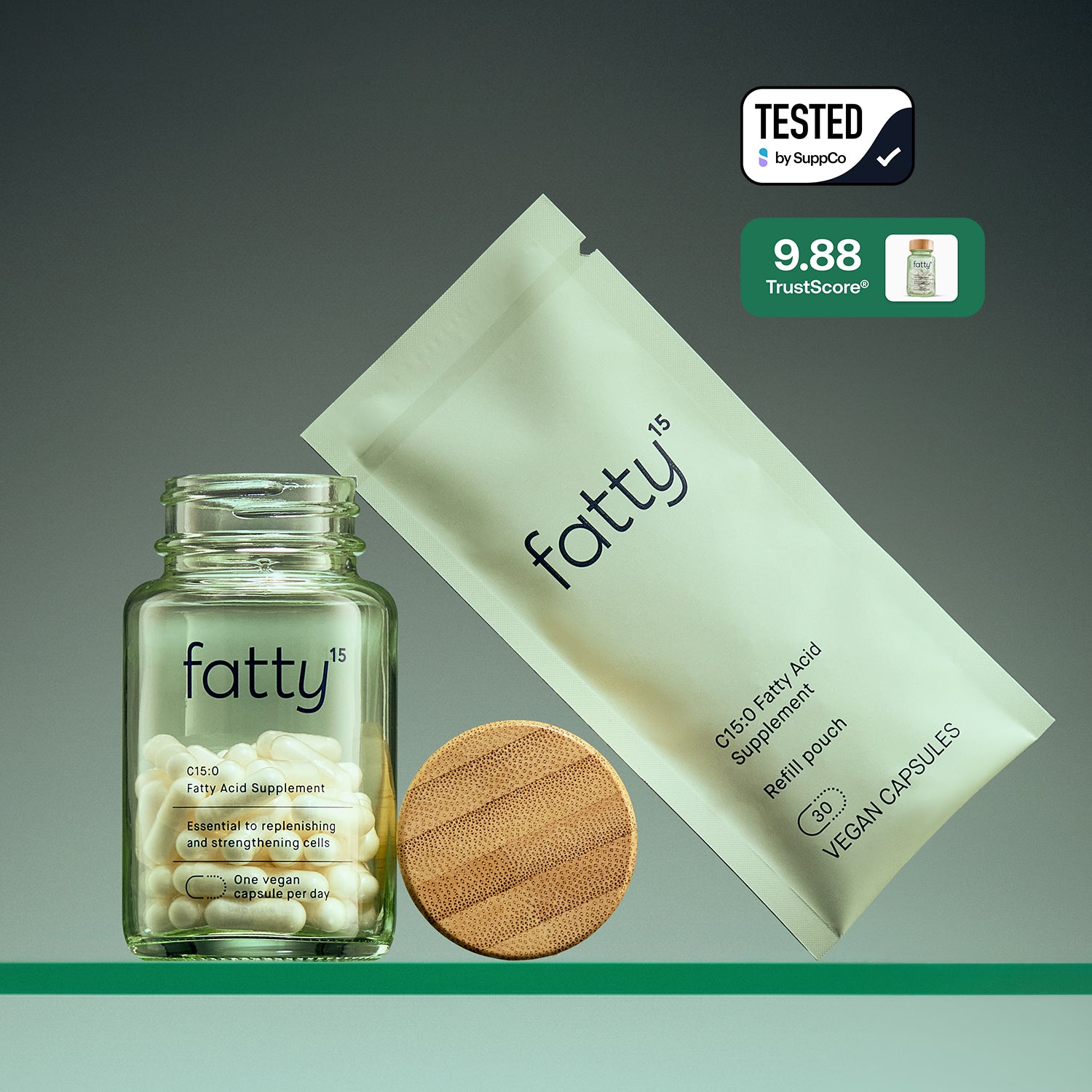
Fatty15 provides pure C15:0 (FA15™) in a vegan-friendly, ready-to-absorb free fatty acid form. It’s designed to support cellular health directly, without relying on inconsistent dietary sources or broad-spectrum supplementation. It was developed from scientific research and is backed by over 100 peer-reviewed papers and 60+ patents.
It’s already in free fatty acid form, ready to be absorbed into your body and target your cells.* It is a simple what to support your health from a foundational level. The best part? It’s safe to take during pregnancy and while nursing.
So, Should You Take Prenatal Vitamins If You’re Not Pregnant?
For most people, the answer is simple: you don’t need to.
Prenatal vitamins are designed for a specific phase of life, with specific demands. Outside of that context, they often provide more than the body requires, and not always in the most useful way. Instead, we’re seeing a shift away from blanket supplementation and toward more targeted support through nutrients that address how the body actually functions at a deeper level.
That means being more intentional about nutrition. Today, health is about supporting the systems that keep everything running, beginning at the cellular level.
Skip the Prenatals
It’s easy to assume that adding more of something deemed “useful” (like more vitamins or more supplements) will move us closer to optimal health. Often, that isn’t the answer. Instead, we need to focus on replacing what is missing.
Prenatal vitamins have a clear and important role during pregnancy. Outside of that, they’re not always necessary. In some cases, they could create imbalances and present unwanted side effects.
At the same time, new nutrition insights are helping us identify gaps that weren’t on our radar before. C15:0 nutritional deficiency and Cellular Fragility Syndrome are among the gaps that can be prevented by increasing our C15:0 levels to strengthen and stabilize our cells.*
When we shift our focus from quantity to function, we begin to approach health differently, and we can see that some supplements are more useful to some bodies than others. Fatty15 delivers essential C15:0 to everyone, across every life stage.
FAQs
What happens if you take prenatal vitamins when not pregnant?
Taking prenatal vitamins while not pregnant is generally safe but unnecessary, as it can lead to excess intake of nutrients like iron and folic acid.
Do prenatals make you gain weight if you’re not pregnant?
No, prenatal vitamins do not directly cause weight gain because they contain virtually zero calories or fat-building components.
Can prenatals affect your period?
Yes, prenatal vitamins can affect your period. While they generally promote hormonal balance, many users report that starting prenatals can lead to changes such as spotting, altered cycle lengths, or delayed periods.
Do prenatals affect fertility?
Prenatal vitamins do not directly increase fertility or guarantee faster conception, but they support reproductive health by correcting nutritional deficiencies.
Sources:
Prenatal vitamins: OK for women who aren't pregnant? | Mayo Clinic


