


C15:0 vs Omega-3: What’s the Difference and Do You Need Both?

Seraphina Therapeutics's Highlights
- C15:0 and omega-3s support healthy aging through different cellular pathways and complementary mechanisms.
- Emerging research shows C15:0 supports mitochondrial function, cellular resilience, and healthy aging markers.*
- In a comparison study, C15:0 was shown to be better, broader, and more effective than the purest and most studied form of omega-3.*
- As longevity science supplements continue to gain mainstream attention, more people are asking questions about healthy fats and whether they are doing the same thing in the body. The answer is no, and understanding the differences between C15:0 and omega-3 fatty acids may help you build a more comprehensive strategy to support long-term cellular health.
- Both C15:0 and omega-3s are generating significant interest in the world of supplements and longevity evidence, especially for their potential roles in healthy aging. But while they are both fatty acids, they work through very different biological pathways and offer distinct benefits.
- The growing interest in C15:0 began with an unexpected discovery. While studying healthy aging in Navy dolphins, researchers led by Dr. Stephanie Venn-Watson observed that dolphins with higher circulating C15:0 levels showed better long-term metabolic health.
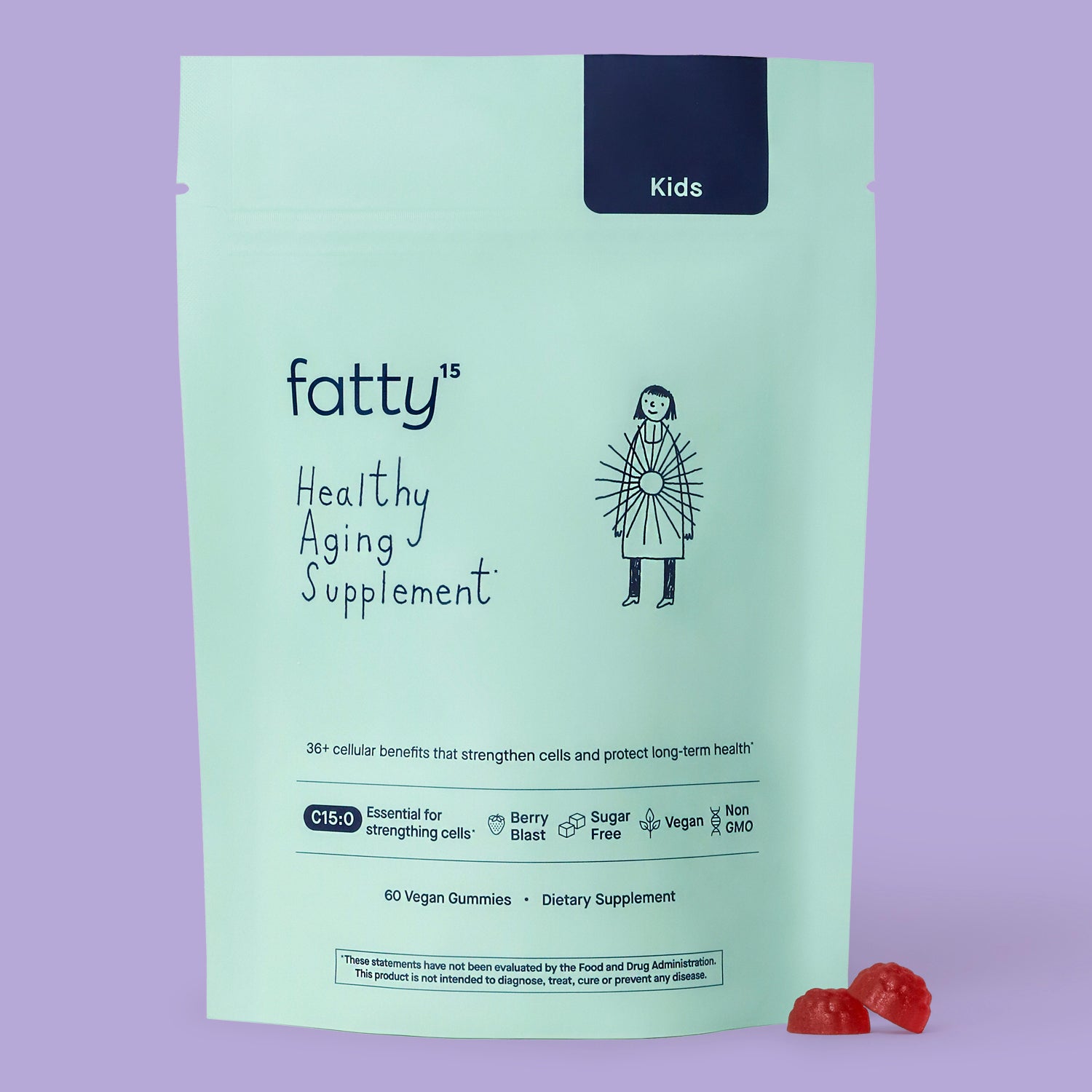
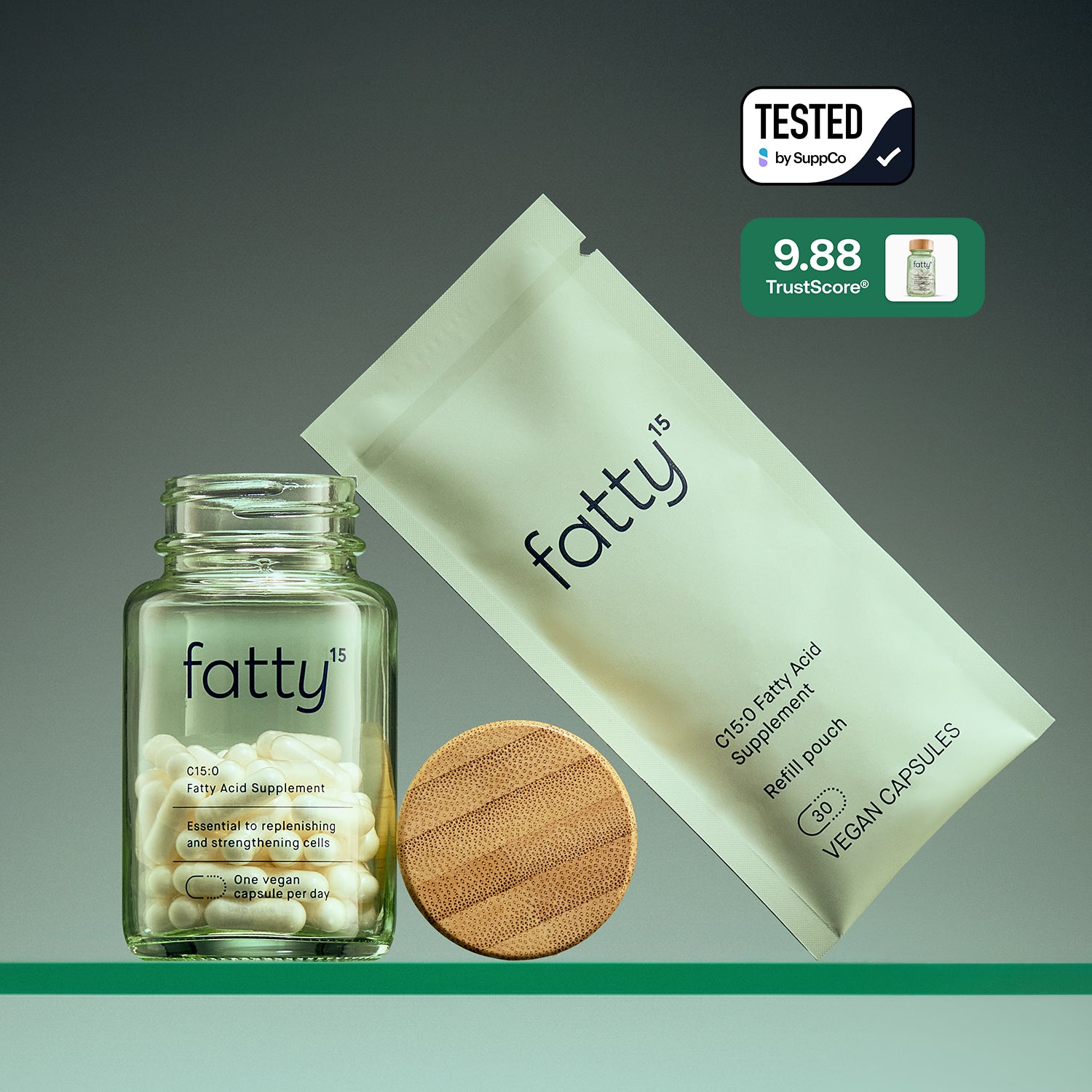
- Over 10 years and 150+ peer-reviewed publications later, that research led to the development of fatty15’s C15:0 supplement, which contains a pure, vegan-friendly form of C15:0, FA15™, designed to help restore healthy circulating levels of this emerging essential fatty acid.
Chemical Structure and Sources Compared
Although C15:0 and omega-3s are both fatty acids, their structures are fundamentally different, which influences how they behave in the body. C15:0 is an odd-chain saturated fatty acid with 15 carbon atoms and no double bonds. Omega-3s, by contrast, are long-chain polyunsaturated fatty acids with multiple double bonds.
This structural difference is important because it affects everything from oxidation resistance to cellular signaling.
Common Sources of C15:0 and Omega-3s
C15:0 is found in full-fat dairy products like whole milk and full-fat butter. It’s also found in trace amounts in some fish and plants. And it’s also available as a supplement from fatty15.
In the past, we got small amounts of C15:0 from whole-fat dairy products and foods from grazing animals. However, as low-fat dietary trends increased over recent decades, population-wide C15:0 intake appears to have declined significantly.
Omega-3 fatty acids like EPA and DHA are found primarily in fatty fish, algae, and fish oil. In supplement form, you’ll find it sourced from fish oil, krill oil, and algae oil. Omega-3s are more commonly consumed through fatty fish, such as salmon, sardines, and mackerel, as well as algae-derived supplements.
Mechanisms of Action and Cellular Effects
One of the biggest differences between C15:0 and omega-3 fatty acids lies in how they function at the cellular level. Research suggests that C15:0 acts through multiple longevity-associated pathways , including partial activation of PPARα and PPARδ receptors, AMPK activation, and HDAC6 inhibition. These pathways are closely connected to metabolism , mitochondrial function , inflammatory response, and cellular resilience.*
Omega-3 fatty acids work differently. EPA and DHA primarily influence inflammatory pathways by helping regulate eicosanoid production and supporting membrane fluidity throughout the body.
What Are PPARs and AMPK?
PPARs are receptors involved in regulating metabolism, lipid processing, and energy balance. AMPK is often referred to as a “metabolic master switch” because it helps regulate cellular energy production and homeostasis. Supporting these pathways is considered important in longevity science because they are closely linked to healthy aging and mitochondrial function.
Unique Activities of Each Fatty Acid
Each fatty acid has different functions in the body.
C15:0:
-
Supports mitochondrial function and cellular energy production*
-
Activates AMPK and PPAR pathways tied to metabolic resilience*
-
Helps strengthen cell membranes and protect against lipid peroxidation*
-
Supports red blood cell health in relevant models*
-
Demonstrates 36+ cellular benefits in cellular studies*
Omega-3:
-
Helps maintain membrane fluidity
-
Supports cardiovascular health
-
Supports brain and cognitive health
-
May help maintain healthy triglyceride levels
Interestingly, cellular studies comparing pure C15:0 to omega-3 fatty acids found that C15:0 demonstrated broader cell-based longevity activities across multiple pathways.*
Evidence for Health Benefits and Longevity Support
Both C15:0 and omega-3 fatty acids have scientific evidence supporting their roles in healthy aging, though the depth and type of evidence differ. EPA and DHA have been widely studied for supporting heart health, healthy triglyceride levels, and healthy inflammatory balance.
However, neither of these fatty acids is generally accepted as essential. Only ALA has received that recognition in the scientific community.
C15:0, while newer to the longevity conversation, is rapidly gaining scientific attention due to its unique cellular activities and associations with healthy aging markers.
Studies have shown that:
-
Higher circulating C15:0 levels are associated with better long-term metabolic and heart health*
-
People living in high-longevity regions, including Sardinia’s Blue Zone s, often exhibit higher circulating C15:0 levels*
-
C15:0 supports mitochondrial repair and healthy cellular signaling in cellular studies
-
Oral supplementation increases circulating C15:0 levels in humans*
In addition, C15:0 has a broader activity profile than EPA, the form of omega-3 that is most frequently studied for its heart health benefits. In cellular studies, pure C15:0 demonstrated activities tied to six hallmarks of aging, including mitochondrial function, inflammation regulation, and cellular stability. *
Stability, Safety, and Side Effect Profiles
Chemical stability is a huge distinction between omega-3 and C15:0. Because C15:0 is saturated and contains no double bonds, it is naturally more stable and less prone to oxidation. Omega-3 fatty acids, on the other hand, contain multiple double bonds, making them more vulnerable to oxidation and rancidity.
This is one reason many omega-3 supplements include antioxidants, such as vitamin E, to help stabilize the oil. Some studies of fish oil supplements have raised concerns about oxidation levels in poorly manufactured products, pointing out that as many as one in 10 supplements are rancid on store shelves before they are even purchased.
Researchers have also reported that:
-
Pure C15:0 showed no cytotoxicity across tested doses in cellular studies.
-
EPA demonstrated cytotoxicity at higher concentrations in some cell-testing models.
-
C15:0 has shown no indication of blood-thinning effects.
-
Some omega-3 supplements may negatively influence blood clotting at higher doses.
Beyond the risks that come along with omega-3 supplementation, there’s also the issue of “fish burps,” which even so-called “burpless” formulas can’t eliminate.
Practical Considerations for Supplementation
Ultimately, science supports that C15:0 is a safer, more effective, and broader solution for longevity. That leaves the issue of whether or not you should start drinking more whole milk to meet your daily C15:0 needs or whether a supplement might be better.
There are a few reasons why a supplement is a better option. First, the trace amounts of C15:0 found in whole dairy products come with an excess dose of “bad,” even-chain saturated fats and a substantial amount of calories that aren’t beneficial to the average American diet.
Second, in whole milk, C15:0 is attached to triglycerides, which must be broken down in the gut before the C15:0 can be used. Finally, consumption of whole milk involves animals, making it difficult for people who avoid animal-based products to get the C15:0 they need.
A solution? Fatty15’s C15:0 supplement .
This supplement delivers pure FA15™ in a ready-to-absorb free fatty acid form. Unlike dietary C15:0 found in dairy, which must first be broken down from triglycerides during digestion, FA15™ is already bioavailable and ready for absorption. At just one calorie per dose and no animal involvement, it’s the smart and easy way to get the C15:0 you need.
|
*These statements have not been evaluated by the Food and Drug Administration. This product is not intended to diagnose, treat, cure, or prevent any disease. |
Frequently Asked Questions
Can C15:0 replace omega-3 fatty acids?
No. C15:0 and omega-3 fatty acids serve different biological functions and operate through different pathways. While both may support healthy aging and cellular health, they are not interchangeable.
Are C15:0 and omega-3 safe to take together?
Current evidence suggests they can be taken together safely because they have distinct mechanisms and no known direct interactions.
What are common dietary sources of C15:0 and omega-3?
C15:0 is naturally present in full-fat dairy products, ruminant fats, and trace amounts in some fish and plants. Omega-3s are abundant in fatty fish, fish oil, and algae.
Who may benefit from both fatty acids?
People interested in supporting cellular health, heart health, cognitive wellness, and healthy aging may benefit from incorporating both into a broader wellness strategy, particularly if dietary intake is low.
Sources:
Revealed: many common omega-3 fish oil supplements are ‘rancid’


