


C15:0 for Kids: What Parents Need To Know About the Essential Fatty Acid Linked to Healthy Growth and Cognitive Development

Seraphina Therapeutics's Highlights
C15:0 (pentadecanoic acid) is an odd-chain saturated fatty acid found mainly in full-fat dairy, and early research links higher early-life levels to healthy growth and cognitive development in children. The growing body of science, including 150+ peer-reviewed publications, supports the long-term health benefits of C15:0. For now, the combination of a balanced diet that includes some whole-fat dairy and a C15:0 gummy vitamin is the best source of this essential nutrient. Any decision about supplements should start with your pediatrician.
C15:0 (pentadecanoic acid) is an odd-chain saturated fatty acid found in dairy fat, ruminant meat, some plants, and fish. Recent research suggests it may play important roles in cell health and metabolism, particularly in developing children.
Unlike omega-3s and omega-6s, the polyunsaturated fats officially recognized as essential, C15:0 is a saturated fat that's only now emerging as an essential or beneficial nutrient.
Why Researchers are Interested
The rapidly growing body of evidence supporting C15:0 as a beneficial nutrient for children is intriguing. Higher C15:0 exposure in infancy has been associated with better cognitive scores at ages 3 and 6, as well as healthier liver function and improved body growth.
Proposed mechanisms include stabilizing cell membranes, supporting mitochondrial function, and modulating inflammation.* In cell and animal studies, C15:0 supported neuronal development partly by inhibiting mTOR, a key regulator of cell growth, development, and metabolism, which suggests it could influence developing brain and body cells.*
Where Kids Get C15:0
As an essential fatty acid, dietary intake drives circulating levels, with only minor endogenous production. The top sources are full-fat dairy products, including whole milk, butter, cheese, yogurt, and ghee, as well as fatty fish. Since whole-dairy-fat consumption declined after the late 1970s, population intakes of C15:0 have fallen, even among children.
How C15:0 Compares to Omega-3
In a study comparing the strongest, purest form of omega-3 (EPA) to C15:0, C15:0 was found to be broader, better, and safer.
-
Better. C15:0 has more than 36 clinically relevant benefits. While C15:0 had 36 clinically relevant and dose-responsive benefits, omega-3 had only ten.*
-
Broader. C15:0 repairs 2.5x more cell types compared to omega-3. While C15:0 repaired 10 out of 12 (83%) cell-based systems, omega-3 only safely repaired 4 out of 12 (33%) of them.*
-
Safer. C15:0 is safe for 12 out of 12 cell types. Omega-3 was toxic to 4 out of 12 cell types.*
In addition, C15:0 is a saturated fatty acid, which is solid at room temperature. Because omega-3 fatty acids are unsaturated oils, they are less stable and subject to rancidity.
The Bottom Line
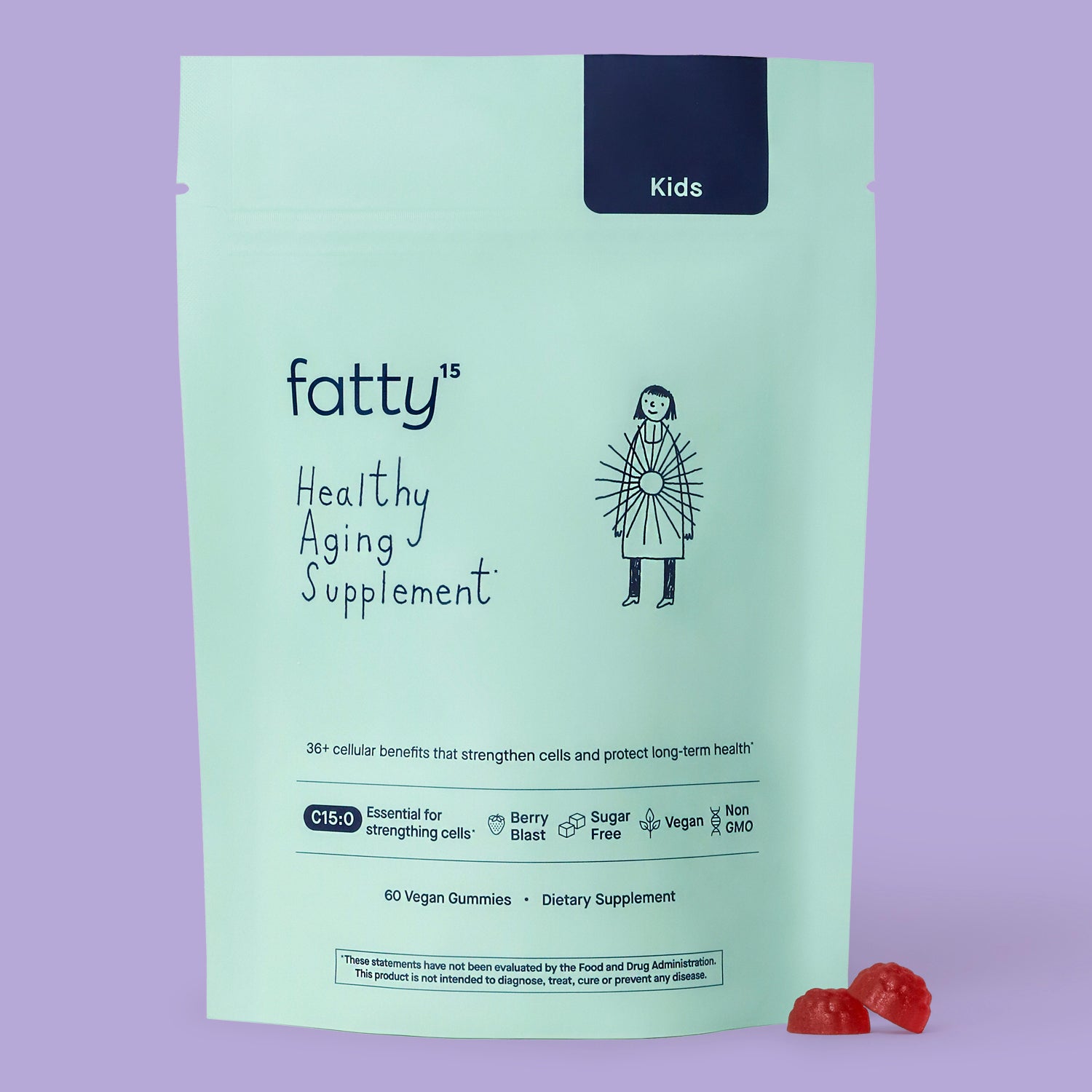
For most children, taking a C15:0 supplement, like fatty15’s gummies for kids, is a great way to support your child’s wellness and increase their circulating levels of C15:0. Always talk with your pediatrician before adding any new supplement, and keep prioritizing evidence-based nutrition as the research evolves.
|
*These statements have not been evaluated by the Food and Drug Administration. This product is not intended to diagnose, treat, cure, or prevent any disease. |
FAQs
What is C15:0, and how is it different from other fats?
C15:0 is an odd-chain saturated fatty acid found mostly in dairy fat and some fish, unlike omega-3s and omega-6s, which are polyunsaturated. It’s being studied for its broad health benefits, including improved metabolism and cell health.
Is C15:0 really ‘essential’ for kids’ growth and brain development?
A growing body of studies increasingly supports that C15:0 may be essential for kids’ growth and brain development. For example, higher C15:0 levels have been repeatedly associated with healthier body growth and cognitive development in children. Further, experimental studies across three gold-standard models show that C15:0 directly supports healthy neonatal growth and neural development.
What foods contain C15:0, and are they safe for kids?
C15:0 is found in whole-fat dairy foods like milk, cheese, and yogurt, which are safe for most kids in moderation, unless there are allergies or specific dietary restrictions.
Should I give my child a C15:0 supplement?
While C15:0 is a routine part of a child’s healthy diet, it is always recommended to consult with your pediatrician before considering any new supplement.
Sources:


