


Are Saturated Fats Actually Good for You? | Fatty15

Seraphina Therapeutics's Highlights
- Saturated fats are a diverse group of molecules, and their health effects vary by structure and metabolic context.
- Emerging research links higher levels of the odd-chain saturated fat C15:0 with improved cardiometabolic markers.*
- Modern dietary guidance increasingly emphasizes overall patterns and precision nutrition rather than labeling entire macronutrients as “good” or “bad.”
What Are Saturated Fats?
At a chemical level, fats are made of carbon atoms linked together. The difference between saturated and unsaturated fats comes down to how those carbon atoms bond.
-
Saturated fats have no double bonds between carbon atoms. They are “fully saturated” with hydrogen.
-
Unsaturated fats have one or more double bonds in their structure.
That small structural distinction affects how fats react in food and in the body. Saturated fats tend to be solid at room temperature. They’re found in foods like butter, cheese, full-fat dairy, coconut oil, and fatty cuts of meat.
Unsaturated fats, especially monounsaturated and polyunsaturated fats, are typically liquid at room temperature and are found in foods like olive oil, nuts, seeds, and fatty fish.
For years, this structural difference translated into one big message: replace saturated fats with unsaturated fats to reduce heart disease risk. But today, researchers have realized this is a big oversimplification that has led to further health decline.
How Saturated Fat Got on the Naughty List
In the mid-20th century, early epidemiological research linked high saturated fat intake with elevated LDL cholesterol. Since LDL cholesterol was associated with cardiovascular risk, public health messaging evolved toward limiting saturated fat consumption.
In response, the Dietary Guidelines for Americans recommended reducing saturated fat to less than 10% of daily calories. That guidance seemed logical, but it didn’t work.
Americans got sicker, and rates of type 2 diabetes and obesity skyrocketed . This led researchers to revisit saturated fat and ask whether or not avoiding it was actually helping us live more healthfully. As more sophisticated studies emerged, researchers began to notice that not all saturated fats correlate with disease risk in the same way.
The Problem With Lumping All Saturated Fats Together
“Saturated fat” isn’t one molecule. It’s a family of fatty acids that vary in chain length and biological effects. Most of the saturated fats in the modern diet are even-chain fatty acids. These have been the primary focus of cardiovascular research.
However, there is another category of saturated fat that researchers seemingly overlooked. Odd-chain saturated fatty acids, which contain an odd number of carbon atoms, are found primarily in whole-fat dairy products and some fish and react differently in our bodies than even-chain saturated fats.
Higher circulating levels of odd-chain saturated fats have been associated in multiple cohort studies with:
-
Lower risk of type 2 diabetes
-
Lower risk of cardiovascular disease
-
Lower markers of systemic inflammation
This means that we can no longer say that all saturated fats are metabolically harmful to us. By doing so, we could eliminate essential fats our bodies need to function properly.
What Large Population Studies Show
Several prospective cohort studies have measured fatty acids directly in blood samples rather than relying solely on food frequency questionnaires. This approach provides a more objective view of how specific fats correlate with long-term health outcomes.
In these studies, higher circulating levels of C15:0 , an odd-chain saturated fatty acid found in whole-fat dairy, have been associated with a reduction in type 2 diabetes, lower cardiometabolic risk markers, and favorable inflammatory profiles.
It’s important to note that these protective associations are not consistently observed with the more common even-chain saturated fats. That difference means that the health effects of saturated fats depend on molecular structure, not category.
The Updated Dietary Guidelines: What Changed?
The 2026–2030 Dietary Guidelines for Americans continue to recommend limiting saturated fat intake overall. However, several important changes are worth noting. The new advisory panels emphasize overall dietary patterns rather than single nutrients and the source of saturated fat, supporting whole-fat dairy over processed meat.
There is also growing recognition that whole-fat dairy doesn’t appear to carry the same cardiovascular risk as we once believed it did. Some studies show that whole-fat dairy consumption may be neutral or even beneficial when consumed as part of a balanced diet.
Does this mean we have the green light to chug whole milk with our meals? Not quite.
The “Good Stuff” In Whole-Fat Dairy
Whole-fat dairy is one of the primary sources of C15:0, an essential fatty acid our bodies need to thrive. C15:0 is important to our bodies for a variety of reasons.
When we consume it, it:
-
Strengthens cellular membranes. C15:0 is a sturdy fatty acid that armors our cell membranes against age-related breakdown. Studies have shown that pure C15:0 improves cellular strength by 80% .*
-
Rescues energy-generating pathways. C15:0 repairs mitochondrial function, increasing our cells’ energy output and decreasing damaging reactive oxygen species by 45%.*
-
Increasing cellular energy. C15:0 has been shown to have significant cell-energy (aka ATP) generating power. In one peer-reviewed study, C15:0 was shown to increase ATP levels in cells by 350% .*
-
Activating AMPK. C15:0 restores cellular and whole body homeostasis, regulates glucose uptake, and calms our immune systems.*
-
Activating PPARɑ and PPARẟ receptors. By activating these receptors, C15:0 has been shown in peer-reviewed studies to support metabolic, immune, heart and liver health in relevant models. These receptors also help to improve mood and deepen sleep.*
In addition, C15:0 has been shown to lower LDL cholesterol and improve liver enzymes . While research is ongoing, evidence suggests that declining intake of whole-fat dairy over recent decades may have reduced population-level C15:0 levels. *
Why Intake May Be Lower Today
Several shifts in the modern food environment may contribute to lower circulating C15:0 levels. First, the widespread adoption of the low-fat diet due to the food guidelines and information issued in the 1970s. Around the same time, we also saw the introduction of more ultra-processed foods, which can be void of nutrients and filled with bad, even chain fats.
It is estimated that one in three people globally may be deficient in C15:0. C15:0 deficiency is known as Cellular Fragility Syndrome . This syndrome causes weak, fragile cells that are directly related to a recently discovered cause of cell death known as ferroptosis. Ferroptosis is associated with higher levels of metabolic illness and accelerated aging.
The good news is that Cellular Fragility Syndrome is fixable by simply elevating your circulating levels of C15:0. Since it is primarily found in whole-fat dairy, it might seem the best way to improve our levels is to consume more cheese, whole milk, and butter. Not so fast.
Increasing C15:0: Why a Supplement Is Better
Increasing our intake of whole-fat dairy would help us elevate levels of C15:0, but it would also come with some major health detriments.
-
It’s packed with calories. Ever read the caloric content of whole milk? Clocking in at about 150 calories per serving, it’s easy to see how easily you could rack up calories drinking more milk. Not to mention, it also contains excess sugar from lactose.
-
It’s not as efficient. In whole-fat dairy products, C15:0 is attached to triglycerides, which must be broken down by the gut to be used. This process makes it less efficient than taking a supplement that is already in free fatty-acid form.
-
It contains bad fat. Although it contains beneficial C15:0, whole-fat dairy contains much more even-chain saturated fat, which is consistently associated with poorer health outcomes.
-
It involves cows. For vegans or anyone avoiding animal-based products, consuming more dairy is off the table.
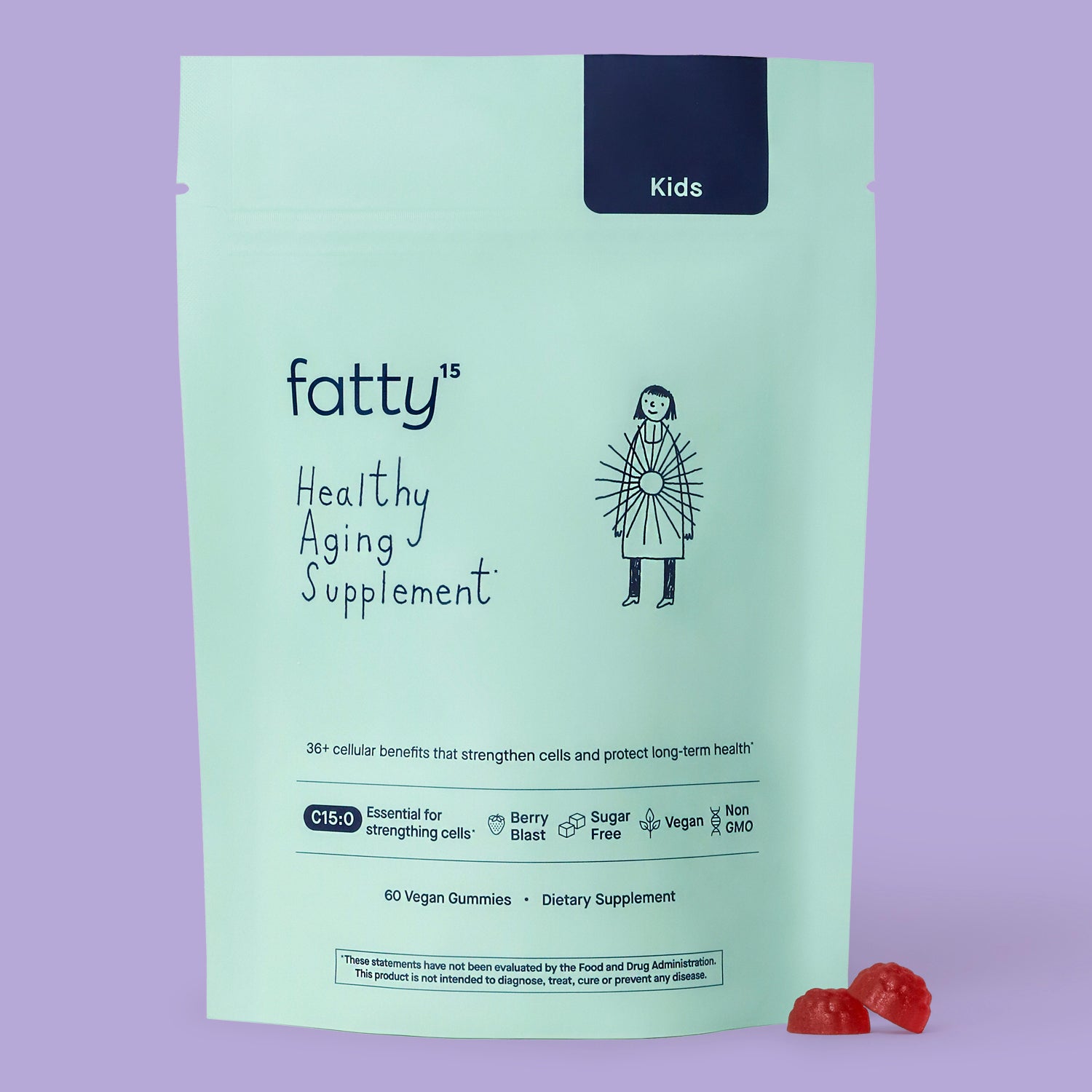
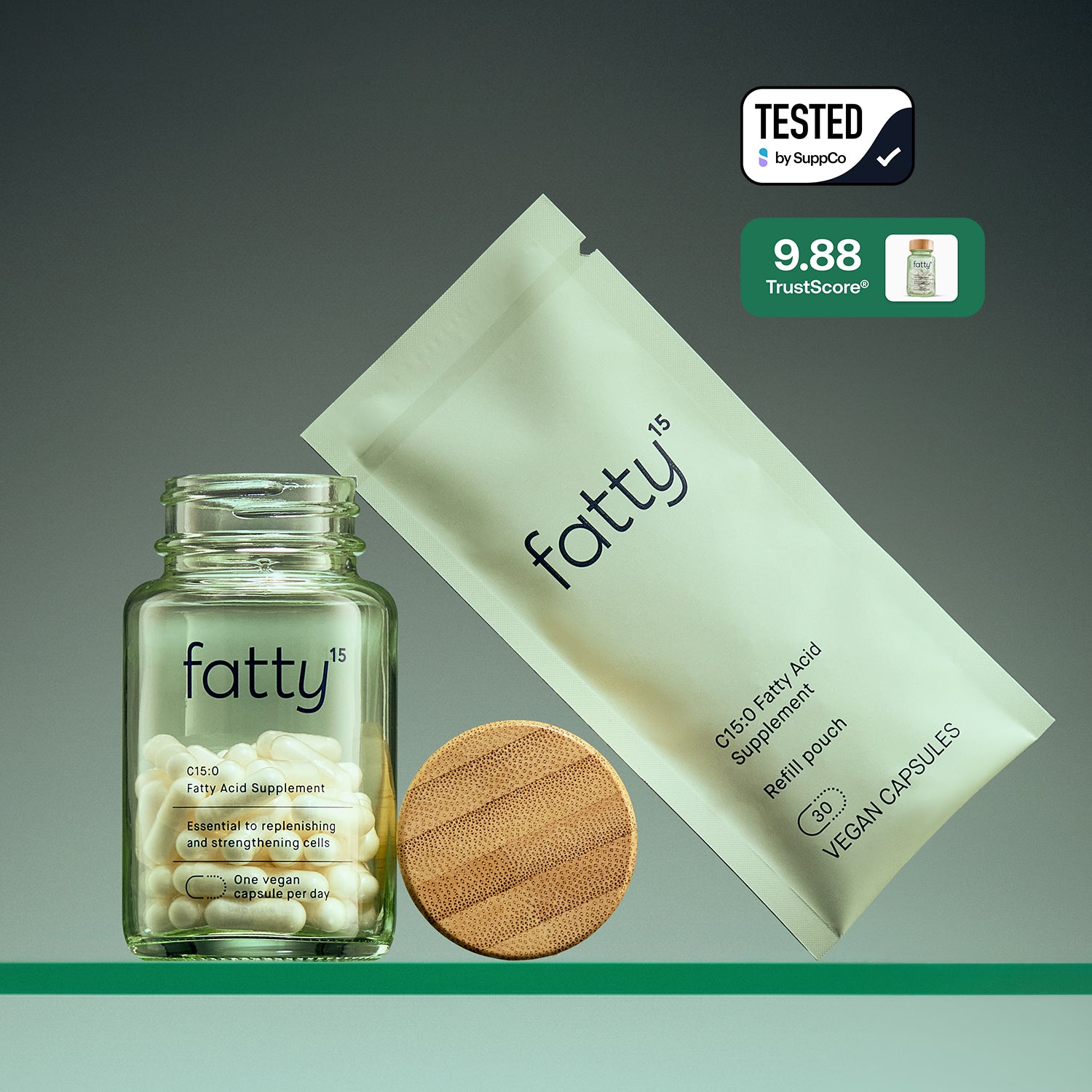
For these reasons, taking a C15:0 supplement is a good solution. Fatty15™ is the first and only supplement that contains the pure, sustainable, vegan-friendly version of C15:0 known as FA15™.
Fatty15 was born from scientific research , gives you all the C15:0 you need to elevate your C15:0 levels, and nothing you don’t. At just one calorie per day, it’s easy to fit into your diet without breaking the caloric bank.
So, Are Saturated Fats Good or Bad?
The honest scientific answer is: it depends on which saturated fat you’re talking about. Even-chain saturated fats consumed in excess, especially within highly processed dietary patterns, may contribute to elevated cardiometabolic risk.
Odd-chain saturated fats, particularly C15:0, appear in multiple studies to correlate with improved metabolic outcomes. That difference matters in a big way that we can no longer ignore.
Where Do We Go From Here?
Nutrition science is moving toward precision. Instead of labeling entire macronutrients as good or bad, researchers are examining specific fatty acids, biomarkers, and metabolic pathways. This more detailed approach has already reshaped how we view carbohydrates and protein quality.
Now, fat is undergoing a similar reevaluation. As evidence accumulates, dietary guidance may continue to evolve, especially as we better understand how individual fatty acids influence long-term health.
FAQs
Which fat is better, saturated or unsaturated?
Unsaturated fats (monounsaturated and polyunsaturated) are considered good fats, promoting heart health by improving cholesterol levels. However some saturated fats, like C15:0, are also beneficial.
How much saturated fat is okay?
You should get less than 10% of your daily calories from saturated fat. On a 2,000-calorie diet, that would be 200 calories or 20 grams of saturated fat.
What are three saturated fats to avoid?
Three saturated fats to avoid are processed meats, prepackaged snack cakes, and some baked goods like pies and pastries.
What are the top 5 healthiest fats to eat?
Foods like avocados, extra virgin olive all, walnuts, almonds, and chia seeds are excellent sources of healthy fat. Fatty15 is a great source of C15:0.
|
*These statements have not been evaluated by the Food and Drug Administration. This product is not intended to diagnose, treat, cure, or prevent any disease. |
Sources:
High- and Low-Fat Dairy Consumption and Long-Term Risk of Dementia | Neurology


